
文旅+短剧融合

Search documents
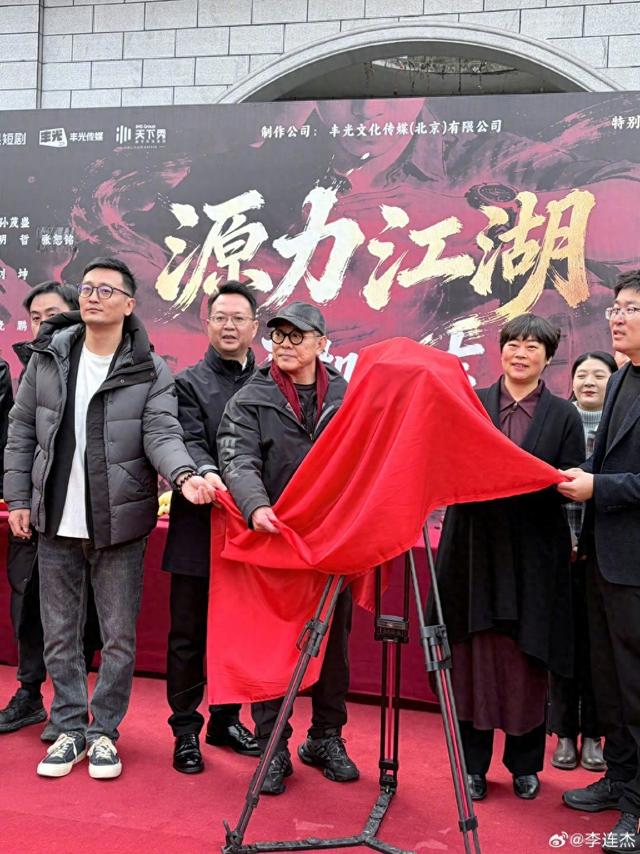
短剧能重现武侠辉煌吗?李连杰师徒在尝试
Xin Lang Cai Jing· 2026-02-11 00:12
Core Viewpoint - The emergence of Jet Li as a "dream helper" in the micro-drama "Source of Jianghu" raises questions about why a global kung fu superstar is entering the short drama space, which is characterized by one-minute episodes and vertical viewing formats [1] Group 1: Industry Trends - The micro-drama "Source of Jianghu" marks a shift in Jet Li's approach, as he takes on a leading role in content creation rather than relying on existing intellectual properties [3] - The involvement of local cultural and tourism departments in the production indicates a blend of cultural tourism and short drama, which could lead to a sustainable "national essence dissemination chain" if successful [7] - The current trend shows that the audience is not tired of the themes of heroism and righteousness, but rather of empty formulas, suggesting a potential for revitalizing traditional martial arts narratives in modern formats [7] Group 2: Company Initiatives - Jet Li's disciple, Xiang Zuo, is also participating in the short drama space with "Hidden Name," which emphasizes real martial arts and has received positive feedback for its fight choreography [5] - The upcoming release of the martial arts film "Biao Ren" during the Spring Festival will extend the discussion of the revival of martial arts from online short dramas to the cinema, potentially reaching a wider audience [9] - Jet Li's mission has shifted from being a star to supporting the next generation of martial artists, indicating a strategic pivot towards nurturing new talent and promoting martial arts culture [7][9]

LP开始布局微短剧
3 6 Ke· 2025-08-14 03:00
Core Insights - The venture capital industry is increasingly focusing on the "micro-short drama" sector, which has seen a resurgence in interest and investment, particularly from government-guided funds [1][2][3] Market Overview - The micro-short drama market in China has experienced explosive growth, with market sizes reported at 3.68 billion RMB in 2021, 10.17 billion RMB in 2022, and 37.39 billion RMB in 2023, projected to exceed 50 billion RMB in 2024 and reach 68 billion RMB by 2025 [2] - By 2027, the market is expected to surpass 100 billion RMB, attracting various stakeholders including platforms, production companies, and advertisers [2][3] Government Initiatives - The Yingtan Modern Industry Guidance Fund has initiated a sub-fund aimed at investing in the micro-short drama industry, with a target size of 200 million RMB and an initial commitment of 30 million RMB [4][5] - The fund aims to leverage government resources to attract social capital and foster a micro-short drama ecosystem in Yingtan, enhancing the local cultural industry [3][4] Regional Developments - Yuyuan District has established a specialized micro-short drama film base, producing 271 micro-short dramas in 2024, generating over 1 billion RMB in box office revenue [5] - The Jiangxi provincial government has introduced measures to promote the micro-short drama industry, including cash rewards and investment subsidies for companies operating in the region [5][6] Broader Industry Trends - The micro-short drama phenomenon is revitalizing the entertainment sector, which has faced challenges such as declining valuations and high vacancy rates in traditional film studios [7] - Various regions, including Shenzhen and Shanghai, are implementing supportive policies to encourage the development of micro-short dramas, including financial incentives and infrastructure support [7][8][9] Future Prospects - The integration of technology and content production in the micro-short drama sector is expected to create new opportunities, particularly in AI and digitalization [11][12] - The industry is transitioning from a niche market to a significant player in cultural consumption, with potential to reshape urban branding and cultural narratives [12][13]