
斯德哥尔摩综合征

Search documents
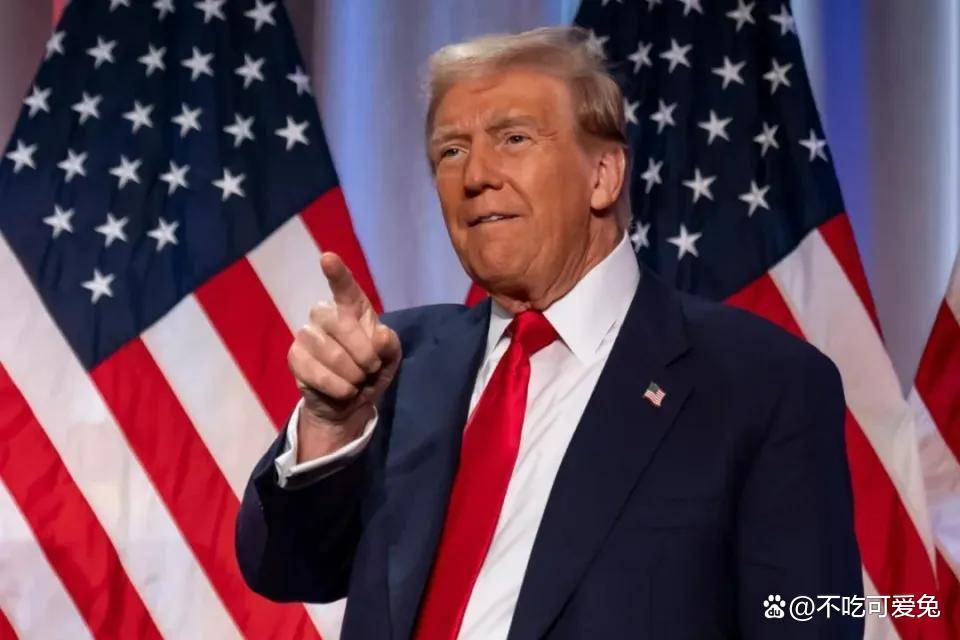
特朗普又赢了!日本550亿买单还要说谢谢?
Sou Hu Cai Jing· 2025-07-23 23:57
Core Points - The trade agreement between the US and Japan is characterized as a one-sided deal that heavily favors the US, with Japan making significant concessions [1][6] - The Japanese government is portrayed as having capitulated to US demands, leading to a situation where they are expected to invest $55 billion, with the US taking 90% of the profits [3][4][6] - The agreement is seen as detrimental to Japan's agricultural sector, which will face increased competition from US products due to market openings [4][6] Group 1: Agreement Details - The US reduced the threatened tariff on Japanese goods from 25% to 15%, which is framed as a concession but is viewed as a manipulation of Japan's position [3][4] - Japan is required to invest $55 billion in the US, with the US extracting 90% of the profits, a highly unusual and unfavorable arrangement for Japan [3][6] - The agreement forces Japan to open its markets, including sensitive agricultural products, which undermines its previous protections [4][6] Group 2: Market Reaction - Despite the unfavorable terms of the agreement, the Japanese stock market reacted positively, with the Nikkei 225 index rising over 800 points and major automotive stocks like Toyota and Mazda seeing significant gains [2] - This reaction is likened to a psychological phenomenon where individuals express relief at avoiding a worse outcome, despite the negative implications of the agreement [2][6] Group 3: Implications for Japan - The agreement is described as a "humiliating" deal for Japan, reminiscent of historical treaties that imposed severe restrictions and concessions [6][8] - The long-term sustainability of this relationship is questioned, as continuous concessions from Japan may lead to public discontent and economic challenges [8][9] - The agreement highlights the power dynamics in international relations, with the US leveraging its position to extract favorable terms at the expense of Japan [8][9]

连大厂都不卷了,我却还不敢休息
Hu Xiu· 2025-05-01 01:33
Core Viewpoint - The article discusses the modern struggle with work-life balance, emphasizing the need for genuine rest and leisure in a society that often equates busyness with productivity and success [1][2][3]. Group 1: Work Culture and Its Impact - The current work culture promotes a "busy" mindset, where individuals feel pressured to constantly prove their worth and remain productive, leading to a state of "hidden anxiety" [1][5][7]. - The boundaries between work and personal life have blurred, with technology enabling constant connectivity, resulting in overwork and burnout [5][12][15]. - The concept of "rest poverty" is prevalent among Chinese workers, who often cannot afford to take breaks or feel guilty for doing so, indicating a deep-rooted cultural belief in hard work [6][15][16]. Group 2: Historical Context and Predictions - Predictions made by economist John Maynard Keynes in 1930 suggested that by 2030, people would work only three hours a day, yet the reality has been an increase in work hours and stress [4][12]. - Despite the introduction of a 40-hour workweek in the 20th century, many workers in China are now averaging 48.5 hours per week, effectively reverting to a six-day workweek [12][18]. Group 3: The Need for Genuine Rest - Genuine rest is essential for high-quality work and overall well-being, yet many individuals engage in ineffective forms of rest that do not restore their energy [8][22][24]. - The article highlights the importance of recognizing rest as a fundamental human right, necessary for mental and physical health [7][19][20]. - There is a growing trend towards alternative work schedules, such as the four-day workweek, which aims to improve work-life balance and productivity [18][19].