
新兴市场降级

Search documents
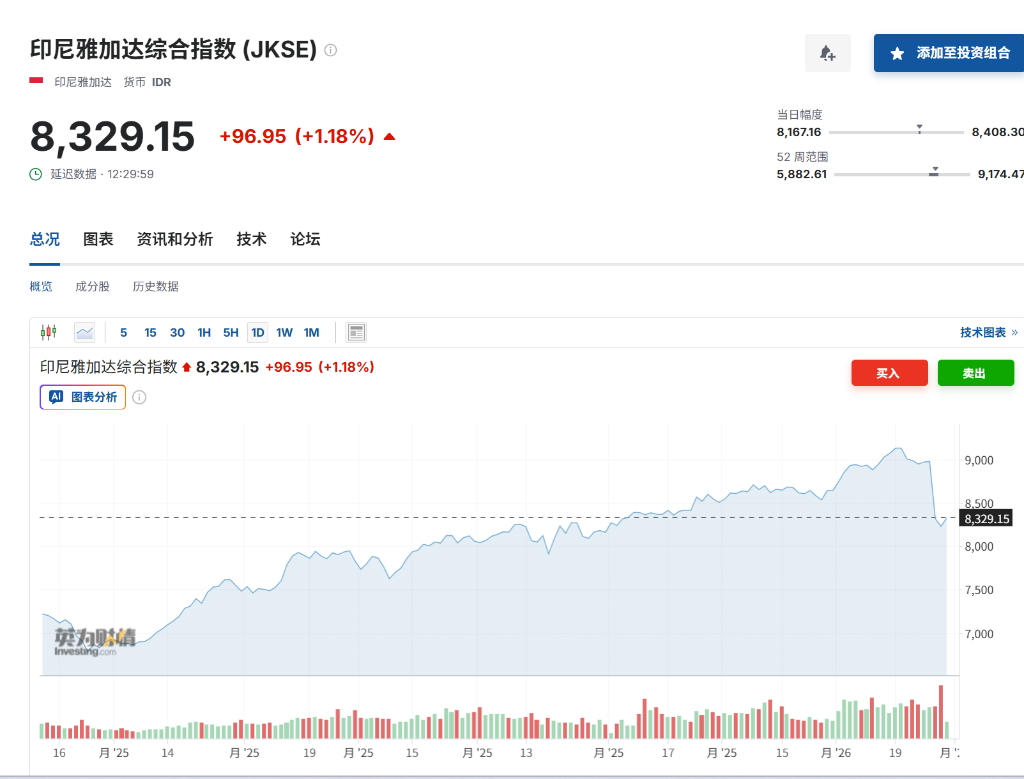
印尼股市“血腥周”:多次崩盘、熔断、交易所CEO“辞职谢罪”
Hua Er Jie Jian Wen· 2026-01-30 06:13
Core Viewpoint - The resignation of Iman Rachman, President of the Indonesia Stock Exchange, is a response to the recent market turmoil triggered by MSCI's downgrade warning, which led to a significant drop in the Jakarta Composite Index and a loss of over $80 billion in market capitalization [1][4]. Group 1: Market Reaction - Following Rachman's resignation, the Indonesian stock market rose by 1.7%, with the cumulative decline over the previous two days narrowing to 6.5% [2]. - The Jakarta Composite Index experienced a total drop of 16% over two days, marking the most severe decline since the 1998 Asian financial crisis [4][5]. Group 2: MSCI Warning - MSCI's report highlighted "fundamental investability issues" regarding the transparency of equity structures in Indonesian companies, warning that failure to address these issues by May could lead to a downgrade from emerging market status to frontier market [4][5]. - The report raised concerns about low free float ratios of Indonesian stocks, which are largely controlled by a small number of wealthy individuals, leading to market manipulation risks [5]. Group 3: Regulatory Response - In response to the market collapse, the Financial Services Authority of Indonesia announced an increase in the free float requirement for listed companies to 15%, effective next month [6]. - The government is accelerating reforms aimed at enhancing governance, improving market liquidity, and attracting new investors to align the Indonesian stock exchange with global standards [6][7]. Group 4: Investor Sentiment - Investor confidence has been shaken, with concerns about the government's ability to meet MSCI's requirements and the potential for significant capital outflows [10][11]. - Despite the turmoil, officials maintain that the country's fundamentals remain strong, citing robust domestic demand and ongoing structural reforms as buffers against external shocks [11].

【财经分析】印尼股市波动引发关注 MSCI相关评估成市场焦点
Xin Hua Cai Jing· 2026-01-30 00:55
Core Viewpoint - The Indonesian stock market experienced significant volatility, with the Jakarta Composite Index dropping approximately 8% and triggering a circuit breaker, raising concerns among international investors [1][2]. Group 1: Market Reaction - The volatility is largely attributed to a statement from MSCI, which highlighted structural issues in Indonesia's market regarding free float shares, market access, and information transparency, and announced a temporary freeze on index adjustments related to Indonesian stocks [2]. - Following this announcement, foreign investors sold a record 62 trillion Indonesian Rupiah (approximately 3.69 million USD) worth of local stocks on January 28, marking the largest single-day outflow since April of the previous year [2]. Group 2: Investment Ratings - Major international investment banks have downgraded their ratings for the Indonesian stock market, with Goldman Sachs lowering its rating to "underweight" and estimating that a downgrade to frontier market status could lead to an outflow of approximately 7.8 billion USD in passive funds [2]. - UBS also downgraded its rating to "neutral," citing ongoing concerns regarding transparency and investability that may continue to constrain foreign capital inflows [2]. Group 3: Government Response - The Indonesian government is actively researching measures to address the concerns raised by MSCI, including improving the free float of listed companies and enhancing oversight of shareholder structures and trading behaviors [3]. - Experts believe that the likelihood of Indonesia being downgraded to a frontier market is low, as MSCI continues to communicate with Indonesian regulatory bodies and market participants [3]. Group 4: Future Outlook - The future trajectory of the Indonesian stock market will depend on the effectiveness of policy responses and market communication, with investor confidence being a critical factor [4].