
自由流通股比例

Search documents
印尼突发史诗级股灾,市值蒸发超800亿,金砖成色迎大考,背后黑手是美国?
3 6 Ke· 2026-02-03 11:16
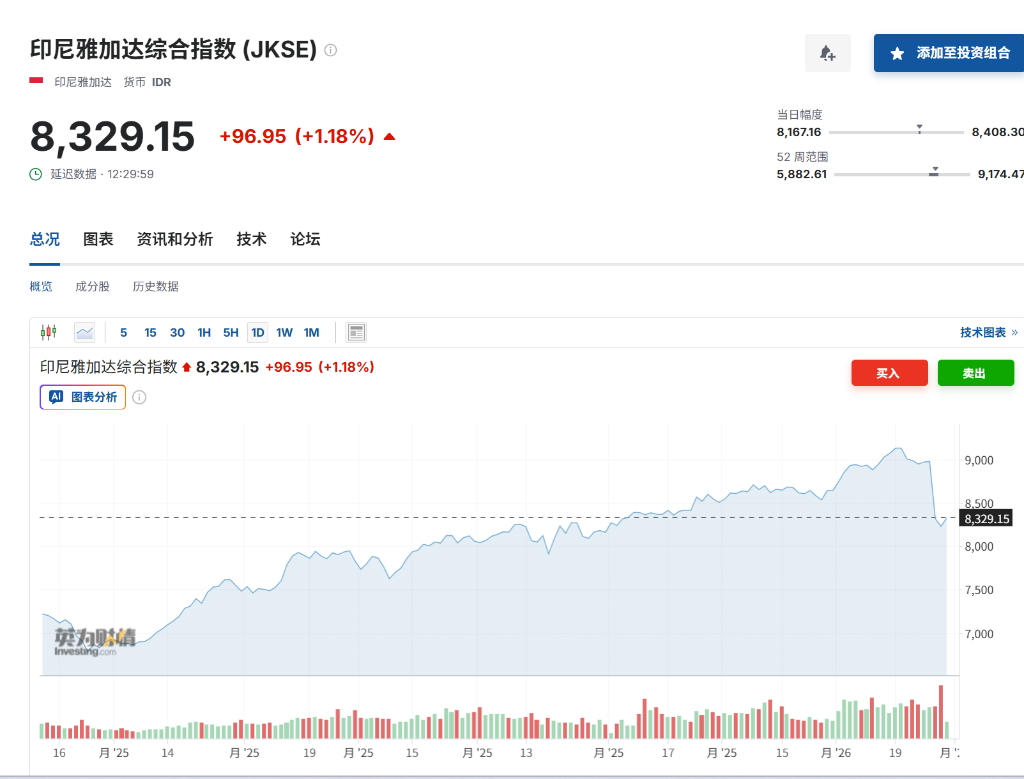
Core Viewpoint - Indonesia's stock market experienced extreme volatility starting January 28, 2026, leading to a significant market crash, with the Jakarta Composite Index (JKSE) dropping nearly 16% over two days, marking the largest decline since the 1998 Asian financial crisis [1][2][4]. Group 1: Market Performance - The Jakarta Composite Index fell by 7.35% on January 28 and continued to decline, triggering trading halts due to a maximum drop of 10% on January 29 [1][3]. - The total market capitalization of the Indonesian stock market decreased from 16,244 trillion IDR to 15,046 trillion IDR, a reduction of 7.37%, equivalent to over 800 million USD [4]. - On January 30, the index fell nearly 5%, closing at 7,922 points, with 715 stocks declining and only 65 stocks rising, indicating widespread market pressure across all sectors [1][3]. Group 2: Regulatory Changes - Following the market crash, key figures in Indonesia's financial regulatory bodies resigned, including the CEO of the Indonesia Stock Exchange and the Chairman of the Financial Services Authority, indicating a significant shift in the regulatory landscape [2][20]. - The Indonesian government announced emergency regulatory reforms aimed at addressing the core issues highlighted by MSCI, including increasing the minimum free float requirement for listed companies from 7.5% to 15% [17][18]. Group 3: External Influences - The crash was triggered by a warning from MSCI regarding fundamental investability issues in the Indonesian stock market, which could lead to a downgrade from emerging market status to frontier market status if not addressed by May [9][10][25]. - External macroeconomic factors, including a strong US dollar and declining commodity prices, further exacerbated the situation, leading to increased pressure on the Indonesian rupiah and contributing to foreign capital outflows [13][14][26]. Group 4: Market Sentiment and Future Outlook - The market's reaction to MSCI's warning led to panic selling, with significant foreign capital withdrawal, which is expected to continue unless reforms are effectively implemented [10][26]. - Financial institutions are divided on the effectiveness of the government's measures, with some optimistic about short-term stabilization while others remain cautious due to ongoing uncertainties regarding MSCI's evaluation [22][26].

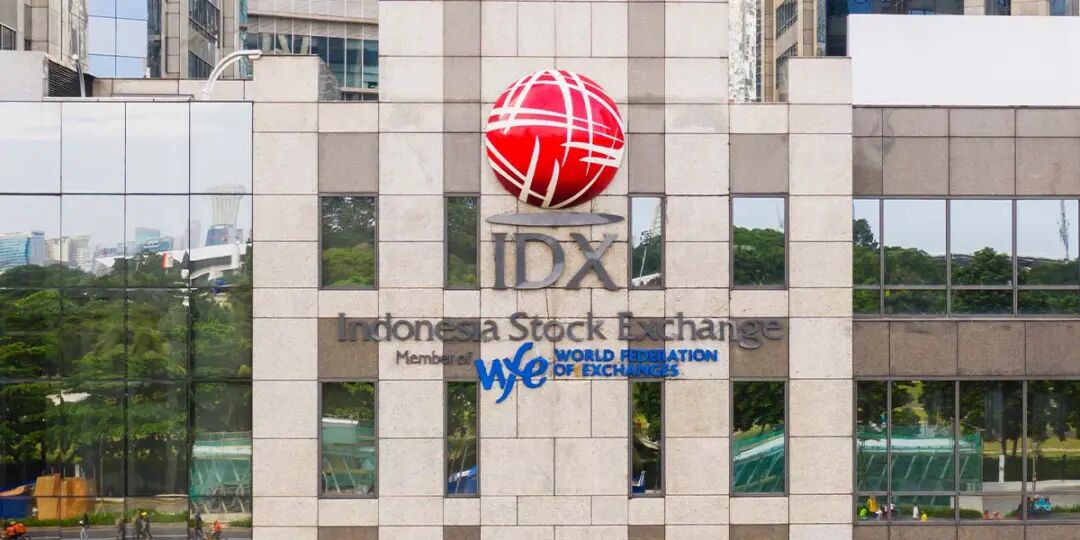
印尼股市“血腥周”:多次崩盘、熔断、交易所CEO“辞职谢罪”
Hua Er Jie Jian Wen· 2026-01-30 06:13
Core Viewpoint - The resignation of Iman Rachman, President of the Indonesia Stock Exchange, is a response to the recent market turmoil triggered by MSCI's downgrade warning, which led to a significant drop in the Jakarta Composite Index and a loss of over $80 billion in market capitalization [1][4]. Group 1: Market Reaction - Following Rachman's resignation, the Indonesian stock market rose by 1.7%, with the cumulative decline over the previous two days narrowing to 6.5% [2]. - The Jakarta Composite Index experienced a total drop of 16% over two days, marking the most severe decline since the 1998 Asian financial crisis [4][5]. Group 2: MSCI Warning - MSCI's report highlighted "fundamental investability issues" regarding the transparency of equity structures in Indonesian companies, warning that failure to address these issues by May could lead to a downgrade from emerging market status to frontier market [4][5]. - The report raised concerns about low free float ratios of Indonesian stocks, which are largely controlled by a small number of wealthy individuals, leading to market manipulation risks [5]. Group 3: Regulatory Response - In response to the market collapse, the Financial Services Authority of Indonesia announced an increase in the free float requirement for listed companies to 15%, effective next month [6]. - The government is accelerating reforms aimed at enhancing governance, improving market liquidity, and attracting new investors to align the Indonesian stock exchange with global standards [6][7]. Group 4: Investor Sentiment - Investor confidence has been shaken, with concerns about the government's ability to meet MSCI's requirements and the potential for significant capital outflows [10][11]. - Despite the turmoil, officials maintain that the country's fundamentals remain strong, citing robust domestic demand and ongoing structural reforms as buffers against external shocks [11].
MSCI突下重拳 ,印尼股市暴跌触发熔断!
Jin Rong Shi Bao· 2026-01-29 03:27
Core Insights - The Jakarta Composite Index in Indonesia experienced a significant drop, falling over 8% and triggering a trading halt due to concerns raised by MSCI regarding the investability of the Indonesian stock market [1][2] - MSCI has decided to suspend certain index adjustments and freeze the addition of new constituents until issues related to concentrated ownership in listed companies are addressed by Indonesian regulators [1] - A potential tightening of the definition of free float shares by MSCI could lead to an estimated outflow of $2 billion in passive foreign investment from the Indonesian stock market [1] Group 1 - The low free float share ratio is a long-standing issue in the Indonesian stock market, with many constituents controlled by a few wealthy individuals, resulting in limited tradable shares and severe market liquidity issues [2] - The performance of the Jakarta Composite Index is susceptible to manipulation by a few high-weight stocks, distorting the true market conditions and increasing the risk of market manipulation [2] - MSCI has warned that if Indonesia does not achieve sufficient progress in transparency by May, it may reassess the market's accessibility, potentially leading to a downgrade in Indonesia's weight in the MSCI Emerging Markets Index [2] Group 2 - The Indonesian stock exchange plans to increase the minimum free float requirement from the current 7.5% to a range of 10%-15%, with a long-term goal of 25%, although no specific timeline has been set [2] - In comparison, the minimum free float requirements in Hong Kong and India are set at 25%, while Thailand's is at 15% [2] - Indonesian financial regulators are preparing stricter rules for small enterprises going public, but the stock exchange emphasizes that more liquidity is needed to absorb the increased supply of shares [2]
美国机构发出警告,印尼股市崩了:触发熔断
Mei Ri Jing Ji Xin Wen· 2026-01-28 11:06
Core Viewpoint - The Indonesian stock market faced a significant decline, with the Jakarta Composite Index (JCI) dropping over 8%, triggering a trading halt due to concerns raised by MSCI regarding the investability of Indonesian stocks [1][2]. Group 1: Market Reaction - The JCI experienced its largest drop in over nine months, with major stocks like PT Bumi Resources, PT Petrosea, and PT Pantai Indah Kapuk Dua falling nearly 15% each [1]. - MSCI announced a suspension of certain index adjustments, including the addition of new constituents, until regulatory concerns about concentrated ownership in listed companies are addressed [1][2]. Group 2: Foreign Investment Concerns - The Indonesian market has been struggling with foreign investor outflows, and MSCI's warning about potential downgrades could further impact investor confidence [3]. - If Indonesia fails to improve information transparency by May, MSCI may reassess the market's accessibility, potentially leading to a reduction in the weight of Indonesian companies in the MSCI Emerging Markets Index or even a downgrade to frontier market status [3]. Group 3: Stock Liquidity Issues - Over 200 stocks in the JCI have a free float ratio below 15%, the lowest among major Asia-Pacific indices, which raises concerns about liquidity and market tracking [4]. - Predictions suggest that if MSCI tightens the definition of free float stocks, Indonesia could face approximately $2 billion in passive foreign capital outflows [4]. Group 4: Regulatory Developments - The Indonesian stock exchange currently requires companies to disclose shareholders with over 5% ownership, and MSCI is utilizing new data sources to better calculate true free float ratios [5]. - To alleviate market concerns, Indonesian regulators plan to increase the minimum free float requirement from 7.5% to a range of 10%-15%, with a long-term goal of 25%, although no specific timeline has been set [5].
美国机构发出警告,印尼股市崩了:触发熔断!
Mei Ri Jing Ji Xin Wen· 2026-01-28 10:24
Core Viewpoint - The Indonesian stock market experienced a significant drop, with the Jakarta Composite Index (JCI) falling over 8%, triggering a trading halt due to concerns raised by MSCI regarding the investability of Indonesian stocks [1][2]. Group 1: Market Reaction - The JCI recorded its largest decline in over nine months, with stocks like PT Bumi Resources, PT Petrosea, and PT Pantai Indah Kapuk Dua dropping nearly 15% each, which were expected to be included in the MSCI index review next month [1]. - Prior to the drop, the JCI had only increased by 2.7% year-to-date, lagging behind the MSCI ASEAN Index, which rose by 5.3% [5]. Group 2: MSCI's Concerns - MSCI announced a suspension of certain index adjustments due to "fundamental investability issues" and investor concerns about potential price manipulation [2][3]. - MSCI warned that if Indonesia does not improve information transparency by May, it may reassess the market's accessibility status, potentially leading to a reduction in the weight of Indonesian companies in the MSCI Emerging Markets Index or even a downgrade to frontier market status [4]. Group 3: Foreign Investment Impact - Global investors net sold $192 million of Indonesian local stocks, ending a streak of 16 weeks of net inflows, indicating a decline in foreign participation in the Indonesian market [6]. - Analysts predict that if MSCI tightens the definition of free float shares, the Indonesian stock market could face approximately $2 billion in outflows from passive foreign investments [6]. Group 4: Free Float Share Issues - Over 200 stocks in the JCI have a free float ratio below 15%, the lowest among major Asia-Pacific indices, complicating the tracking of the index [6]. - MSCI has expressed concerns about the difficulty in defining strategic shareholders due to the complex and opaque business relationships in Indonesian companies [7]. Group 5: Regulatory Responses - Indonesian regulators plan to increase the minimum free float requirement from the current 7.5% to between 10% and 15%, with a long-term goal of 25%, although no specific timeline has been set [7]. - The Indonesian financial regulatory authority is also preparing stricter rules for small company listings to enhance market transparency and liquidity [7].
