
新型储能产业发展

Search documents
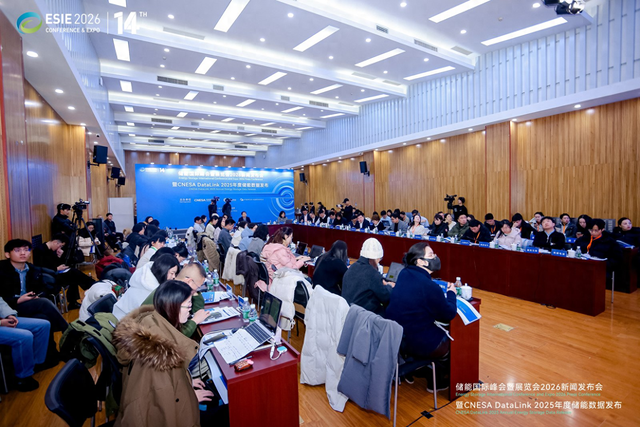
2025年度CNESA储能数据发布 新型储能实现跨越式增长
Huan Qiu Wang· 2026-01-26 10:11
Core Insights - The new energy storage industry in China is experiencing significant growth, with a cumulative installed capacity of 213.3 GW by the end of 2025, representing a 54% year-on-year increase [3] - The cumulative installed capacity of new energy storage reached 144.7 GW, marking an 85% year-on-year growth, with the addition of over 100 GW for the first time [3] - The market is shifting from user-side applications to independent storage, with independent storage now accounting for 58% of the total [3] Industry Growth - By the end of 2025, new energy storage in China is expected to have an installed capacity of 66.43 GW and an energy scale of 189.48 GWh, with power and energy scales growing by 52% and 73% respectively [3] - The top 10 provinces account for nearly 90% of the installed capacity, with Inner Mongolia leading in both energy and power installations, surpassing California to become the world's top province [3] Policy Developments - In 2025, 869 new policies related to energy storage were released, a 13% increase year-on-year, indicating a high level of activity in policy development [5] - The "14th Five-Year Plan" aims for a total installed capacity of over 91.6 GW, with most provinces already meeting their targets [5] - The introduction of market-oriented reforms in electricity pricing is expected to drive commercial energy storage towards market participation [5] Future Outlook - The "15th Five-Year Plan" anticipates that new energy storage will exceed 370 GW, driven by market demand and the expansion of application scenarios [7] - The average duration of new energy storage installations is projected to increase from 2.58 hours in 2025 to 3.47 hours by 2030, reflecting advancements in technology and growing market demand for long-duration storage [7] - The revenue model for energy storage is expected to evolve, with energy arbitrage becoming the dominant revenue source as market conditions change [7]

以应用扩容,驱动广东新型储能产业价值转变丨能源之声
2 1 Shi Ji Jing Ji Bao Dao· 2025-11-28 12:05
Core Viewpoint - The article emphasizes the strategic importance of developing new energy storage systems in Guangdong Province, highlighting the need for market demand expansion and optimization of the domestic value chain to address supply-demand imbalances in the industry [1][2]. Group 1: Current State of the New Energy Storage Industry in Guangdong - Guangdong Province is experiencing rapid growth in its new energy storage industry, with projected revenues of approximately 400 billion yuan in 2024 and a 114% increase in installed capacity [3][4]. - Despite the growth, there is a significant mismatch between supply expansion and market absorption, as evidenced by an 8.68% decline in actual utilization hours of connected projects [3][5]. - The province has a complete industrial chain for energy storage, with significant contributions from lithium battery exports, which reached 16.48 billion USD in the first ten months of the year, accounting for 26.4% of the national total [3][4]. Group 2: Challenges Facing the Industry - The new energy storage industry is facing issues such as intense competition and unclear profit models, necessitating measures to enhance market demand and optimize the value chain [2][6]. - The local absorption capacity for energy storage is insufficient, with only 3.52 GW of installed capacity projected for 2024, ranking ninth nationally and indicating a significant gap in market demand [5][6]. - External trade friction and increased compliance requirements in foreign markets are adding pressure to the supply side, with a projected 10.5% decrease in lithium-ion battery exports to Europe in 2024 [6][7]. Group 3: Recommendations for Industry Development - To address the supply-demand mismatch, the industry should focus on diversifying and scaling application scenarios, enhancing market mechanisms to stabilize long-term revenue expectations, and promoting technological innovation [12][13]. - The establishment of a sustainable business model is crucial, which includes expanding the participation of energy storage in the electricity market and developing a multi-dimensional revenue model [13][14]. - There is a need to enhance the quality and safety of supply through technological advancements and the establishment of high-standard regulatory frameworks [15][16]. Group 4: Future Outlook - The new energy storage industry in Guangdong is at a critical transition point from scale expansion to quality and efficiency improvement, requiring collaborative efforts from government, enterprises, and research institutions [18]. - By leveraging internal demand and optimizing regional collaboration, Guangdong can transform its manufacturing advantages into sustainable market competitiveness, providing a replicable model for the national energy storage industry [18].