新型储能发展

Search documents
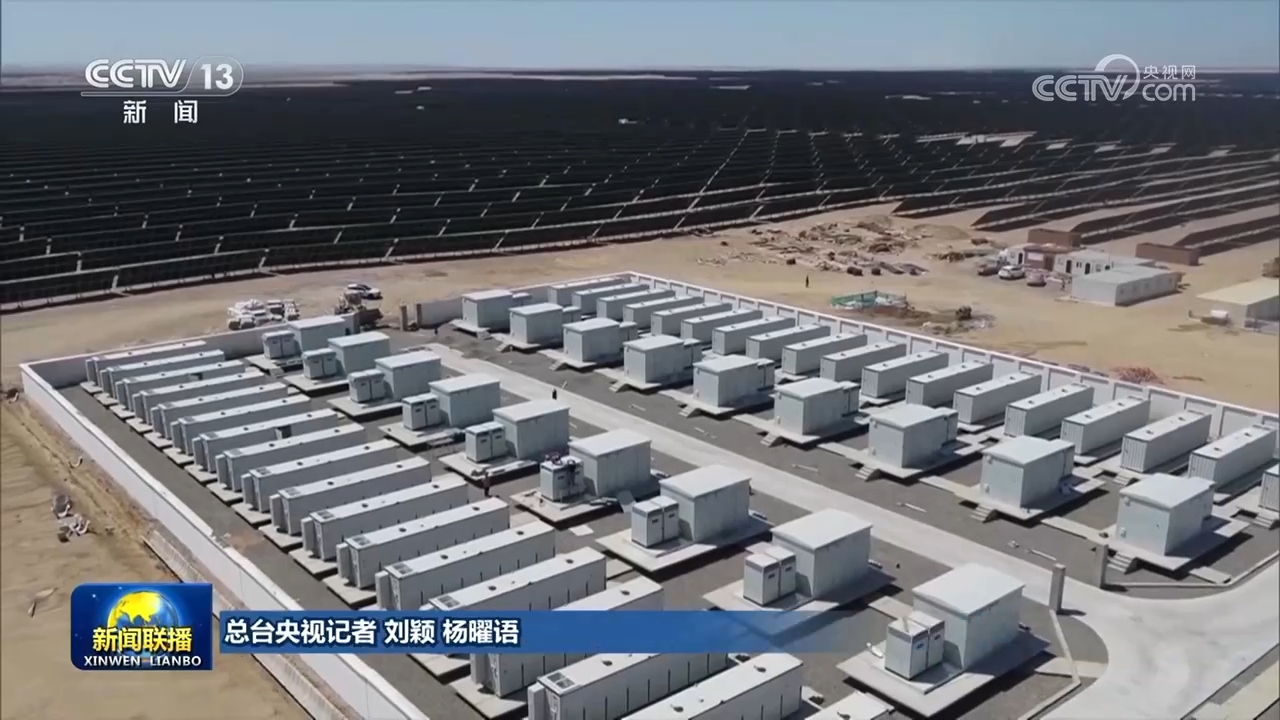
截至2025年底我国新型储能装机比“十三五”末增长超40倍
Yang Shi Wang· 2026-01-30 12:12
Core Insights - China's new energy storage capacity is expected to grow by 84% by the end of 2025 compared to the end of 2024, and over 40 times compared to the end of the 13th Five-Year Plan, indicating a leap in development [1] Regional Analysis - The North China region has the largest operational new energy storage capacity, accounting for 32.5% of the national total. The past year has seen North and Northwest China as the main growth areas for new energy storage [3] Development Trends - There is a clear trend towards larger-scale new energy storage projects, with installations of 100,000 kilowatts and above expected to account for 72% of total capacity by the end of 2025. The utilization level of new energy storage is also improving, with an expected equivalent utilization hours of 1,195 hours in 2025, an increase of nearly 300 hours from 2024. This indicates a strengthening role of new energy storage in promoting renewable energy development and enhancing power supply stability [4]

183GWh!国家能源局公布2025储能数据
行家说储能· 2026-01-30 04:06
Core Viewpoint - The National Energy Administration held a press conference discussing the energy situation in 2025, focusing on energy supply during peak winter, the development of new energy storage, and the national electricity market transactions [2]. Energy Storage Development - By the end of 2025, the cumulative installed capacity of new energy storage will reach 136 million kilowatts (351 GWh), representing an 84% increase from the end of 2024 and over 40 times growth compared to the end of the 13th Five-Year Plan [3][6]. - The average storage duration will increase to 2.58 hours, up by 0.30 hours from the end of 2024 [3]. Regional Analysis - The North China region has the largest share of installed new energy storage capacity at 32.5%, followed by Northwest (28.2%) and East China (14.4%) [9]. - In the past year, North and Northwest China were the main growth areas for new energy storage, contributing 35.2% and 31.6% of the new installations, respectively [9]. Provincial Insights - Rapid development of new energy storage is observed in Xinjiang, Inner Mongolia, Yunnan, Hebei, and Shandong, with new installations of 1,023 MW, 1,003 MW, 613 MW, 569 MW, and 404 MW, respectively [11]. - The top three provinces by cumulative installed capacity are Inner Mongolia (2,026 MW), Xinjiang (1,880 MW), and Shandong (1,121 MW) [11]. Project Scale and Technology - Projects with an installed capacity of over 100 MW account for 72% of total installations, a 10 percentage point increase from 2024 [11]. - Lithium-ion battery storage remains dominant, comprising 96.1% of the installed capacity, while other technologies like compressed air and flow batteries account for 3.9% [13]. Utilization and Future Plans - The equivalent utilization hours for new energy storage are expected to reach 1,195 hours in 2025, an increase of nearly 300 hours from 2024 [15]. - The National Energy Administration plans to implement a new energy storage development plan and enhance the policy management system to support high-quality development [15]. Electricity Market Transactions - The total electricity market transaction volume is projected to reach 664 billion kilowatt-hours in 2025, a 7.4% year-on-year increase [16]. - Market-based transactions will account for 64% of total electricity consumption, up by 1.3 percentage points [16]. - Cross-provincial and cross-regional transaction volumes reached 1.59 trillion kilowatt-hours, marking an 11.6% year-on-year growth [17]. - Green electricity transactions surged to 328.5 billion kilowatt-hours, a 38.3% increase, with long-term green power agreements (PPA) reaching 60 billion kilowatt-hours [18].

预告丨国家能源局季度例行新闻发布会即将召开
国家能源局· 2026-01-29 09:03
Group 1 - The article discusses the upcoming quarterly press conference by the National Energy Administration scheduled for January 30, 2026, at 10:30 AM, focusing on the national energy situation for 2025, energy supply during peak winter, new energy storage development, and national electricity market transactions [2][3][4] - The National Energy Administration's official WeChat account serves as an important platform for news dissemination, information transparency, and public service [5][6] - The press conference will include a Q&A session for journalists, indicating an interactive approach to sharing information [3][4] Group 2 - The article encourages readers to follow the National Energy Administration's official WeChat account for more energy-related updates, highlighting the importance of staying informed about industry dynamics [8]

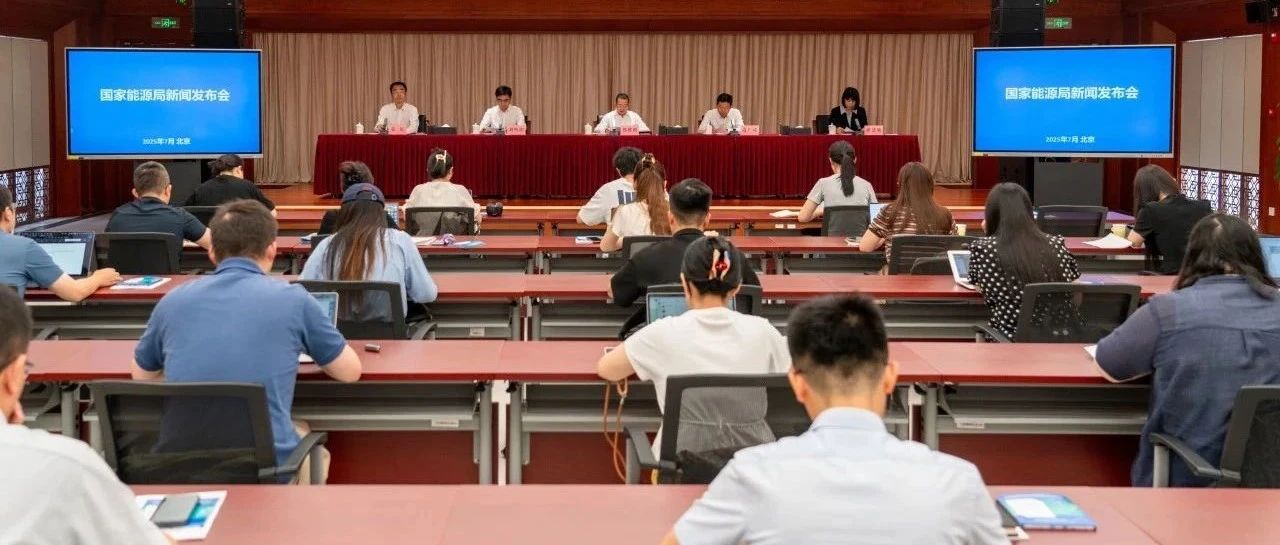
新增54GWh!国家能源局发布储能重要数据
行家说储能· 2025-07-31 04:49
Core Viewpoint - The article discusses the development and growth of new energy storage in China, highlighting significant increases in installed capacity and utilization hours, as well as regional contributions to this growth [1][2][3]. Summary by Sections New Energy Storage Capacity - As of mid-2025, China's new energy storage capacity reached 94.91 million kilowatts (22.2 billion kilowatt-hours), marking a 29% increase from the end of 2024 [2]. - The newly added capacity in the first half of 2025 was 21.15 million kilowatts (54 GWh) compared to the end of 2024 [3]. Regional Distribution - Inner Mongolia and Xinjiang each exceeded 10 million kilowatts in installed capacity, while Shandong, Jiangsu, and Ningxia surpassed 5 million kilowatts [6]. - The North China, Northwest, and Southern regions accounted for over 80% of the new installed capacity, with North China and Northwest regions holding 29.7% and 25.7% respectively [8]. Utilization and Performance - The equivalent utilization hours for new energy storage increased by over 100 hours to approximately 570 hours in the first half of 2025 [13]. - Provinces like Zhejiang, Guangdong, Gansu, and Xinjiang reported utilization hours exceeding 600 hours, indicating improved performance in energy regulation [16]. Contribution to Power Supply - During the high-temperature period in July, new energy storage played a crucial role in ensuring power supply, with peak discharge capacities reaching 7.14 million kilowatts in Jiangsu, 8.04 million kilowatts in Shandong, and 4.74 million kilowatts in Yunnan [17]. Future Outlook - The year 2025 is identified as a pivotal year for the new energy storage sector, coinciding with the conclusion of the 14th Five-Year Plan and the initiation of the 15th Five-Year Plan, emphasizing technological innovation and high-quality development [18].