
新型研发机构

Search documents
强化新型研发机构科技开放合作职能 推动产业跃升
Xin Lang Cai Jing· 2025-12-30 20:11
Core Viewpoint - The deepening of technological open cooperation is essential for reshaping the global innovation landscape and enhancing the overall effectiveness of national innovation systems [1][2][3] Group 1: Importance of Technological Open Cooperation - The urgency to reconstruct global innovation and supply chains is driven by the fragmented nature of global technology governance [2] - High-level technological self-reliance is crucial for enhancing independent innovation capabilities and mastering strategic initiatives [3] - The uneven regional development of innovation in China necessitates breaking down barriers to promote the efficient flow of innovative elements across regions [3] Group 2: Role of New R&D Institutions - New R&D institutions serve as institutional hubs for integrating global technological resources, providing essential support for multinational technological innovation cooperation [4] - They facilitate the cross-border flow of innovative elements by establishing integrated talent service systems and offering professional services for technology transfer [5] - These institutions are becoming core forces in enhancing China's international industrial competitiveness by identifying key technologies and integrating innovations [6] Group 3: Strategies for Enhancing R&D Institutions - Building a collaborative network for new R&D institutions across regions is essential to promote the flow of advantageous research resources [7] - Establishing new models and mechanisms for international cooperation, such as cross-border R&D service procurement, is necessary to broaden innovation resource channels [8] - Enhancing the global positioning of new R&D institutions through the establishment of international cooperation departments and advisory committees will strengthen their role in the global innovation network [9] Group 4: Management and Evaluation Systems - Developing a multi-dimensional evaluation system for international scientific cooperation is crucial to encourage participation in high-level international collaborations [10] - Implementing secure management for cross-border research data and establishing a dynamic monitoring mechanism for research risks will support global R&D activities [10]
以智提质 攀高逐新
Guang Xi Ri Bao· 2025-12-20 02:31
Core Viewpoint - The establishment and growth of new research and development institutions in Guangxi have significantly contributed to innovation and economic development, with a focus on various key industries such as artificial intelligence, new materials, and biomedicine [4][5][6]. Group 1: Overview of New R&D Institutions - Guangxi has recognized 46 new R&D institutions, which are involved in key industries including artificial intelligence, non-ferrous metals, and biomedicine [4][5]. - The total number of R&D personnel in these institutions reached 7,037 by the end of 2024, with 1,568 holding senior titles and 190 having doctoral degrees [5]. - In 2024, the internal R&D expenditure of these institutions was approximately 1.96 billion, with total revenue around 23.3 billion [5]. Group 2: Characteristics and Structure - New R&D institutions are characterized by flexible mechanisms, diversified investment sources, and a clear focus on technology transfer [5][6]. - The majority of these institutions (91.3%) are enterprise-led, highlighting the role of companies as key players in innovation [5][6]. - The hiring mechanisms are flexible, with compensation linked to research outcomes, which enhances innovation motivation [6]. Group 3: R&D Investment and Output - Many new R&D institutions allocate over 30% of their total revenue to R&D, with some like Guangxi Precision Medicine Technology Co., Ltd. investing 114% of their revenue in R&D [6]. - In 2024, the total revenue of new R&D institutions was 23.285 billion, with technology-driven income accounting for 9.424 billion, representing 40.47% of total revenue [6]. Group 4: Achievements and Impact - In 2024, these institutions undertook 24 national and 125 regional research projects, receiving 707 awards and participating in the formulation of 648 national/industry standards [7]. - They achieved 561 technology transfers, generating approximately 12 billion in transfer income [7]. - For instance, Beihai Shiji Information Technology Co., Ltd. reported a technology transfer income of 180.68 million, accounting for 82.57% of its annual revenue [7]. Group 5: Case Studies of Successful Innovations - Guangxi Huanshi Saier Biotechnology Co., Ltd. successfully developed the first batch of Pakistani Nili-Ravi buffalo embryos, reducing the breeding cycle from 12 years to 28 months [9]. - Guangxi Minglei Weisheng Pharmaceutical Co., Ltd. created the first oral vitamin K1 drops for newborns, addressing a significant medical gap in the country [10].

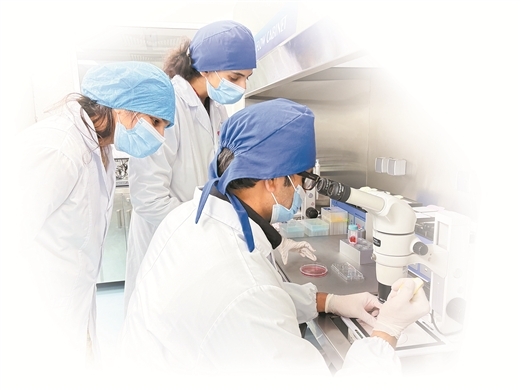
东营市正加快构建“151”科技创新体系
Qi Lu Wan Bao Wang· 2025-10-15 15:34
Core Viewpoint - Dongying City is enhancing its technological innovation platform to support high-quality development through strategic deployment and systemic upgrades in various innovation areas [1][7]. Group 1: Strategic Technology Layout - Dongying City is accelerating the construction of a "151" technology innovation system, establishing major innovation platforms such as the National Saline-Alkali Land Technology Innovation Center and the Heavy Oil National Key Laboratory Carbon Neutrality Joint Research Institute [2]. - The city has formed a three-tier laboratory layout (national, provincial, and municipal) to optimize the allocation of technological resources, achieving a breakthrough with the establishment of a national key laboratory for shale oil and gas [2]. - The restructuring of provincial and municipal laboratories has led to an increase in the proportion of enterprises leading research activities to 81.8%, with 46.37% of large-scale industrial enterprises engaged in R&D [2]. Group 2: Technology Transfer and Innovation Ecosystem - Dongying City is addressing technology transfer challenges by building a comprehensive ecosystem that connects concept validation, pilot testing, and industrial application [3]. - The city has established 5 provincial and 9 municipal pilot testing bases across key sectors, with 27 pilot projects implemented and 9 successfully transferred to industry [3]. - The various pilot bases have provided 141 testing services to enterprises, generating over 36 million yuan in technical service revenue [3]. Group 3: Incubator Development - The recent revision of the "Management Measures for Technology-based Enterprise Incubators" aims to enhance the quality of incubators, focusing on industrial innovation and standardization [4]. - Dongying City has built 53 incubators at various levels, with a total incubation area exceeding 600,000 square meters and 1,836 enterprises currently incubated [4]. - The city plans to elevate existing incubators to meet new standards and foster a reverse incubation model driven by industry demand [5]. Group 4: Market-oriented R&D Institutions - Dongying City is promoting the development of new-type R&D institutions as part of its technological reform, with 16 provincial and 10 municipal institutions established [6]. - These institutions operate under a governance model that emphasizes shared benefits and risks, leading to the incubation of 572 enterprises and the acquisition of over 700 patents [6]. - The city aims to enhance the self-development capabilities of these institutions through market-oriented reforms and collaborative problem-solving mechanisms [6].
领受综改新任务,深圳官宣一批“科创新政”
Di Yi Cai Jing· 2025-06-26 14:33
Core Viewpoint - Shenzhen is accelerating the establishment of a corporate R&D reserve fund system and introducing support measures for high-growth innovative enterprises as part of a broader reform initiative to enhance its status as a technology innovation hub [1] Group 1: Strengthening Corporate R&D - In 2024, Shenzhen's corporate R&D investment is projected to reach 208.67 billion yuan, accounting for 93.3% of the total social R&D investment, the highest among Chinese cities [2] - The city aims to maintain corporate R&D investment at around 95% and will implement a support plan for high-growth innovative enterprises [2] - A funding mechanism for corporate R&D expenses will be established, providing post-funding support based on the previous year's R&D expense increase, with individual enterprise funding ranging from 100,000 yuan to 5 million yuan [2] Group 2: New R&D Institution Management - Shenzhen is exploring a flexible management system for new R&D institutions, which have been pivotal in driving technology transfer and industrial upgrades [3] - The city will implement a "full responsibility system" for top scientists, granting them autonomy to foster a conducive research environment [3] Group 3: Optimizing Innovation Organization Mechanisms - Shenzhen has implemented project manager and owner systems in various fields to address critical technological challenges [4] - The city plans to expand the use of a negative list for R&D funding and allow funds to flow across borders to attract global innovation resources [4] Group 4: Supporting Technology Transfer - Legislative changes will shift the incentive model for technology transfer from "post-conversion rewards" to "pre-empowerment" [6] - A new 2 billion yuan seed fund for technology innovation will be established to encourage long-term investments in hard technology [6] Group 5: Developing Major Innovation Platforms - Shenzhen is building significant technological infrastructures, including the second phase of the National Supercomputing Center and various research institutes [7] - The city aims to strengthen its national laboratories and key experimental facilities to support breakthroughs in artificial intelligence and other cutting-edge fields [7]
科技部:支持深圳规范发展新型研发机构,探索薪酬市场化体制
news flash· 2025-06-12 03:03
Core Viewpoint - The Chinese government is intensifying support for Shenzhen's role in the Guangdong-Hong Kong-Macao Greater Bay Area as an international technology innovation center, focusing on enhancing strategic technological capabilities and fostering major innovation platforms [1] Group 1: Government Initiatives - The Ministry of Science and Technology will increase efforts to support Shenzhen's deep involvement in the Greater Bay Area's international technology innovation center [1] - There is a focus on strengthening strategic technological capabilities by supporting the establishment and utilization of national laboratories and key laboratories [1] - The government aims to improve policies to nurture and grow leading technology enterprises, ensuring they can better undertake significant national scientific tasks [1] Group 2: Innovation and Development - Encouragement and regulation of the development of new research and development institutions will be prioritized [1] - Exploration of market-oriented management systems, including salary structures, is part of the initiative to enhance innovation [1]
科技部副秘书长苗鸿:支持深圳规范发展新型研发机构,探索薪酬市场化体制
news flash· 2025-06-12 02:44
Group 1 - The Ministry of Science and Technology supports Shenzhen in building and utilizing national laboratories and key laboratories for major technological innovation platforms [1] - Policies will be improved to cultivate and strengthen leading technology enterprises to better undertake national scientific and technological major tasks [1] - Encouragement and regulation of the development of new research and development institutions will be implemented, exploring a market-oriented compensation system [1] Group 2 - A comprehensive approach will be taken to advance reforms in education, science and technology, and talent systems, including deepening the management reform of research funding [1] - The implementation of a "budget + negative list" management system will be explored, along with the introduction of a project manager system for research projects, granting managers greater management authority [1] - Reforms in talent cultivation mechanisms will be strengthened, and support mechanisms for the introduction of overseas talent will be improved [1]