无感交互

Search documents
从科技潮玩到生活刚需,杭州智能眼镜解锁“无感体验”
Mei Ri Shang Bao· 2026-01-13 12:40
Core Insights - Smart glasses are transforming the way people interact with the world, moving beyond being seen as "tech toys" to becoming essential tools in various scenarios such as education, navigation, and business [1][3] Industry Overview - The rise of smart glasses is driven by a deep understanding of user pain points and innovative applications across multiple fields, including AR, VR, and MR technologies [1][3] - In Hangzhou, smart glasses have been successfully implemented in various sectors, enhancing efficiency for traffic police and providing immersive cultural experiences for tourists [1][3] Company Developments - Local companies in Hangzhou are actively contributing to the proliferation of smart glasses, with several firms developing products that expand functionality and user experience [2][3] - Rokid Technology's AI smart glasses have achieved significant sales, with 40,000 units sold within five days of launch and a 346% year-on-year increase in sales during the "Double Eleven" shopping festival [2] Product Innovations - Companies are focusing on "seamless experiences" and niche applications, such as Wigain XR glasses that allow users to interact with a virtual desktop through head movements and voice commands [3] - Holoswim AR smart goggles developed by Guangli Technology provide real-time swimming data, showcasing the integration of sports science and AI [3] Market Trends - The application scenarios for smart glasses are expanding, with uses in education, tourism, business, and outdoor activities, making them a bridge between reality and virtual information [3] - The industry is moving towards a "no-sense smart" era, where technology enhances daily life rather than complicating it [3][4] Future Outlook - Hangzhou's strong industrial cluster is pushing smart glasses from being merely functional to being desirable and user-friendly, indicating a shift towards a more integrated smart lifestyle [4]
跨界对话:如果向100年后寄一个时间胶囊,你会寄什么?
Xin Lang Cai Jing· 2025-12-08 09:59
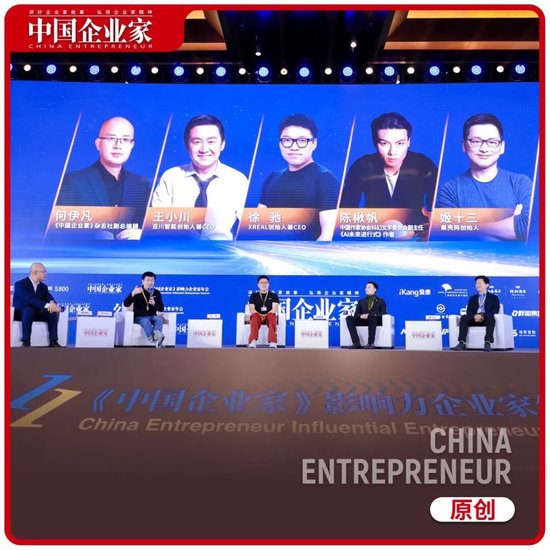
Core Insights - The 2025 Influence Entrepreneur Annual Conference, hosted by China Entrepreneur Magazine, focused on the intersection of AI and the future, featuring discussions among industry leaders and experts [3][34]. Group 1: AI and Human Interaction - The ideal interaction with machines is envisioned as "non-perceptual interaction," where machines can anticipate human judgments rather than merely responding to commands [4][35]. - The acceptance and effective use of AI can alleviate identity anxiety, allowing individuals to better understand themselves [4][35]. - There is a call for regulatory measures to manage AI's potential for addiction, as human appreciation systems are vulnerable to manipulation [4][35][30]. Group 2: Future Predictions - By 2030, the world is expected to enter the era of AGI (Artificial General Intelligence), leading to exponential technological advancements and a deep integration of human and machine capabilities [7][38]. - The future may see the emergence of brain-machine interfaces that allow for direct communication of thoughts to machines, fundamentally changing human interaction [9][41]. - The potential for AI to translate animal languages raises intriguing possibilities for interspecies communication by 2040 [9][41]. Group 3: Education and Adaptation - Current educational approaches must evolve to address the integration of AI in creative processes, focusing on how to use AI to enhance rather than replace human creativity [12][43]. - The historical context of technological advancements shows that humans have a strong capacity for adaptation, even in the face of significant changes like the advent of AGI [13][44]. - The need for individuals to manage multiple AI agents may lead to new psychological challenges, highlighting the urgency for educational reform [12][43]. Group 4: Philosophical and Ethical Considerations - The relationship between humans and machines is evolving, with future generations likely to view machines as integral parts of their existence, reducing identity anxiety [11][42]. - Concerns about AI's integration into military applications emphasize the need for safeguards to prevent potential threats to humanity [30][28]. - The discussion includes the importance of enhancing human cognitive abilities through advanced technologies, rather than solely focusing on making machines smarter [52][53]. Group 5: Legacy and Future Vision - Participants expressed a desire to leave behind artifacts for future generations, such as technological milestones that signify the beginning of the AI era [57][58]. - The concept of creating a "time capsule" of current knowledge and data aims to provide future societies with a reference point for rebuilding or understanding their past [58][58].

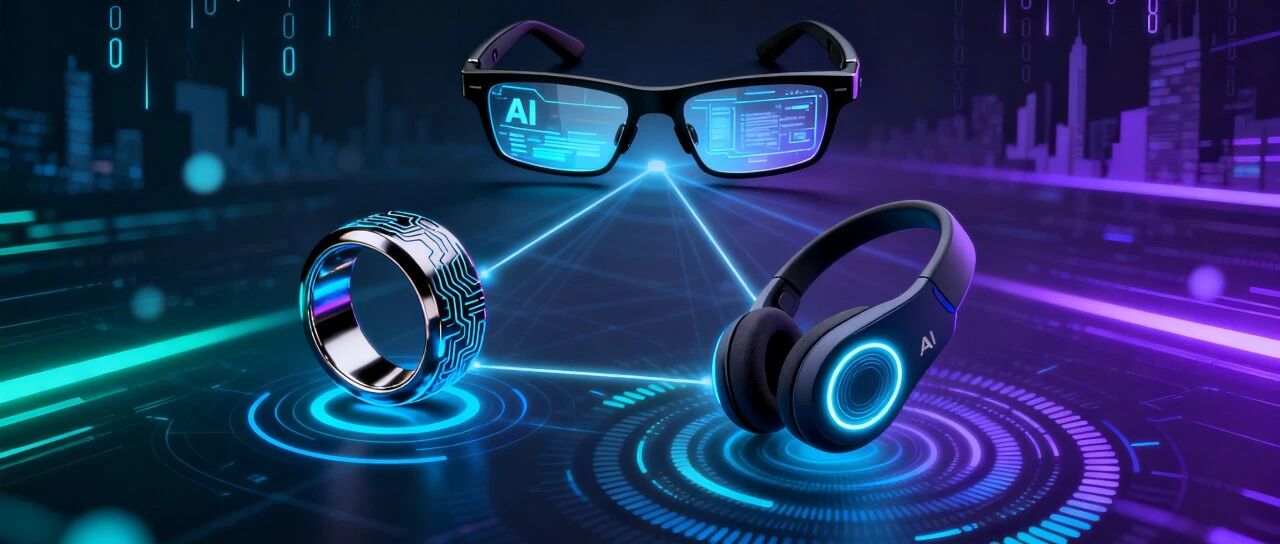
AI 硬件,将带来下一个「苹果」还是昙花一现?
机器之心· 2025-09-13 01:30
Group 1: Core Insights - The article discusses the potential shift from smartphones to AI hardware, suggesting that the next major leap in consumer technology may come from a revolutionary device that could render smartphones obsolete [5][6]. - Major tech companies like Meta, OpenAI, Apple, and Google are positioning themselves in the AI hardware space, with a focus on devices that integrate AI capabilities as foundational infrastructure [8]. Group 2: AI Hardware Landscape - The global wearable technology market is projected to grow from approximately $120 billion in 2023 to around $158 billion in the coming years, indicating a significant expansion in the AI hardware sector [9]. - Various innovative AI hardware products are emerging, including smart glasses, health-monitoring rings, and AI-enabled earbuds, showcasing diverse interaction forms and functionalities [9]. Group 3: Company Strategies - Meta plans to release multiple tiers of AI glasses within the next five years, emphasizing the importance of AI functionality for future cognitive advantages [5]. - OpenAI is collaborating with former Apple designer Jony Ive to launch a next-generation portable device by 2026 that relies solely on cameras and microphones for interaction [5]. - Google is developing new AI assistants and Android XR glasses, aiming to enhance user experience through real-time interaction and improved language understanding [7].