日元低估

Search documents
德银:日元疲软是政策与资金共同的选择,政府短期干预可能性不大
Hua Er Jie Jian Wen· 2026-01-16 13:22
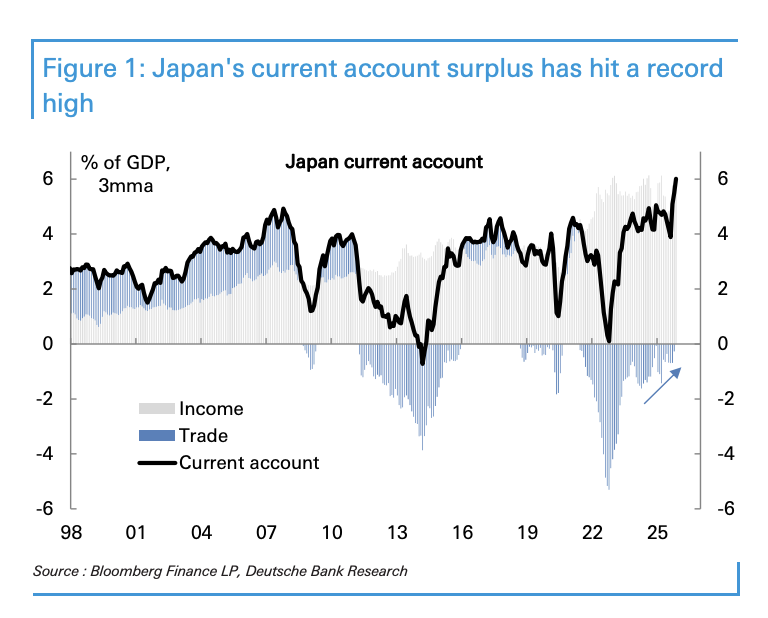
Core Insights - The report from Deutsche Bank indicates that the continued depreciation of the yen is a result of "policy acquiescence" and "capital outflow," with low likelihood of short-term foreign exchange intervention [1][9] Group 1: Economic Indicators - Japan's current account surplus has reached a historical high of 6% of GDP, indicating a significant undervaluation of the yen [1][2] - The strong performance of the basic international balance of payments is evident, with net securities investment turning positive, driven by foreign investors increasing their exposure to Japanese assets due to rising Japanese government bond yields and a strong stock market [4] Group 2: Capital Outflow Trends - Japanese companies and institutional investors continue to show a lack of confidence in the domestic market, with net outward direct investment nearing 2% of GDP, reflecting a historical high [5] - Approximately half of the direct investment income from overseas is reinvested, and a significant portion of the "repatriable" income remains in foreign currency on corporate accounts [5] Group 3: Policy Stance - Despite the evident capital outflow, the strong basic international balance of payments suggests that the market has factored in a significant policy risk premium, with the USD/JPY exchange rate exceeding the implied level from U.S. 10-year Treasury yields by 7-8% [6][9] - Current political conditions indicate that Japanese policymakers prefer to maintain a loose fiscal and monetary policy stance, which is not expected to change in the short term as long as the yen's weakness does not provoke significant domestic voter dissatisfaction [9]