
旱作农业

Search documents
中国北方万年农业考古新发现:燕山南北早期旱作农业历经三阶段
Xin Lang Cai Jing· 2026-01-14 12:27
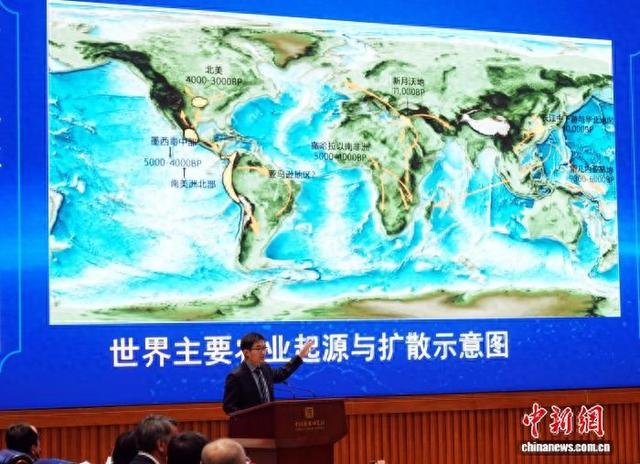
Core Insights - The Chinese Academy of Social Sciences' Key Laboratory of Technological Archaeology and Cultural Heritage Protection announced significant findings regarding the origins of dryland agriculture in northern China, revealing three key stages in its development [1][3]. Group 1: Research Findings - The research team utilized radiocarbon dating and stable isotope analysis to identify critical time nodes in the development of dryland agriculture, which is essential for understanding the origins of agriculture and civilization [1][3]. - The first stage identified at the Sitaizhi site in northern Hebei indicates a coexistence of settled life and agricultural origins around 10,000 years ago, suggesting that this region may be a center for the origins of dryland agriculture [4]. - The second stage, evidenced by findings at the Xiliao River sites, shows that by 7,800 to 7,500 years ago, dryland agriculture had formed a stable economic base, with millet comprising about 70% of the diet of early inhabitants [5]. - The third stage, from 6,200 to 5,000 years ago, indicates that millet constituted approximately 80% of the diet in the core area of the Hongshan culture, reflecting the development of agricultural economies that supported population growth and social complexity [5]. Group 2: Laboratory Contributions - The radiocarbon dating laboratory, established in 1965, is the first of its kind in China and has published over 2,700 dating results, contributing significantly to the foundational chronological framework for Chinese archaeology [7]. - The laboratory will continue to focus on important academic issues related to the cultural history of over 10,000 years and the civilization history of over 5,000 years [7].

甘肃民勤:沙漠绿洲里构建从麦粒到面条产业链
Zhong Guo Xin Wen Wang· 2026-01-08 08:45
Group 1 - The core viewpoint of the articles highlights the development of the hand-pulled noodle industry in Minqin County, Gansu Province, which has transformed traditional craftsmanship into a significant employment-boosting and income-generating sector through standardization and branding efforts [1][2] - The hand-pulled noodles, made from high-quality local wheat flour, are characterized by their unique texture and are popular among locals, symbolizing good fortune and longevity, thus becoming a favored gift during festivals [1] - Minqin County has adopted a "cooperative + enterprise" model to promote standardized production and leverage e-commerce platforms for nationwide distribution, contributing to rural revitalization through specialty agricultural products [1] Group 2 - Minqin County has implemented strict water resource management policies, focusing on "water-based production" to enhance water efficiency in dryland agriculture, resulting in a significant increase in wheat yield and water savings [2] - The county has established a comprehensive water-saving control network that integrates various technologies, including precision seeding and drip irrigation, leading to wheat yields exceeding 520 kg per mu with over 45% water savings [2] - To address agricultural technology dissemination challenges, Minqin County has created an integrated mechanism involving research institutions and leading enterprises to promote advanced agricultural practices directly to farmers [2][3] Group 3 - Future plans for Minqin County include expanding the application of water-saving technologies, enhancing agricultural services, and optimizing water and fertilizer management to further increase production and water-saving potential [3] - The county aims to extend its industrial chain by developing deep-processed products like noodles and specialized flour from local high-quality wheat, promoting the integration of primary, secondary, and tertiary industries [3] - By 2025, Minqin County plans to cultivate 78,200 mu of wheat, with 22,000 mu utilizing advanced irrigation techniques, thereby steadily enhancing the supply capacity of quality raw materials [3]