农业起源

Search documents
中国北方万年农业考古新发现:燕山南北早期旱作农业历经三阶段
Xin Lang Cai Jing· 2026-01-14 12:27
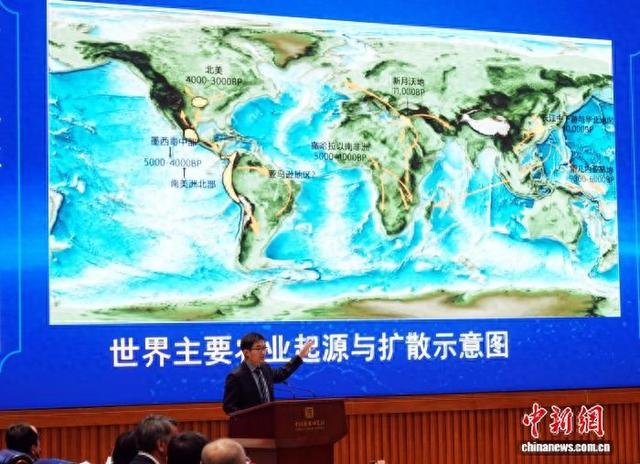
Core Insights - The Chinese Academy of Social Sciences' Key Laboratory of Technological Archaeology and Cultural Heritage Protection announced significant findings regarding the origins of dryland agriculture in northern China, revealing three key stages in its development [1][3]. Group 1: Research Findings - The research team utilized radiocarbon dating and stable isotope analysis to identify critical time nodes in the development of dryland agriculture, which is essential for understanding the origins of agriculture and civilization [1][3]. - The first stage identified at the Sitaizhi site in northern Hebei indicates a coexistence of settled life and agricultural origins around 10,000 years ago, suggesting that this region may be a center for the origins of dryland agriculture [4]. - The second stage, evidenced by findings at the Xiliao River sites, shows that by 7,800 to 7,500 years ago, dryland agriculture had formed a stable economic base, with millet comprising about 70% of the diet of early inhabitants [5]. - The third stage, from 6,200 to 5,000 years ago, indicates that millet constituted approximately 80% of the diet in the core area of the Hongshan culture, reflecting the development of agricultural economies that supported population growth and social complexity [5]. Group 2: Laboratory Contributions - The radiocarbon dating laboratory, established in 1965, is the first of its kind in China and has published over 2,700 dating results, contributing significantly to the foundational chronological framework for Chinese archaeology [7]. - The laboratory will continue to focus on important academic issues related to the cultural history of over 10,000 years and the civilization history of over 5,000 years [7].

沉睡2200年的“地下粮仓”重见天日
Qi Lu Wan Bao· 2025-12-13 10:19
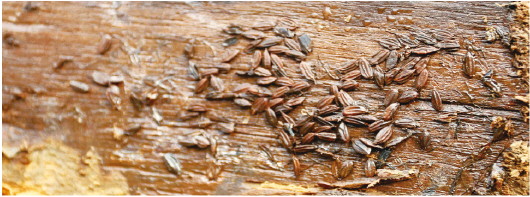
Core Insights - The discovery of well-preserved rice remains in a 2200-year-old tomb in Hubei's Yunmeng Zhengjiahu site represents the earliest and largest instance of grain burial in China, providing insights into ancient agricultural practices and beliefs [2][3] Archaeological Findings - Nearly 100,000 grains of rice from the Warring States period were uncovered, indicating a long-standing tradition of rice cultivation in the Jianghan Plain, dating back to the late Warring States period [3] - The tomb contained not only rice but also remains of various plants such as chestnuts, melons, and jujubes, reflecting the dietary preferences and biodiversity of the region during that era [3] Preservation Techniques - The rice grains were preserved in a waterlogged environment, which acted as a natural preservative, preventing oxidation and damage [5] - Scientific analysis, including carbon isotope studies, is being conducted to trace the irrigation sources and evolutionary paths of the rice varieties found [5] Cultural Significance - The intentional processing of some rice grains before burial suggests a symbolic role in ancient rituals, possibly representing a connection between the living and the afterlife [5] - The findings contribute to understanding the agricultural history and cultural practices of the Warring States period, highlighting the importance of grains in funerary customs [2][5] Broader Implications - The discovery of ancient seeds, like those from Yunmeng, emphasizes the resilience of life and the potential for ancient genetic traits to inform modern agricultural practices [6][8] - The preservation of ancient seeds serves as a vital resource for studying the origins of agriculture and the exchange of civilizations, underscoring the need for biodiversity conservation in agriculture [9]
一份精密的气候与人文互动档案(考古进行时)
Ren Min Ri Bao· 2025-11-28 22:00
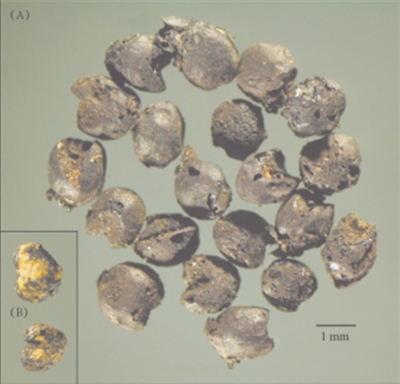
Core Insights - The research at the Xinglong site reveals the transition of early humans from a nomadic lifestyle to a semi-sedentary existence, ultimately leading to low-intensity agricultural production, providing a valuable case study for understanding human adaptation to environmental changes in East Asia [2][6][8] Environmental Evolution - The climate environment in the region has undergone three main phases since the Holocene: 1. A warming and humidification period from approximately 11,700 to 10,000 years ago, where vegetation transitioned from cold grasslands to forest grasslands, creating an ecological foundation for human activities [5] 2. A warm and humid period from 10,000 to 5,000 years ago, particularly between 10,000 and 7,100 years ago, where human exploitation of forest resources inhibited natural expansion [5] 3. A cooling and arid period since 5,000 years ago, leading to vegetation degradation and significant water body shrinkage [5] Agricultural Development - Evidence shows that as early as 8,000 years ago, charred millet and foxtail millet seeds were found at the Xinglong site, indicating that agriculture was not the primary means of survival but rather an experimental or supplementary activity [6][7] - The transition to agriculture was influenced by a warm and humid climate that allowed for the cultivation of certain plants, while human activities actively modified the environment to support these crops [6][8] Societal Changes - The period from 8,150 to 7,100 years ago marked a flourishing of Neolithic culture, with archaeological findings indicating a more stable population and complex social structures, alongside an increase in the number of cultivated crops [7] - The interaction between stable population growth and environmental resource utilization led to deeper impacts on the ecosystem, highlighting the relationship between climate, population stability, and societal evolution [7][8] Historical Significance - The research underscores the importance of the Xinglong site in understanding the independent origins of agriculture in China, pushing back the timeline for the cultivation of millet and foxtail millet, and reinforcing the region's status as a center for agricultural origins [7][8] - The findings provide insights into human adaptability and resilience in the face of climate fluctuations, offering lessons for contemporary agricultural transformations and ecological policies [8]
九千年前的炭化小豆(考古中国)
Ren Min Ri Bao· 2025-10-25 22:12
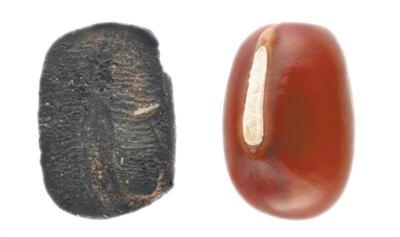
Core Viewpoint - The discovery of carbonized small beans at the Xiaogao site in Shandong, dating back approximately 9,000 years, provides significant evidence of early agricultural practices in East Asia, particularly the integration of legumes into the crop system alongside grains, which predates previous findings in China by 4,000 years [2][3][5]. Group 1: Archaeological Findings - An international team, including researchers from Shandong University and Washington University in St. Louis, published findings in the Proceedings of the National Academy of Sciences, highlighting the importance of the Xiaogao site in understanding the origins of agriculture in northern China [2][3]. - The excavation at Xiaogao involved systematic sampling of 891 flotation samples, leading to the identification of 45 carbonized small beans among 32,000 carbonized plant remains, confirming the presence of a diverse agricultural system [3][4]. - Radiocarbon dating of two small beans revealed ages of 8,985–8,645 cal.BP and 8,032–7,939 cal.BP, marking a significant advancement in the timeline of legume domestication in the region [3][4]. Group 2: Agricultural Practices and Implications - The findings indicate that 9,000 years ago, the lower Yellow River region had already developed an early "grain + legume" agricultural system, showcasing the nutritional and ecological benefits of combining these crops [3][4]. - The presence of small beans alongside other crops like millet and soybeans suggests an early understanding of sustainable agricultural practices, which improved soil fertility and provided essential protein [3][4]. - The research emphasizes the need to reassess the role of food diversity in human civilization and the importance of legumes in sustainable agricultural development [4][6]. Group 3: Collaborative Research Efforts - The success of this research is attributed to international collaboration among scholars from China, the U.S., Japan, and South Korea, who shared archaeological data from over 40 sites and utilized multidisciplinary techniques [6]. - The study of small bean domestication reflects a broader global issue, highlighting the necessity of cross-regional and interdisciplinary cooperation to understand the dynamics of agricultural evolution [6].