时间溢价

Search documents
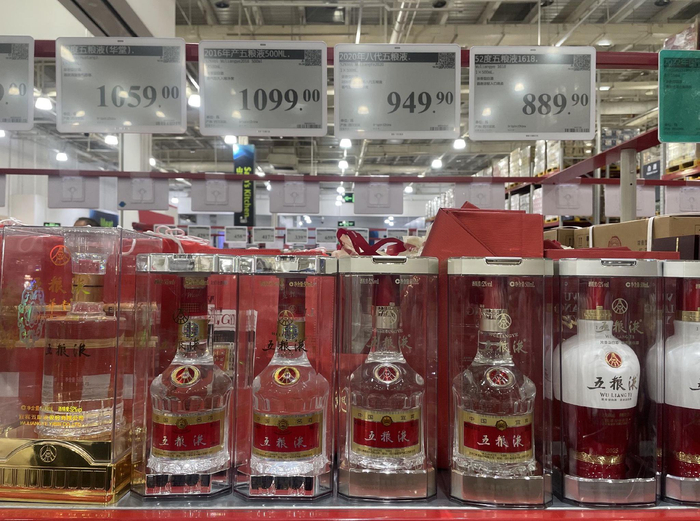
山姆刺破年份酒泡沫
Xin Lang Cai Jing· 2026-02-09 04:18
Core Viewpoint - The recent changes in the display and pricing of vintage liquor at Sam's Club indicate a shift towards transparency and standardization in the retail of aged spirits, challenging traditional distribution models and pricing mechanisms in the liquor industry [1][3][4]. Group 1: Changes in Retail Strategy - Sam's Club has reorganized its liquor shelves to display products by vintage year, marking a significant shift from traditional methods that relied on flavor or series categorization [1]. - The pricing of vintage liquors has become more accessible, allowing consumers to purchase older, higher-value products within similar budget constraints as before [1][4]. - The direct supply model employed by Sam's Club, bypassing traditional multi-tier distribution, reduces price markups and enhances price transparency for consumers [4][5]. Group 2: Impact on Traditional Distribution - The traditional distribution model of vintage liquor, which relied on a closed network of dealers and collectors, is facing unprecedented challenges due to increased price transparency [3][4]. - The shift to a more transparent pricing system is compressing profit margins for traditional distributors, as consumers can easily compare prices online [4][5]. - The emergence of new sales channels, such as direct partnerships between online platforms and liquor manufacturers, is further disrupting the traditional distribution landscape [5]. Group 3: Market Dynamics and Consumer Behavior - The overall liquor market is experiencing a downturn, with a significant increase in inventory turnover days and many companies facing price inversions [7]. - The demand for high-end liquor, particularly in business settings, has sharply declined, impacting sales volumes for brands like Moutai and Wuliangye [8]. - Despite the challenges, the vintage liquor market is still expanding, with projections indicating growth from 628 billion yuan in 2019 to 1,285 billion yuan in 2023 [10]. Group 4: Consumer Preferences and Market Trends - The preference for sauce-flavored liquor is dominant in the vintage market, with 43% of consumers favoring this type over others [11]. - Liquors produced after 2000 are the most popular among consumers, reflecting a balance between flavor enhancement and affordability [11]. - The lack of a unified and transparent certification system for vintage liquor remains a fundamental challenge, hindering the establishment of a stable valuation system in the market [12].