显绩与潜绩

Search documents
校准政绩观的民生坐标 ——“树立和践行正确政绩观”系列评
Xin Lang Cai Jing· 2026-02-26 04:14
校准政绩观的民生坐标,最终要落到真抓实干的行动上。《通知》明确要求"坚持民生为大,为群众多 办实事,让群众可感可及"。学习教育不能仅仅停留在"学"的层面,而要体现在解决实际问题的实效 中。比如,针对群众的办事需求,能不能做到"数据多跑路、群众少跑腿"?针对青年群体的发展需求, 能不能及时拿出切实可行的政策?针对农村老人的养老需求,能不能把养老服务点建到群众家门口?这 些都是关乎群众切身利益的"大事",也是检验政绩观是否端正的"试金石"。此次学习教育不分批次、不 划阶段,强调"边查边改、立行立改",就是要避免形式主义的"花架子",让党员干部在办实事、解民忧 的过程中深化对正确政绩观的理解,让群众切实感受到新变化、新气象。 "政声人去后,民意闲谈中。"推动党员干部树立和践行正确政绩观,就是要让"为民造福"成为每一位党 员干部的自觉追求,让每一项政策的制定、每一个项目的实施都能问需于民、问计于民、问效于民。 把"群众满意"作为最高追求,把"民生改善"作为最大政绩,我们就一定能在"十五五"新征程上创造出更 多经得起实践、人民、历史检验的实绩,让中国式现代化建设成果更多更公平地惠及全体人民。(张智 斌) 编辑:韩睿 近 ...


显绩与潜绩
Xin Lang Cai Jing· 2026-01-11 18:13
Core Viewpoint - The articles emphasize the importance of balancing "visible achievements" and "potential achievements" in governance, highlighting that both are essential for sustainable development and public welfare [1][2][3] Group 1: Relationship Between Visible and Potential Achievements - Visible achievements are likened to the exterior of a building, representing immediate development results that address public concerns and showcase industrial growth [1] - Potential achievements serve as the foundation for long-term development, crucial for ensuring stability and sustainability in governance [1] - The articles argue that both types of achievements are interdependent; without a solid foundation of potential achievements, visible achievements may lack substance [1] Group 2: Misconceptions Among Officials - Some officials mistakenly oppose visible and potential achievements, focusing on short-term, attention-grabbing projects while neglecting long-term foundational work [2] - This short-sighted approach, driven by a weakened sense of party discipline and a lack of foresight, ultimately harms public interests and hinders long-term development [2] Group 3: Strategies for Balancing Achievements - To effectively balance visible and potential achievements, a correct performance evaluation system must be established, prioritizing long-term benefits over short-term metrics [3] - There is a need to enhance the recognition of officials who focus on foundational work, ensuring that those who invest in potential achievements are supported and encouraged [3] - Encouraging a mindset of continuous effort across different governance terms can help transform potential achievements into visible results, fostering a mutually beneficial relationship between short-term and long-term goals [3]
甘做铺垫工作 甘抓未成之事(思想纵横)
Ren Min Ri Bao· 2025-12-22 22:27
Group 1 - The core idea emphasizes the importance of long-term planning and foundational work in the context of socialist modernization, highlighting that immediate results should not overshadow the necessity of groundwork for future development [1][3] - There is a tendency to prioritize visible achievements over foundational efforts, leading to neglect of essential reforms and long-term projects, which ultimately undermines sustainable growth and public interest [2][3] - Historical examples illustrate that significant achievements require substantial foundational support, as seen in Xi Jinping's past work in developing strategic plans for cities like Xiamen and Fuzhou, which laid the groundwork for future progress [3] Group 2 - To foster a culture of foundational work, it is essential to establish supportive institutional mechanisms that differentiate between short-term goals and long-term projects, ensuring resources are allocated appropriately [4] - A scientific evaluation system should be developed to assess long-term contributions, integrating these metrics into performance evaluations to encourage those who focus on foundational work rather than just immediate results [4] - The call for a persistent effort in foundational work is framed as a necessary approach for achieving sustainable and impactful results that withstand the test of time and public scrutiny [4]
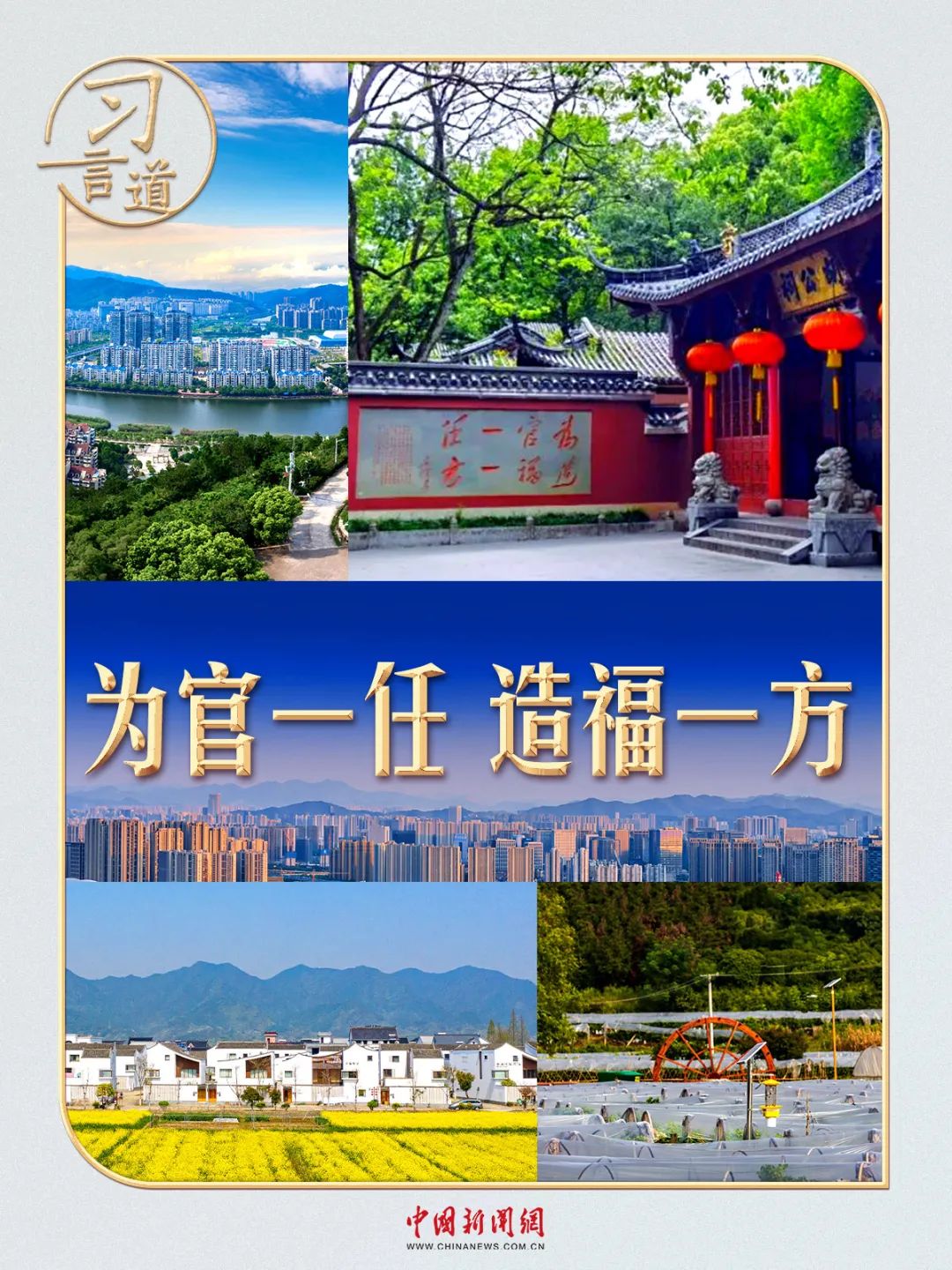
习言道丨这八个字,被习近平当作座右铭
Zhong Guo Xin Wen Wang· 2025-08-14 01:52
Core Viewpoint - The phrase "for official duty, benefit the local people" has been adopted by Xi Jinping as a guiding principle throughout his political career, emphasizing the importance of serving the public and prioritizing their welfare [2][4][5]. Group 1: Historical Context - Xi Jinping first referenced the phrase during his tenure as the Secretary of the Zhejiang Provincial Committee in 2003, highlighting its significance in his governance philosophy [2]. - The phrase is rooted in the legacy of Hu Ze, a renowned official from the Northern Song Dynasty, who exemplified the ideals of public service and integrity [3]. Group 2: Political Philosophy - Since the 18th National Congress, Xi has articulated the need for a correct view of political achievements, focusing on serving the people rather than seeking personal glory [5][6]. - Xi emphasizes that the Communist Party must prioritize the well-being of the people, stating that serving the public is the ultimate measure of success [6][9]. Group 3: Practical Application - Xi has called for a balance between "visible achievements" and "hidden contributions," advocating for long-term benefits over short-term gains [10]. - He has criticized the pursuit of GDP growth at the expense of environmental and social consequences, urging a shift towards sustainable development practices [10].