
普氏野马保护

Search documents
马年说马 | 普氏野马:一个“活化石”的重生之旅
Xin Lang Cai Jing· 2026-02-20 08:19
金蛇逶迤现蛇尾,骏马奔腾见马首。 2026年央视春晚的吉祥物天团——"骐骐""骥骥""驰驰""骋骋",四匹大马又帅又飒!尤其是C位出道 的"骋骋",它的原型可不一般:普氏野马,它是整个马科家族中现存的唯一真正野生马种,堪称"活着 的自然遗产"。 前世今生 普氏野马是地球史上第四纪(又称灵生纪)进化而来的物种,是与我们人类一同出现的物种。它们曾广 泛分布于欧亚大陆中纬度的草原带东部,是草原生态系统的代表性物种。随着人类第一个文明——牧业 文明的兴起及拓展,普氏野马逐渐从草原退缩至欧亚大陆中部的荒漠草原。近代农牧业的迅猛发展,更 迫使它们退居到戈壁荒漠的河流、湖泊及沼泽等隐域环境"苟住发育"。 独特习性 普氏野马与欧洲野马(家马的野生种)属于同一物种的不同亚种(也有人认为它们属于不同物种)。普 氏野马拥有66条染色体,而家马为64条,但两者仍能杂交并繁殖后代(居然还能跨界联名)。欧洲野马 被毛呈鼠灰色,普氏野马则呈黄棕色。普氏野马每年6-7月交配,孕期约11个月,次年5-6月产驹。马驹 出生后1-2小时便能站立行走,哺乳期长达半年以上。 普氏野马生活在开阔的草原及荒漠草原地带,天性机警,擅长奔跑,练就了卓越的避狼 ...


扎根荒原,四十余载守护普氏野马(守望·野生动物保护背后的故事)
Ren Min Ri Bao· 2026-01-09 01:22
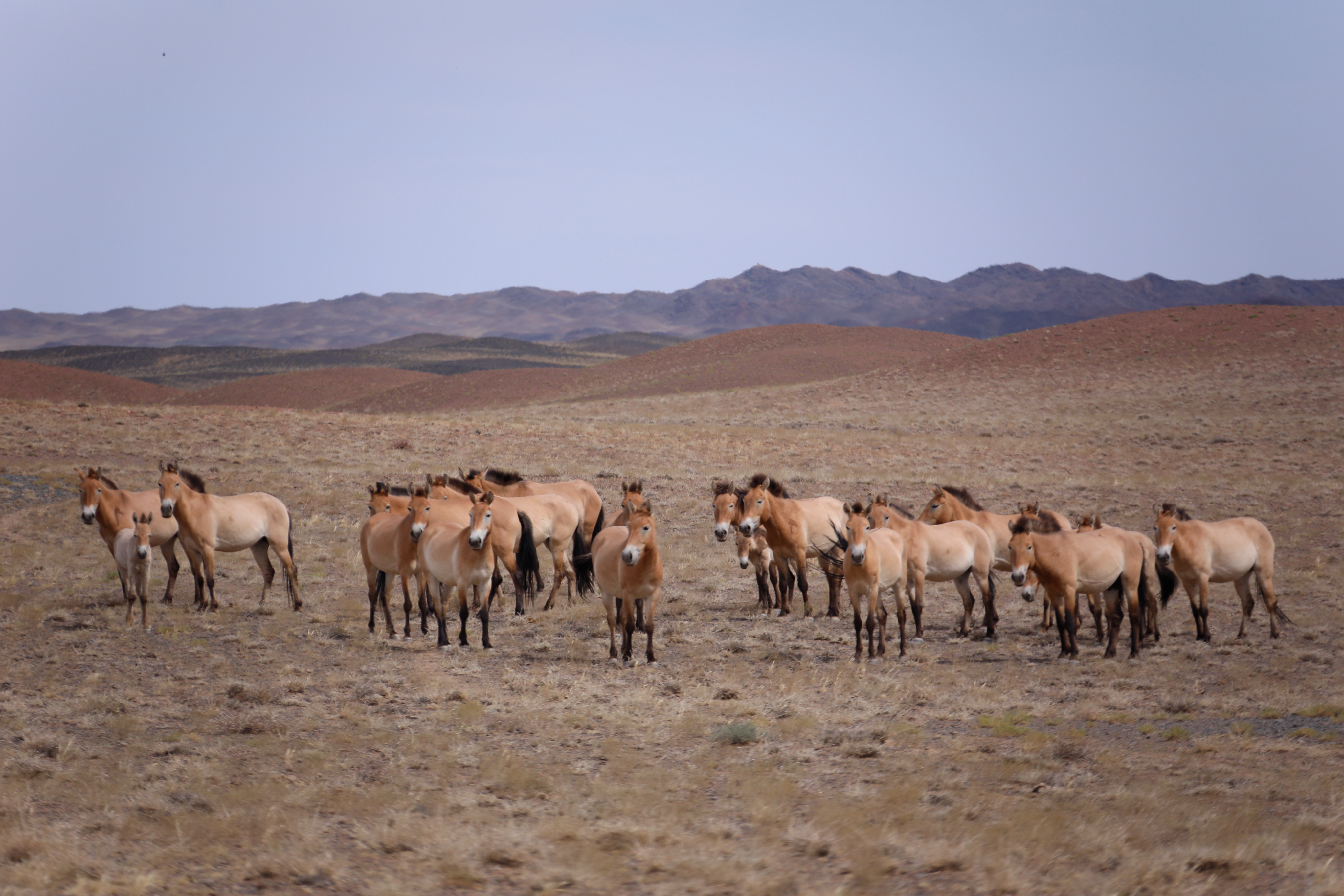
杨建明在照顾普氏野马小马驹。 受访者供图 新疆卡拉麦里山有蹄类野生动物自然保护区的普氏野马。 张赫凡摄 前不久,《2026年春节联欢晚会》吉祥物形象发布,其中"骋骋"的设计原型就是普氏野马。普氏野马是 拥有6000万年进化史的"生物基因活化石",是世界上现存的唯一野生马种。我国新疆准噶尔盆地是普氏 野马的故乡,上世纪70年代,我国宣布国内普氏野马野外绝迹。1985年,"野马返乡"计划启动,普氏野 马再次被引入中国。截至2024年底,我国普氏野马种群数量已突破900匹。日前,人民日报记者采访了 普氏野马保护团队,记录他们扎根荒原、潜心科研,40余年守护荒野"精灵"的故事。 ——编 者 云朵低垂,一群普氏野马奔向远处的地平线,扬起阵阵尘烟。如今,越来越多普氏野马在新疆卡拉麦里 山有蹄类野生动物自然保护区繁衍生息。上世纪70年代,我国宣布国内普氏野马野外绝迹。1985 年,"野马返乡"计划启动,一些普氏野马陆续从海外被引入中国新疆,一场拯救野马的行动拉开帷幕。 经过饲养繁育、野化放归,普氏野马在新疆已经繁衍到了第六代。种群稳步恢复背后,是野马保护者的 不懈努力。他们在实验室、马厩和荒野中潜心研究,默默守护这群荒野" ...

新疆普氏野马保护团队不懈努力、默默奉献—— 扎根荒原,四十余载守护普氏野马(守望·野生动物保护背后的故事)
Ren Min Ri Bao· 2026-01-08 22:53
野马研究所负责人杨建明: "守护野马让我觉得工作特别有价值" 前不久,《2026年春节联欢晚会》吉祥物形象发布,其中"骋骋"的设计原型就是普氏野马。普氏野马是 拥有6000万年进化史的"生物基因活化石",是世界上现存的唯一野生马种。我国新疆准噶尔盆地是普氏 野马的故乡,上世纪70年代,我国宣布国内普氏野马野外绝迹。1985年,"野马返乡"计划启动,普氏野 马再次被引入中国。截至2024年底,我国普氏野马种群数量已突破900匹。日前,本报记者采访了普氏 野马保护团队,记录他们扎根荒原、潜心科研,40余年守护荒野"精灵"的故事。 ——编者 云朵低垂,一群普氏野马奔向远处的地平线,扬起阵阵尘烟。如今,越来越多普氏野马在新疆卡拉麦里 山有蹄类野生动物自然保护区繁衍生息。上世纪70年代,我国宣布国内普氏野马野外绝迹。1985 年,"野马返乡"计划启动,一些普氏野马陆续从海外被引入中国新疆,一场拯救野马的行动拉开帷幕。 经过饲养繁育、野化放归,普氏野马在新疆已经繁衍到了第六代。种群稳步恢复背后,是野马保护者的 不懈努力。他们在实验室、马厩和荒野中潜心研究,默默守护这群荒野"精灵"。 "虽然艰苦,但守护野马让我觉得工作特别 ...
我国普氏野马种群从濒危走向壮大
Ke Ji Ri Bao· 2025-09-26 01:11
新疆卡拉麦里山有蹄类野生动物自然保护区(以下简称"卡山保护区")是国内最大的普氏野马保护 基地。众多专家学者四十年如一日,扎根荒漠腹地,从零开始进行科学研究,充分运用先进技术手段, 助力普氏野马种群恢复。同时,新疆加快推进普氏野马种群扩散和扩大放归试验,与甘肃、宁夏、内蒙 古等地进行跨区域合作,合力推进普氏野马保护。目前,我国普氏野马种群数量已突破900匹,占全球 总量的1/3。 科技助力种群恢复 在天山脚下的昭苏湿地公园,成群的马匹在平缓的河水中奔跑。与这些常见的家马相比,普氏野马 喜欢离群索居,在外形和基因上,二者均有区别。 新疆野马繁殖研究中心工程师薛剑楠告诉记者,普氏野马头大颈粗、全身呈土黄色,耳短小而圆, 无长额毛,鬃毛短而直立,背部中央有一条黑褐色脊线。 普氏野马有66条染色体,比家马多出两条。作为地球上唯一现存的野生马种,普氏野马仍保留着 6000万年前的原始基因图谱,被称为"生物基因的活化石",对生态链修复意义重大。 普氏野马是国家一级保护动物、全球濒危大型野生动物,珍稀程度堪比大熊猫。 普氏野马原产于我国新疆准噶尔盆地和蒙古国干旱荒漠草原地带,由于气候变化、人为干扰、栖息 地碎片化等原因,曾 ...
我国普氏野马总数突破九百匹
Zhong Guo Zi Ran Zi Yuan Bao· 2025-08-27 02:51
Core Viewpoint - The event celebrating the 40th anniversary of the return of the Przewalski's horse in China highlights the successful reintroduction and conservation efforts that have led to a population exceeding 900 individuals, representing about one-third of the global total [3]. Group 1: Conservation Efforts - The "Return of the Wild Horse" program initiated in 1985 involved the introduction of Przewalski's horse, the only existing wild horse species, from overseas to breeding bases in Xinjiang and Gansu [3]. - The Xinjiang Kalamaili Mountain Ungulate Nature Reserve has become a core habitat for the Przewalski's horse, benefiting from unique geographical and ecological advantages [3]. - Scientific protection strategies, habitat optimization, and continuous wild release efforts have contributed to the steady increase in the Przewalski's horse population [3]. Group 2: Technological Integration - The implementation of an integrated monitoring network using drones, satellite collars, and other technologies has enabled precise tracking of the horses' activities and health [3]. - The ecological restoration projects in Xinjiang have created favorable living conditions for the Przewalski's horse [3]. Group 3: International Collaboration - The conservation success has had international implications, with the export of four breeding individuals to Mongolia in 2012 and the release of 12 horses in Inner Mongolia in 2021 [3]. - Plans are in place for the release of 18 horses in the Helan Mountain area in three batches by 2025 [3].
我国普氏野马数量超900匹
Ren Min Ri Bao· 2025-08-10 19:23
Core Insights - The population of Przewalski's horse in China has surpassed 900, accounting for one-third of the global total [1] - Przewalski's horse is the only surviving wild horse species and is classified as a national first-class protected animal and a globally endangered large wild animal [1] Conservation Efforts - In the 1970s, Przewalski's horse was declared extinct in the wild in China, leading to the initiation of the "Return of the Wild Horse" program in 1985, which involved bringing horses back from abroad and establishing breeding bases in Xinjiang and Gansu [1] - The Kalamaili Mountain Ungulate Nature Reserve in Xinjiang has become the core habitat for the breeding and survival of Przewalski's horse due to its unique geographical and ecological advantages [1] Breeding and Release Strategies - Over 40 years, a three-step method has been developed: captive breeding, semi-wild training, and soft release, resulting in a breeding population exceeding 800 horses and 146 horses released in 18 batches [1] - Currently, there are 546 Przewalski's horses in Xinjiang [1] Regional Cooperation - Xinjiang has accelerated the expansion of the Przewalski's horse population and has conducted release trials, sending 41 horses to Mongolia and several provinces in China, including Gansu, Ningxia, and Inner Mongolia [1] - This cross-regional cooperation aims to enhance the protection of Przewalski's horse and provide broader habitats for the species [1]