
智慧居住

Search documents
这些新提法,写入“十五五”规划建议丨四组词汇,为“好房子”画像
Ren Min Ri Bao Hai Wai Ban· 2025-12-09 06:39
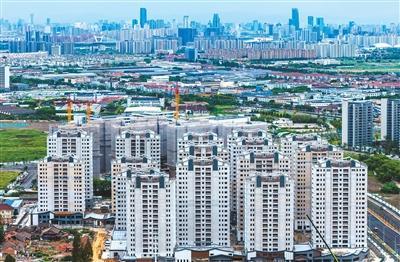
Core Viewpoint - The construction of "good houses" is a significant initiative to adapt to the new stage of housing development in China and to meet the people's expectations for a better life, while also serving as a crucial tool for building a new model of real estate development that effectively stimulates domestic demand and consumption [1][2]. Group 1: Housing Development Trends - The average living space for urban residents in China increased from 7.1 square meters in the 1990s to 41.76 square meters by 2020, with urban households averaging 36.52 square meters [2]. - The housing supply and demand dynamics have shifted from "whether there is housing" to "how good the housing is," reflecting a stronger desire for improved living quality among the populace [2]. Group 2: Market Opportunities - The demand for quality housing translates into significant growth and optimization potential in the market, as housing is a major consumer expenditure that can stimulate related sectors such as home decoration, furniture, and appliances [4]. - The application of new information technologies, construction techniques, and green low-carbon technologies in building "good houses" will drive the transformation of the real estate and construction industries, promoting sustainable and healthy development [4]. Group 3: Characteristics of "Good Houses" - "Good houses" are characterized by four key aspects: safety, comfort, green features, and intelligence [6]. - Safety is prioritized, ensuring that the structural integrity and facilities of the house meet national standards, with measures in place for risk monitoring and prevention [6]. - Comfort involves appropriate spatial dimensions, functional zoning, natural lighting, and ventilation, as well as the use of environmentally friendly materials [7]. - Green features focus on energy efficiency and environmental sustainability throughout the housing lifecycle, utilizing advanced green construction techniques [7]. - Intelligence in housing includes smart control systems that enhance convenience and efficiency for residents [8]. Group 4: Standards and Implementation - The construction of "good houses" requires adherence to high standards, effective design, quality materials, skilled construction, and proper maintenance [9]. - The implementation of the new "Residential Project Standards" since May 1, which includes raising building heights and improving sound insulation, reflects a commitment to meeting residents' needs [9][10]. - The design process must consider diverse regional characteristics and varied housing demands, leveraging data technology to ensure effective product positioning and design [10]. Group 5: Maintenance and Management - Effective maintenance throughout the housing lifecycle is essential, including establishing safety management systems and enhancing property services to address residents' concerns [11].

海尔智家联合5大央企国企发布智慧居住方案
Quan Jing Wang· 2025-11-11 07:05
Core Insights - The article highlights the transition from traditional living to smart living in residential spaces, driven by advanced technology and collaborative efforts among various industry players to enhance user experience in smart homes [1] Group 1: Event Overview - The "Good House Technology Exhibition" was held on November 7 in Beijing, organized by the Ministry of Housing and Urban-Rural Development's Science and Technology and Industrialization Development Center [1] - Haier Smart Home's "Three-Winged Bird" showcased various smart home services and collaborated with five state-owned enterprises to create a national model for smart homes [1] Group 2: Collaborative Models - The "Flexible Space Good House" co-created with China Building Science emphasizes high adaptability of space, catering to different family stages and needs [2] - The "Safe and Happy Home" developed with China Academy of Building Research focuses on improving living comfort through a systematic design framework [3] - The "Cloud Habitat" project with Beijing Housing Security Center aims to maintain optimal indoor temperature and humidity year-round using clean energy [3] - The near-zero carbon house model created with Shougang Group offers a low-carbon living experience through prefabricated steel structure technology [4] - The upcoming "Huafa Zhuhai Bay 128㎡ Model" targets the needs of multi-generational living in Southern China, integrating advanced technology for convenience [5] Group 3: Technological Innovations - The "Flexible Space Good House" features a design that allows for easy transitions between different living scenarios, enhancing the user experience [2] - The "Safe and Happy Home" includes practical solutions like a space-saving refrigerator and energy-efficient water heater to optimize living conditions [3] - The "Cloud Habitat" utilizes Haier's AI system to automatically adjust indoor air quality, ensuring a comfortable living environment [3] - The near-zero carbon house incorporates advanced air systems to improve comfort while promoting sustainability [4] Group 4: Strategic Implications - The collaboration among Haier Smart Home and state-owned enterprises redefines the value system of smart living, integrating technology with infrastructure development [5] - The "eco-partnership model" is expected to enhance living quality and meet public expectations for improved lifestyles [5]

