智能化厨房

Search documents
为了让你吃上现炒,老乡鸡们开始用机器人颠勺了
3 6 Ke· 2025-11-18 01:32
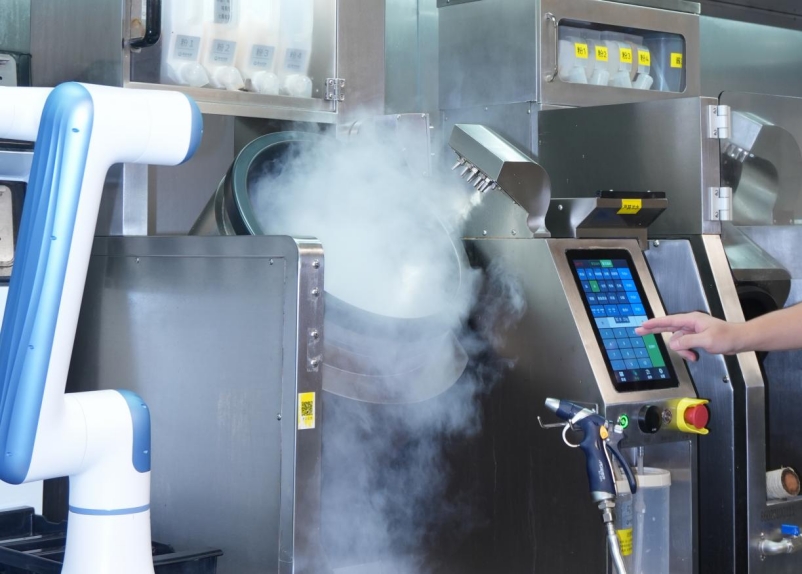
Core Insights - The restaurant industry is experiencing a shift towards automation, particularly with the adoption of cooking robots, as traditional methods face challenges in efficiency and cost control [1][5][10] Group 1: Industry Trends - The recent backlash against pre-prepared meals has led to a significant increase in interest for cooking robots, with inquiries from restaurants rising nearly tenfold in the past month [1] - The evolution of the restaurant industry has moved from reliance on chef skills to a focus on high cost-performance and quality, indicating a need for innovation in food preparation [2][5] - The introduction of cooking robots is seen as a solution to the challenges of maintaining food quality while improving service speed and reducing labor costs [5][10] Group 2: Technological Advancements - Cooking robots can precisely control cooking temperatures and automate processes, which helps maintain the flavor and quality of dishes while reducing human error [5][8] - The technology includes multi-sensor systems and intelligent temperature control algorithms, allowing for real-time adjustments and consistent cooking results [7][10] - Companies like Zhigu Tianchu are providing customized software solutions that enable restaurants to tailor cooking programs to local tastes, enhancing the versatility of robotic cooking [8] Group 3: Cost Efficiency - The cost of a medium-sized cooking robot is approximately 60,000 yuan, with a lifespan of 8-10 years and a monthly operating cost of around 600 yuan, significantly lower than the salary of a human chef [10] - Over an 8-year period, using cooking robots can save restaurants between 680,000 to 1,340,000 yuan in labor costs [10] - The implementation of cooking robots in corporate cafeterias has improved food safety and reduced labor-intensive tasks, addressing the dual challenges of cost and quality in employee meals [11][15] Group 4: Market Adoption - Major companies, including Muyu and Foxconn, are adopting cooking robots to enhance their food service operations, reflecting a broader trend in the industry [1][4] - The integration of cooking robots in large-scale dining settings, such as factory cafeterias, has proven effective in meeting high demand while minimizing food waste by up to 70% [15]


火星人(300894) - 300894火星人投资者关系管理信息20250326
2025-03-26 09:58
Group 1: Product Development and Innovation - The company has a leading product R&D system and team, continuously launching benchmark products through technological iterations, enhancing industry performance standards [2][3] - The newly upgraded X5 Pro integrated stove features the proprietary "Galaxy Platform" technology, offering four-in-one functions and achieving a suction power of 25m³/min and static pressure of 1200Pa, significantly improving oil fume handling efficiency [2][3] - The Q60 steam and bake integrated stove, introduced at the 2025 AWE, utilizes biomimetic whale suction technology, achieving a cruising air volume of 29m³/min and a low noise level of 47 decibels, enhancing user experience [3] Group 2: Market Trends and Strategic Positioning - The integrated stove market is transitioning from scale expansion to high-quality development, driven by technological advancements and evolving consumer demands [4] - The company emphasizes a long-term strategy to address short-term challenges posed by real estate cycles and changing consumer needs, maintaining its leading position in the integrated kitchen appliance industry [4] - Future kitchens will focus on smart, humanized, and health-oriented designs, evolving from single-function spaces to family social centers, with the company aiming to leverage technological innovation to meet these demands [4] Group 3: Investment and Risk Management - The company has invested RMB 198 million in a private equity fund to explore projects aligned with its strategic development, enhancing its business layout and competitive edge [6] - The fund has invested in three projects, including Beijing Xingdong Jiyuan Technology Co., but the company holds a minority stake and views these as financial investments [6] - Investment risks include long recovery periods and potential underperformance due to macroeconomic factors, necessitating close monitoring of fund management and project performance [6]