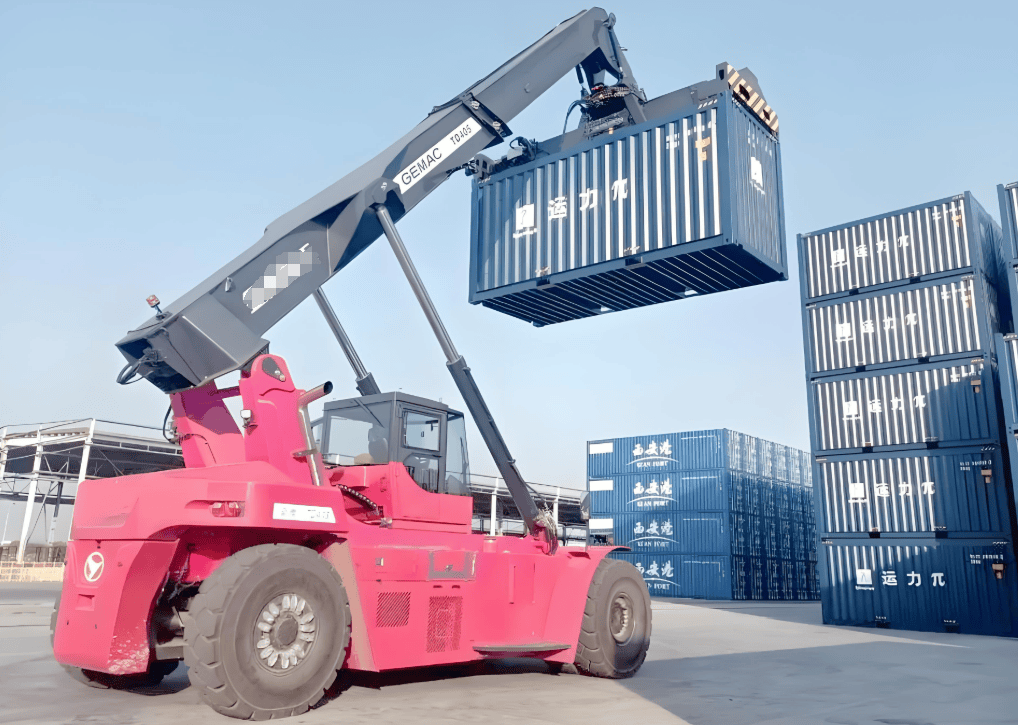
智能化港口作业

Search documents
港口作业车辆安全新篇章:正面吊与堆高机360全景影像AI人车识别预警系统+高清作业记录仪
Sou Hu Cai Jing· 2025-12-27 13:19
Core Viewpoint - The introduction of AI technology, specifically the 360-degree panoramic imaging AI vehicle-person recognition system, significantly enhances safety and efficiency in port logistics operations involving heavy equipment like front lifts and stackers [1][3]. Group 1: Current Status and Safety Issues in Port Logistics - Ports are critical hubs for international logistics, where heavy equipment plays a vital role in operations, necessitating high safety standards [3]. - Human-vehicle accidents frequently occur due to limited visibility, operational complexity, and the high frequency of accidents, which adversely affect operational efficiency [3]. - The integration of AI and panoramic imaging technology is essential to inject new momentum into port operations [3]. Group 2: Working Principle of 360-Degree Panoramic Imaging AI Recognition Technology - The technology combines multiple high-definition cameras to create a real-time panoramic view, enhancing environmental awareness for operators [3]. - The system employs deep learning algorithms to accurately identify people, vehicles, and obstacles, providing timely alerts to improve response times and reduce blind spot accidents [4]. - An alert mechanism is in place to notify operators of potential dangers, effectively lowering the accident rate [4]. Group 3: Importance of Front Lifts and Stackers in Port Logistics - Front lifts are crucial for handling heavy cargo, requiring advanced imaging and intelligent warning systems due to their complex operational demands [6]. - Stackers are versatile in handling standard cargo and performing efficiently in complex terrains, significantly enhancing cargo handling efficiency at ports [6]. Group 4: Real-World Case Analysis - Many ports have begun implementing the 360-degree panoramic imaging AI recognition technology, achieving notable results [7]. - Accident rates have decreased by 40%, with a near elimination of accidents caused by driver blind spots [7]. - The introduction of the warning system has improved the scheduling efficiency of stackers and front lifts, reducing operational time by 25% [7]. Group 5: Future Outlook and Development Directions - The future of port operations is expected to trend towards greater intelligence, with interconnected equipment enhancing overall operational efficiency through data analysis [9]. - Enhanced safety measures will be achieved through more powerful recognition algorithms, sensors, and data processing capabilities [9]. - As technology matures, the demand for human operators may decrease, potentially leading to a shift towards unmanned operations for more economical operational models [9].