
智能财务

Search documents
AI与财务管理如何融合?这场论坛这么说
Guo Ji Jin Rong Bao· 2025-12-08 05:55
Core Insights - The eighth Smart Finance Forum was held in Shanghai, recognizing 10 units with the Best Practice Annual Comprehensive Award and 10 units with the Best Practice Individual Award, highlighting the growing importance of intelligent finance in various sectors [1] - The forum emphasized the transformative impact of generative AI technologies on financial work, urging a shift towards intelligent and digital finance management as a necessity for high-quality development [1] Group 1: Development Directions - The three proposed development directions include: 1. Promoting independent innovation to establish a Chinese intelligent finance knowledge system, enhancing international discourse power [1] 2. Strengthening security awareness to ensure the safety of financial digital transformation and safeguard financial information and national economic security [1] 3. Deepening open cooperation to build an intelligent finance development ecosystem, promoting integration across industry, academia, and research [1] Group 2: Industry Trends - The 2025 China Intelligent Finance Development Report outlines six dimensions: policy, ecology, theory, technology, talent, and application, indicating a comprehensive approach to the industry's growth [2] - Key policies such as the State Council's "AI+" initiative and the revision of the Accounting Law are providing strong guidance for the industry [2] - The emergence of RPA and ChatGPT models marks significant turning points in theoretical research, with a notable increase in related publications [2] Group 3: Research Institute Achievements - Since its establishment in 2018, the research institute has gathered 19 organizations and 525 researchers, focusing on six research directions and producing numerous blue and white papers [3] - In 2026, the institute plans to participate in the "14th Five-Year Plan" formulation, organize evaluations of top information technologies and best practices, and launch a knowledge-sharing platform for intelligent finance [3] - Successful transformation in intelligent finance requires clarity in strategy, effective use of technology, solid data foundations, restructured processes, empowered talent, value focus, and risk control [3]
上海国家会计学院第八届智能财务年度论坛成功举办
Zhong Guo Xin Wen Wang· 2025-12-07 10:28
Core Viewpoint - The 8th Intelligent Finance Forum held in Shanghai emphasizes the transformative impact of generative artificial intelligence on financial management, advocating for a shift towards intelligent and digital finance as a necessity for high-quality development [1][3]. Group 1: Forum Overview - The forum was co-hosted by various organizations including Shanghai National Accounting Institute, China Petroleum, and several technology firms, highlighting the collaborative effort in advancing intelligent finance [1]. - The event featured discussions on the integration of AI technologies in finance, with a focus on the evolution from understanding dialogue to autonomous execution [3]. Group 2: Development Directions - Three key development directions were proposed: 1. Promote independent innovation to establish a unique Chinese intelligent finance knowledge system [3]. 2. Strengthen security awareness to ensure the safety of financial digital transformation [3]. 3. Deepen open cooperation to build an intelligent finance ecosystem that integrates industry, academia, and research [3]. Group 3: Research and Policy Insights - The 2025 China Intelligent Finance Development Report outlined six dimensions of intelligent finance development, including policy support from the government and the increasing demand for automation due to rising labor costs [5]. - Significant growth in related academic publications and the emergence of RPA and ChatGPT as pivotal points in the field were noted [5]. Group 4: Research Institute Achievements - Since its establishment in 2018, the Intelligent Finance Research Institute has gathered 19 organizations and 525 researchers, producing numerous reports and white papers [6]. - The institute plans to focus on ten key tasks in 2026, including participation in the "14th Five-Year Plan" and the establishment of a knowledge-sharing platform [6]. Group 5: Awards and Recognitions - The forum announced the winners of the 6th Intelligent Finance Best Practice Awards, recognizing 10 organizations for their comprehensive achievements and 10 for specific practices [8][9][10]. - Notable winners included China Petroleum and Haier Group, showcasing innovative applications of AI in financial management [9][10]. Group 6: Key Success Factors - Successful intelligent finance transformation requires clarity in strategy, effective use of technology, solid data foundations, restructured processes, empowered talent, value focus, and risk control [13]. - The integration of AI in finance is evolving from standardized accounting to personalized management accounting, with a focus on overcoming various bottlenecks [13].

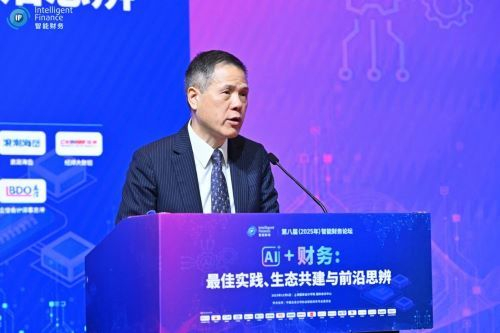
第八届智能财务年度论坛成功举办
Zheng Quan Ri Bao Wang· 2025-12-07 09:39
Core Insights - The eighth Smart Finance Forum held in Shanghai focused on the integration of artificial intelligence (AI) and financial management, emphasizing best practices and ecological collaboration in the field [1][2] - Lu Wenbin, the Dean of Shanghai National Accounting Institute, highlighted the transformative impact of generative AI technologies on financial work, advocating for a shift towards intelligent and digital financial management [1] - The forum revealed the results of the sixth Smart Finance Best Practice Awards, recognizing 10 units for comprehensive excellence and 10 for specific achievements in smart finance [3] Group 1: Development Directions - The forum proposed three key development directions: fostering independent innovation to create a unique Chinese smart finance knowledge system, enhancing security awareness in digital transformation, and promoting open collaboration to build a smart finance ecosystem [1] - The Shanghai National Accounting Institute aims to deepen research and innovation in smart finance, contributing to high-quality development in the accounting sector [2] Group 2: Research and Policy Insights - The Smart Finance Research Institute has identified six dimensions for the development of smart finance, including policy, ecology, theory, technology, talent, and application, with government policies providing strong guidance for industry growth [2] - The institute has gathered 19 organizations and 525 researchers since its establishment in 2018, producing numerous reports and blue papers to advance the field [2] Group 3: Key Highlights from the Forum - The forum showcased new applications of large models and intelligent agents, indicating a rapid acceleration in the smart finance transformation [3] - A debate on "the human-machine competition in future finance" resonated with attendees, reflecting the concerns of finance professionals regarding AI's impact on their careers [3] - The launch of the "Smart Finance Knowledge Sharing Platform" aims to facilitate quick access to knowledge for accounting professionals, integrating advanced models for enhanced efficiency [3]
上海国家会计学院第八届智能财务论坛举办
Zhong Zheng Wang· 2025-12-07 08:38
Core Viewpoint - The forum emphasizes the integration of artificial intelligence (AI) with financial management, highlighting the need for intelligent financial transformation in response to technological advancements and the demands of high-quality development [1][2]. Group 1: Development Directions - The first direction is to promote independent innovation and establish a Chinese intelligent financial knowledge system, focusing on unique theoretical frameworks and practical standards based on China's national conditions [2]. - The second direction stresses the importance of security awareness in financial digital transformation, advocating for the development of key technologies to ensure the safety of financial information and national economic security [2]. - The third direction encourages open cooperation to build an intelligent financial ecosystem, enhancing the integration of industry, academia, and research [2]. Group 2: Research Institute Achievements - Since its establishment in 2018, the Intelligent Finance Research Institute has gathered 19 organizations and 525 researchers, producing numerous blue papers and white papers across six research directions [3]. - In 2026, the research institute plans to focus on ten key tasks, including participating in the "14th Five-Year Plan" formulation and launching an intelligent finance knowledge-sharing platform [3]. Group 3: Best Practices and Success Factors - The forum announced the results of the sixth intelligent finance best practice awards, recognizing 10 units with comprehensive awards and others for specific achievements [3]. - Successful intelligent finance transformation in enterprises requires clarity in strategy, effective use of technology, solid data foundations, process reconstruction, talent empowerment, value focus, and risk control, with these seven elements significantly increasing success rates [3].
学界专家共议人工智能时代下的会计与财务学科发展
Guo Ji Jin Rong Bao· 2025-10-24 08:17
Core Insights - The conference focused on the transformation of accounting and finance in the era of artificial intelligence, highlighting the need for interdisciplinary approaches and innovative frameworks to adapt to technological advancements [1][2]. Group 1: Educational and Talent Development - Future accounting professionals need to develop a composite skill set that includes data analysis, intelligent decision-making, and strategic thinking, moving beyond traditional knowledge boundaries [1]. - Emphasis on lifelong learning and value-driven education is crucial for students to effectively respond to ongoing technological changes [1]. Group 2: Technological Integration and Practical Frameworks - The concept of "scene precision matching" is identified as key to driving intelligent project transformations, focusing on real business needs and considering factors like ROI, technology adaptability, and human-machine collaboration [1]. - A practical framework of "technology-scenario-value" is proposed to guide enterprises in implementing intelligent finance solutions [1]. Group 3: Institutional Challenges and Innovations - The integration of AI with institutional frameworks is essential to address deep-rooted issues such as financial fraud and audit failures in capital markets [2]. - Research indicates that the growth of the AI industry is reshaping talent demand, particularly increasing opportunities for women, thereby breaking traditional gender discrimination barriers in employment [2]. Group 4: Legal and Social Responsibility - The establishment of smart courts is seen as a mechanism to enhance judicial efficiency and compel companies to improve their ESG performance, linking digital governance with corporate social responsibility [3]. - The research emphasizes the importance of integrating digital technology and legal frameworks to support sustainable development and high-quality growth in enterprises [3]. Group 5: Cultural and Innovative Perspectives - The contemporary value of traditional Chinese culture, particularly merchant culture, is explored for its implications on modern corporate governance and strategic decision-making [3]. - AI technology's application in cultural financial research is highlighted for its potential in extracting and quantifying cultural characteristics, offering new perspectives and methodologies for research in this area [3].
澳洲会计师公会会长戴宾图:AI解放基础工作 财务人员不会被替代 | 服贸会
Zhong Guo Jing Ying Bao· 2025-09-18 17:05
Core Insights - Australia showcased its largest delegation at the 12th China International Fair for Trade in Services, highlighting cooperation potential in finance, education, and professional services [1] - The bilateral trade between China and Australia is significant, with a 2.6% growth projected for the 2023-2024 fiscal year, reaching 325 billion AUD (approximately 1.5 trillion RMB) [1] Group 1: Trade Relations - China remains Australia's largest trading partner, particularly in iron ore, coal, and natural gas, holding a substantial share of Australia's export market [1] - The trade relationship between the two countries has been improving, with a notable increase in trade volume [1] Group 2: Service Trade Cooperation - There is immense potential for cooperation in knowledge-intensive services such as accounting, finance, law, and consulting between China and Australia [2] - Initiatives to jointly cultivate international talent and enhance mutual recognition of professional qualifications are expected to further promote connectivity in the professional services sector [2] Group 3: Impact of Government Policies - China's recent measures to open up the service trade market signal a positive shift towards integrating into the global service economy [2] - The transformation of China's trade structure from goods to services, including AI, digital economy, finance, education, and tourism, is noteworthy [2] Group 4: Talent Development in Finance - The Australian CPA has developed a competency framework for finance professionals, focusing on six core competencies: ethical integrity, professional financial skills, adaptive thinking, big data and digitalization, business acumen, and self-motivation with interpersonal leadership [2][3] - Emphasis is placed on the ability to translate professional knowledge into cross-disciplinary collaboration and practical application, aligning with future employer demands [3] Group 5: Role of Artificial Intelligence - AI is reshaping the finance industry by enabling faster, smarter, and more resilient business development, enhancing compliance risk control, optimizing cash flow management, and establishing data-driven decision-making mechanisms [3] - The challenge lies not in AI itself but in finance professionals' ability to continuously learn and adapt their skills to meet new industry demands [3]
澳洲会计师公会会长戴宾图:AI解放基础工作,财务人员不会被替代 服贸会
Zhong Guo Jing Ying Bao· 2025-09-18 14:13
Core Viewpoint - Australia showcased its largest delegation at the 12th China International Fair for Trade in Services, highlighting cooperation potential in finance, education, and professional services with China [2] Group 1: Trade Relations - China remains Australia's largest trading partner, particularly in iron ore, coal, and natural gas, accounting for a significant share of Australia's export market [2] - The bilateral trade volume between China and Australia is projected to grow by 2.6% in the 2023-2024 fiscal year, reaching AUD 325 billion (approximately RMB 1.5 trillion) [2] Group 2: Service Trade Cooperation - There is substantial potential for cooperation in knowledge-intensive services such as accounting, finance, law, and consulting between China and Australia [3] - China's recent initiatives to open up its service trade market signal a shift from a goods-focused trade structure to include sectors like artificial intelligence, digital economy, finance, education, and tourism [3] Group 3: Talent Development - The Australian CPA has developed a competency framework for accounting talent, which includes six core competency modules: ethical integrity, professional financial skills, adaptive thinking, big data and digitalization, business acumen, and self-motivation with interpersonal leadership [4] - The framework aims to enhance the ability to translate professional knowledge into cross-disciplinary collaboration and practical application, aligning with future employer demands in the accounting sector [4] Group 4: Impact of Artificial Intelligence - Artificial intelligence is reshaping the finance industry by automating routine tasks, allowing finance professionals to transition from traditional controllers to value creators [5] - The challenge lies not in AI itself but in finance professionals' ability to continuously learn and adapt their skills to meet new industry demands [5]
【创投】初创企业Kamino获5400万融资,打造中型企业首选智能财务平台
Sou Hu Cai Jing· 2025-09-11 23:08
Core Insights - Kamino, a financial management platform for medium-sized enterprises, has completed a new funding round of 54 million Brazilian Reais (approximately 10 million USD) [1] - The company aims to strengthen its position in the industry by providing CFOs with tools for automated performance analysis, cash flow forecasting, and support for agile and strategic decision-making [1] Funding Details - The latest funding round was led by Flourish Ventures and Quona Capital, focusing on fintech in emerging markets, with participation from Endeavor Catalyst [1] - Since its establishment in 2021, Kamino has raised a total of over 108 million Brazilian Reais (approximately 20 million USD) [1] Product Offering - Kamino's solution integrates management software, proprietary business accounts, company credit cards, connections with all banks, and automated reconciliation features [1] - The platform aims to eliminate manual operations in accounts payable and receivable, achieving real-time integration with bank data and reducing losses from fraud, payment errors, or inefficient receivables management [1] Strategic Vision - The CEO of Kamino, Gonzalo Parejo, stated the goal is to create the preferred financial platform for medium-sized enterprises in Brazil [1] - The company is focused on providing comprehensive control over corporate cash flow on a single platform [1]

AI“变革”财务会计生态
Jing Ji Guan Cha Wang· 2025-07-30 12:49
Core Insights - Artificial intelligence (AI) is significantly transforming accounting and financial management, impacting accounting functions, management decision-making, and business integration [1][3][4] Group 1: Impact on Accounting Functions - AI enables automation of accounting tasks such as transaction processing, report generation, and anomaly detection, allowing accountants to shift from transactional roles to managerial and leadership roles [1][4] - The integration of AI in financial processes is leading to a reduction in routine accounting workloads, enhancing the analytical capabilities of finance professionals [5][10] Group 2: Management Decision-Making - AI's data analysis capabilities allow for precise forecasting of financial conditions and operational outcomes, providing robust support for management decisions [1][4] - Companies are increasingly utilizing AI tools for dynamic budget management and cash flow adjustments based on project progress [10][11] Group 3: Business Integration - AI facilitates real-time analysis of business and financial data, promoting deeper integration between finance and operations [1][2] - The development of customized AI solutions is helping companies address specific challenges in data integration and financial analysis [8][9] Group 4: Challenges in AI Adoption - Companies face challenges such as the uncertainty of AI solutions, integration with existing systems, data privacy concerns, and regulatory issues [5][7] - The need for effective data governance and security measures is critical for successful AI implementation in finance [11] Group 5: Future Trends - The application of generative AI in finance is expanding, with potential uses in financial modeling, risk assessment, and automated reporting [4][6] - The evolution of AI in finance is expected to continue moving towards comprehensive, intelligent systems that enhance decision-making and operational efficiency [7][10]
长三角打头阵,国资国企掀AI赋能浪潮|聚焦2025WAIC
Hua Xia Shi Bao· 2025-07-29 13:31
Core Insights - The integration of artificial intelligence (AI) is driving high-quality economic development in China, with local state-owned enterprises (SOEs) accelerating their digital transformation, particularly in the Yangtze River Delta region [1][2] - The establishment of the "National Local SOE Digital Transformation Forum" aims to enhance the synergy between digital economy and real economy, with over 100 local SOEs joining the "Digital Innovation Alliance" in the past five years [1][2] Group 1: AI Empowerment in Enterprises - The trend of AI empowerment is expanding from the financial sector to encompass the entire industrial chain, with various enterprises adopting AI technologies [2] - China Pacific Insurance has initiated a new "AI+" strategic plan, focusing on enhancing AI capabilities and integrating them into core business processes over the next five years [2][5] - The "Intelligent Finance Open Ecosystem Alliance" was formed during the WAIC forum, with multiple organizations committing to collaborate on financial intelligence innovations [2][3] Group 2: Financial Intelligence Transformation - The increasing importance of trustworthy AI is highlighted as a core driver for financial digital transformation, with a shift from traditional accounting to intelligent analysis and strategic decision-making [3][4] - The "2025 China Enterprise Financial Intelligence Survey Report" provides insights into the current state and challenges of financial intelligence in Chinese enterprises, offering strategies for digital transformation [3][4] Group 3: Market Potential and Future Outlook - The AI-driven transformation is expected to create a new market worth hundreds of billions, with significant improvements in efficiency, decision-making, and risk management [5][6] - The global investment in AI is projected to exceed $800 billion, with China's market share potentially reaching $100 billion by 2028, growing at an annual rate of over 30% [7] - Companies are encouraged to consider how AI can disrupt their business models and how they can leverage AI for transformative changes [7]