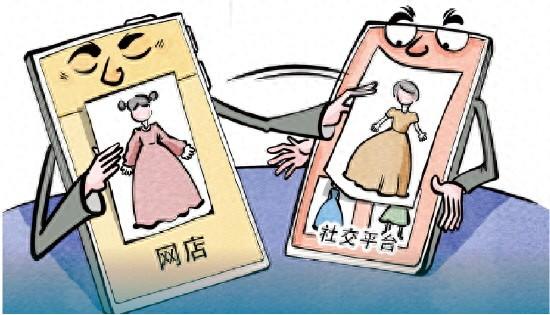
未成年人肖像权保护

Search documents
一心守护“数字童年”
Xin Lang Cai Jing· 2026-02-11 00:12
Core Viewpoint - The case highlights the challenges of protecting minors' rights in the digital age, particularly regarding the unauthorized commercial use of their images, and emphasizes the importance of legal mechanisms to support such cases [3][9]. Group 1: Case Background - A case involving the infringement of a minor's portrait rights was initiated when a mother discovered her daughter's modeling photos were used without consent on a children's clothing online store [3][4]. - The mother expressed feelings of violation, indicating that her child's childhood was being exploited without her knowledge [3]. Group 2: Evidence Collection - The prosecution identified flaws in the initial evidence submitted by the mother, such as missing timestamps on screenshots, which could undermine the case [5]. - To secure evidence, the prosecution employed electronic data forensics to capture and preserve the online store's sales pages, ensuring a reliable evidence chain [5]. Group 3: Legal Proceedings - The prosecution confirmed the identity of the child in the disputed photos through image analysis and comparison with family photos [6]. - The defendant's common defenses included claiming ignorance of the image's origin and attempting to argue for "fair use" under the law [6][7]. Group 4: Legal Outcome - The prosecution submitted a formal opinion to the court, asserting that the unauthorized commercial use of a minor's image violated legal provisions and societal norms [8]. - The court ruled in favor of the prosecution, ordering the defendant to remove the infringing content, apologize, and compensate the mother for legal expenses [8]. Group 5: Broader Implications - The case serves as a reflection of the widespread issue of minors' images being exploited online and the difficulties families face in protecting their rights [9]. - Following the case, the prosecution initiated a broader "Clean Internet, Protect Youth" campaign to address similar issues in online marketing and protect minors' rights [9].


网络空间 如何守住未成年人隐私边界?
Yang Shi Wang· 2026-01-22 19:08
Group 1 - The article highlights the challenges of protecting minors' privacy in the digital age, particularly regarding their image rights [1] - It discusses the prevalence of social media and the potential misuse of shared images, including unauthorized advertising and malicious alterations [1] - The legal framework in China, including the Civil Code and laws related to minors and personal information protection, aims to establish a system that balances equal protection with special prioritization for minors [1] Group 2 - The article emphasizes that the protection of minors' image rights has become more complex in the digital era compared to previous times [1]
“看得见伤害、难抓住源头” 网络空间里如何守住未成年人隐私的边界?
Yang Guang Wang· 2026-01-22 06:39
Core Viewpoint - The article highlights the challenges of protecting minors' image rights in the digital age, where their photos can be easily misused for commercial gain or malicious intent, leading to significant psychological harm and legal complexities [1][3][5]. Group 1: Legal Framework and Challenges - China's legal system, including the Civil Code and laws on minors' protection and personal information, aims to provide equal protection for minors, requiring stricter regulations for their image rights [3][10]. - The difficulty in enforcing these rights arises from the anonymity of online infringers and the ease of altering or deleting evidence, complicating the process of accountability [3][6]. - Recent cases illustrate that even when courts rule in favor of minors, infringing parties often fail to comply with legal judgments, highlighting enforcement issues [2][3]. Group 2: Psychological Impact and Social Dynamics - The psychological impact of image misuse on minors can be severe, leading to feelings of fear and anxiety, especially when used for harassment or revenge [5][6]. - Experts emphasize the need for guardians to be cautious about sharing minors' images online and to act swiftly in the event of infringement [5][6]. - The phenomenon of "digital child labor" is emerging, where minors are used as content creators without proper consent or understanding of the implications, raising ethical concerns [10][14]. Group 3: Commercial Exploitation and Market Dynamics - The commercial exploitation of minors' images is rampant, with numerous sellers offering images for minimal prices, indicating a market for unauthorized use [2][3]. - MCN (Multi-Channel Network) agencies are increasingly treating minors as products, focusing on monetization rather than their well-being, which raises ethical questions about parental consent and the commercialization of childhood [9][10]. - The rapid dissemination of content featuring minors can lead to widespread negative consequences, necessitating a reevaluation of how minors are portrayed and utilized in digital media [6][10]. Group 4: Recommendations for Improvement - Experts suggest that a multi-faceted approach is needed to address the misuse of minors' images, including stricter legal definitions and increased penalties for violations [14][15]. - Platforms are encouraged to enhance their content governance systems to better manage and prevent the spread of harmful content involving minors [15][16]. - Parents are urged to limit the exposure of their children's images online and to reflect on the potential consequences of sharing such content [16].
警惕未成年人肖像成商家“免费广告”
Xin Lang Cai Jing· 2026-01-10 23:43
Core Viewpoint - The case highlights the legal boundaries regarding the commercial use of minors' images and emphasizes the responsibility of businesses to obtain consent before using such images for advertising purposes [3][5][8]. Group 1: Case Background - A minor, referred to as Xiao Jiang, had her images used without consent by a clothing company on an online store for commercial promotion [4][5]. - The mother of Xiao Jiang, acting as her legal representative, filed a lawsuit against the company for unauthorized use of her child's images, seeking to stop the infringement and obtain compensation [4][8]. Group 2: Legal Framework - The court ruled that the clothing company violated Xiao Jiang's portrait rights by using her images for profit without consent, which is against Article 1019 of the Civil Code [5][6]. - The court clarified that the company's defense of believing the images were free to use from the internet had no legal basis, as the law specifies limited circumstances under which images can be used without consent [7][8]. Group 3: Court Ruling and Implications - The court ordered the company to remove all promotional content featuring Xiao Jiang's images and to issue a written apology, along with compensating her for reasonable expenses incurred in stopping the infringement [8]. - The ruling serves as a clear warning to businesses about the legal consequences of using minors' images without proper authorization, reinforcing the need for strict adherence to copyright and personal rights [8][9]. Group 4: Broader Context and Recommendations - The case underscores the increasing prevalence of online violations of minors' rights, necessitating a comprehensive protective framework involving guardians, businesses, and regulatory platforms [9]. - It is essential for guardians to enhance their digital awareness and for businesses to adopt ethical practices by ensuring prior authorization before using minors' images in commercial activities [9].