机会平等

Search documents
【有本好书送给你】当我们在谈论公平时,我们究竟在谈论什么?
重阳投资· 2025-09-10 07:33
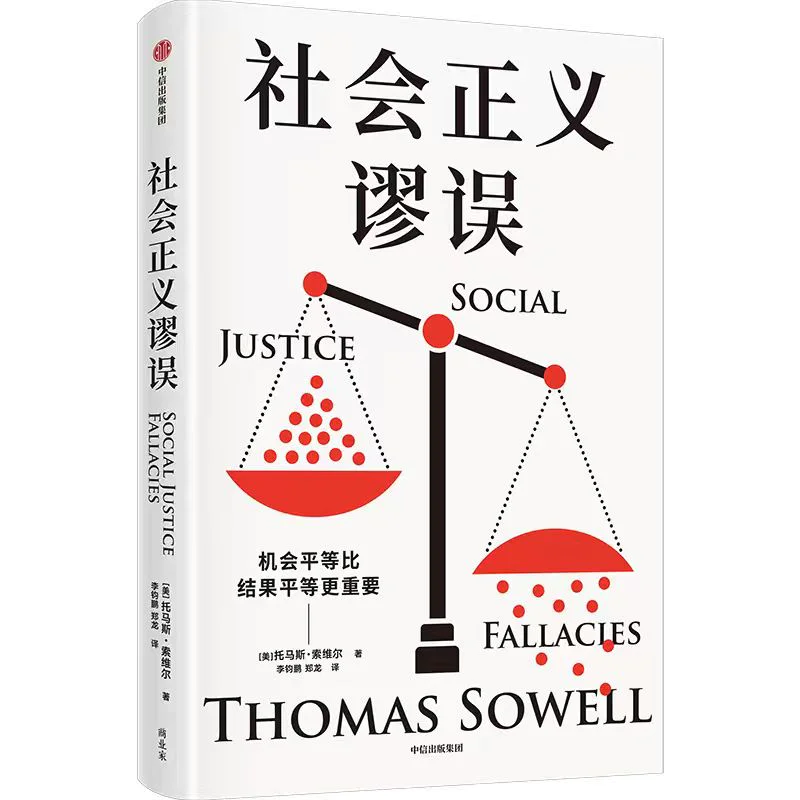
Core Viewpoint - The article emphasizes the importance of reading as a pathway to growth and understanding, encouraging readers to engage in discussions about the themes presented in selected books [2][3][6]. Summary by Sections Book Recommendation - The featured book is "The Fallacy of Social Justice" by Thomas Sowell, which critiques widely held beliefs about equality and social justice [8][30]. Key Themes from the Book - The book argues that "opportunity equality" does not equate to "result equality," highlighting that even in equal opportunity conditions, outcomes are influenced by diverse factors such as environment, history, and culture [11][12]. - It discusses how different groups may excel in various fields, suggesting that perceived inequalities are often a reflection of historical and cultural contexts rather than discrimination [15][17]. - The author critiques the notion of comparing different professions or educational paths as if they are equivalent, pointing out that such comparisons can lead to misleading conclusions about equality [19][20]. - The book also explores the roots of inequality, suggesting that factors such as family background and early childhood experiences significantly impact future success [21][22]. - It highlights the role of honesty and trust within societies as critical components of economic development, noting that these traits are not evenly distributed across different cultures [24][25]. - Finally, it questions the true nature of equality that society should strive for, advocating for a focus on opportunity rather than enforced equality of outcomes [26][28].


平等的幻象
Hu Xiu· 2025-09-06 06:22
Group 1 - The concept of "equality of opportunity" is often mistaken for "equality of outcome," which can lead to sacrificing true fairness and efficiency [3][10][15] - Historical, cultural, geographical, and environmental factors contribute to the inherent inequalities observed in various industries and sectors [4][5][12] - Different groups may excel in different fields, and this diversity should not be viewed as a disadvantage but rather as a reflection of varied strengths and skills [6][7][11] Group 2 - The representation of different groups in specific industries often reflects their historical and cultural backgrounds rather than systemic discrimination [5][9][14] - The pursuit of equal representation in fields like technology may overlook the differences in educational choices and career paths between genders [8][9][10] - The concept of "mutual inequality" suggests that while some groups may lag in certain areas, they may thrive in others, highlighting the complexity of human achievement [6][7][16]