
机器人产业泡沫

Search documents
春晚抢天价广告位? 宇树、智元被曝席位之争,投资人开始焦虑了 | BUG
Xin Lang Cai Jing· 2025-12-11 00:41
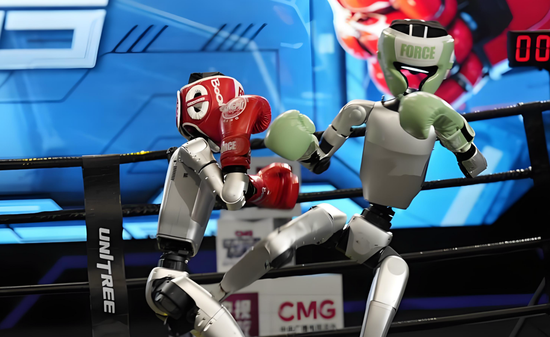
Group 1 - The core competition in the humanoid robot sector is intensifying, with companies like Yushutech and Zhiyuan Robotics bidding high for sponsorships, with Zhiyuan offering 60 million yuan and Yushutech 100 million yuan [2][15] - Concerns are rising about a potential bubble in the industry, as the total investment in the domestic robotics sector has exceeded 80 billion yuan this year, with over 20 billion yuan raised by companies that have publicly launched robotic products [3][15] - Investors express worries about the oversaturation of humanoid robot companies, with some stating that 80% of existing companies may be eliminated due to the lack of substantial progress and high operational costs [4][19] Group 2 - In 2025, there were 557 investment events related to the robotics industry in China, totaling over 839.52 billion yuan, with leading companies like Zhiyuan and Yushutech reaching valuations in the hundreds of billions [4][15] - The top 20 companies in the robotics sector have collectively raised 20.6 billion yuan, with notable funding rounds including UBTECH's 7 billion HKD (approximately 6.36 billion yuan) and Tashizhi's 1.708 billion yuan in angel funding [4][16][17] Group 3 - Investors highlight significant challenges in the humanoid robot industry, including high energy consumption, low precision, and insufficient intelligence, which hinder practical applications and increase costs [6][20][21] - The current humanoid robots often require multiple operators, leading to increased costs without achieving efficiency, contradicting the primary goal of reducing costs and enhancing productivity [9][23] - The industry is compared to the early days of the PC industry, where many companies are focused on assembling robots from components rather than developing core technologies, leading to a lack of competitive advantage [10][24] Group 4 - Experts emphasize the need for a more holistic approach to the robotics industry, advocating for the development of a complete ecosystem that focuses on reducing costs and improving efficiency, similar to the evolution of the electric vehicle industry [11][25] - The reliance on imported components for critical parts of humanoid robots poses a risk, as domestic alternatives often lack the necessary quality and longevity, limiting profitability [10][24]

“硬件+软件”AI在物流行业能创造更大价值丨2025数字价值观察室「AI落地指南特别篇」
Tai Mei Ti A P P· 2025-10-22 09:12
Core Insights - The main topic of discussion in the ToB enterprise service sector for 2025 is the implementation of enterprise-level AI applications, particularly in the logistics industry, where previously unimaginable demands are now being met due to advancements in AI technology [1][2] - There are significant challenges in standardization and the integration of AI hardware and software, despite the potential for AI to transform logistics operations [1] Group 1: AI Implementation in Logistics - AI is expected to have a limited immediate impact on revenue in the logistics sector, but it is anticipated to significantly influence income in the near future [2][15] - G7 Yiliu's edge AI products are currently in trial phases, addressing previously unsupported demands such as monitoring unloading conditions and providing real-time weather updates for drivers [2][15] - The shift towards a "pay for results" model has increased clients' willingness to pay for software solutions, enhancing the value proposition of AI applications in logistics [2][19] Group 2: Comparison of AI Development in China and the US - There is a notable gap in foundational AI models between the US and China, with OpenAI having released GPT-5 while most Chinese models are still exploring the capabilities of version 3.5 [2][12] - In the application domain, many US ToB companies are already profitable, whereas Chinese companies face challenges in customer payment willingness, necessitating deeper application development from the outset [2][12] Group 3: Observations from Industry Leaders - Insights from discussions with industry leaders, such as the recognition of a bubble in the current robotics industry, highlight the limitations of existing robotic vision technologies [4][6] - The emergence of innovative products, such as the 2.5D printer from Anker, showcases the potential of combining AI with hardware to create new market opportunities [9][10] Group 4: Future Directions and Events - G7 Yiliu plans to showcase new AI products and services at the upcoming 2025 Digital Logistics Conference, focusing on the technological advancements and benefits AI can bring to the logistics sector [21]