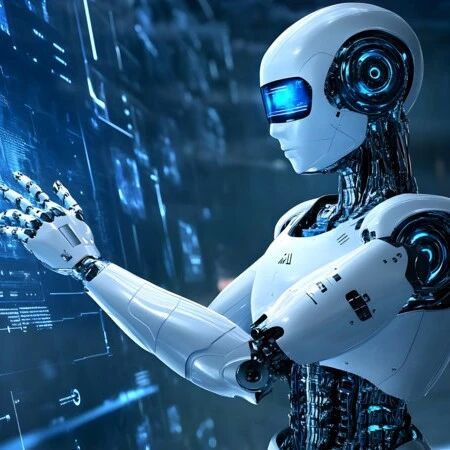
机器人安全防护

Search documents
IFR最新发布!揭示2026年机器人产业五大趋势!
机器人大讲堂· 2026-01-19 09:09
Core Viewpoint - The integration of AI and robotics is becoming a core engine for restructuring global productivity, with the global industrial robot installation market reaching a historical peak of $16.7 billion [1][3]. Group 1: AI Empowerment - The fusion of AI and robotics has transitioned from being an "auxiliary tool" to a "core engine," significantly enhancing robot autonomy through breakthroughs in computing power, algorithm iteration, and data explosion [3][5]. - AI is categorized into analytical, generative, and agent AI, with generative AI enabling robots to learn and create autonomously, thus enhancing human-robot interaction [5][6]. Group 2: IT/OT Integration - The demand for versatile robots is rising as manufacturing shifts towards flexibility, digitalization, and intelligence, necessitating the integration of IT (Information Technology) and OT (Operational Technology) [6][8]. - This integration breaks down traditional silos, allowing seamless data flow between digital and physical worlds, thereby expanding the capabilities and application boundaries of robots [8]. Group 3: Humanoid Robots in Practical Use - Humanoid robots are gaining traction in industries facing labor shortages due to aging populations and reluctance of youth to engage in repetitive physical labor [9][10]. - The report emphasizes the need for humanoid robots to demonstrate reliability and efficiency to compete with traditional automation solutions [12]. Group 4: Safety and Protection - As robots increasingly collaborate with humans in various environments, ensuring their safe operation has become a fundamental requirement [13][15]. - The safety landscape has evolved to include not only physical safety but also cybersecurity, data privacy, and ethical algorithms, necessitating comprehensive governance frameworks [15]. Group 5: Robots as Strategic Allies - Employers globally are facing a severe skills shortage, making the adoption of robotic technology a critical strategy to alleviate labor shortages and enhance workplace efficiency [16]. - Successful integration of robots requires close collaboration with employees to ensure acceptance and effective implementation in various settings [16].