机构大资金交易行为

Search documents
融资资金扎堆,别被走势骗了
Sou Hu Cai Jing· 2026-02-24 03:17
Core Viewpoint - The article emphasizes the importance of understanding the true trading intentions of funds, particularly institutional investors, rather than relying solely on personal intuition or market trends when making investment decisions [1]. Group 1: Misjudging Market Trends - Investors often rely on personal feelings to determine market highs and lows, leading to premature selling or buying decisions [3]. - The article illustrates that stock price movements are dictated by the trading intentions of funds, especially institutional participation, rather than mere price trends [3]. - An example is provided where a stock doubled in price within three months, and despite price corrections, institutional inventory data indicated continued participation, suggesting that these corrections were normal rather than signals of a market peak [3]. Group 2: Misinterpretation of Price Corrections - A common mistake is to sell off stocks after they reach new highs and begin to correct, assuming the market has peaked [5]. - The article highlights that during price corrections, institutional inventory data remained active, indicating ongoing institutional interest and suggesting that these corrections were merely consolidations for future gains [5]. - Investors who sell during these corrections may miss out on significant future profits [5]. Group 3: Risks of Bottom Fishing - The belief that a stock must rebound after a significant drop leads many investors to attempt bottom fishing, often resulting in losses [7]. - The article notes that many rebounds are not supported by institutional buying, making them unreliable and prone to further declines [7]. - An example is given of a stock that continued to decline despite apparent short-term rebounds, illustrating the dangers of following market sentiment without institutional backing [7]. Group 4: Misreading Rebounds After Declines - Investors often mistake short-term rebounds following significant declines as signs of a market reversal, leading to hasty buying decisions [9]. - The article points out that during these rebounds, institutional inventory data showed no signs of active participation, indicating that these movements were merely emotional responses rather than genuine reversals [9]. - This misinterpretation can result in investors being trapped in further downtrends after buying into these false signals [9]. Group 5: Establishing Probability-Based Thinking - The article advocates for a shift from intuitive decision-making to a data-driven approach that focuses on the participation of institutional investors [12]. - By utilizing quantitative data, investors can better understand the true market dynamics and improve their decision-making processes [12]. - The emphasis is on developing a systematic investment strategy based on objective data rather than subjective feelings, which can enhance long-term investment success [12].

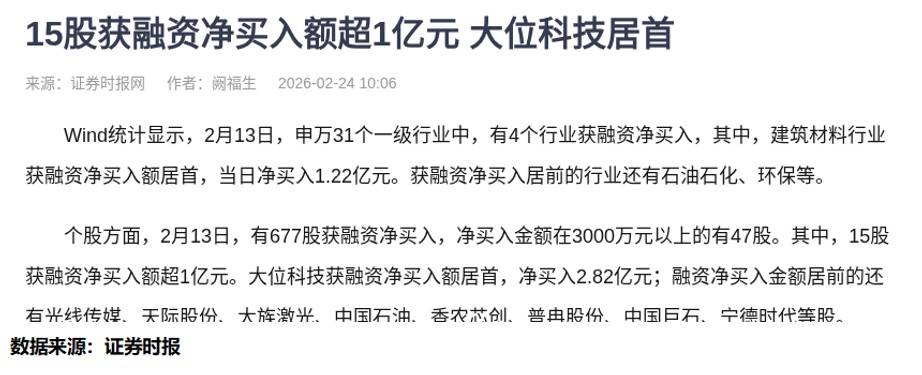
部分股连续获融资净买入,行情要换个维度看了
Sou Hu Cai Jing· 2026-01-20 07:10
Core Insights - The article emphasizes the importance of analyzing market behavior through a multi-dimensional lens, focusing on funding, behavior, and probabilities rather than solely on price movements [1][3]. Group 1: Price and Funding Dynamics - Many investors tend to rely on price patterns to identify market bottoms or tops, which can lead to misjudgments as price movements are merely outcomes of trading, while the true drivers are institutional funding behaviors [3][6]. - A price rebound without corresponding institutional trading activity is often a false signal, indicating that without funding support, price movements are merely short-term fluctuations [7][11]. Group 2: Institutional Participation - Continuous institutional trading activity is crucial for validating price trends; price adjustments during an upward trend should not cause panic if institutional interest remains strong [12][16]. - The presence of institutional trading signals during price fluctuations provides a more reliable basis for investment decisions, allowing investors to navigate market uncertainties more effectively [19]. Group 3: Quantitative Multi-Dimensional Perspective - The advancement of quantitative data technology enables a more comprehensive analysis of market behavior, moving beyond simple price trends to a data-driven investment approach [16][19]. - Developing a sustainable investment strategy requires a shift from subjective judgments to objective assessments based on funding, behavior, and probability data [19].