极致效率

Search documents
未来五年,经销商只剩一条命叫“极致效率”
Sou Hu Cai Jing· 2026-02-14 19:27
Core Insights - The current market environment for distributors is challenging, with many feeling lost and questioning their strategies as traditional methods become ineffective [3][6][10] - The decline in business is not a temporary cycle but a long-term downward trend, driven by irreversible changes in population structure and market dynamics [6][7][10] - Distributors must adapt to survive, focusing on understanding their own business models and identifying their sources of profit [10][11][30] Market Dynamics - The previous protective state for brand owners and distributors has ended, leading to increased competition and a need for efficiency [6][8] - The birth rate in China has significantly decreased, dropping from around 20 million annually a decade ago to below 8 million, indicating a long-term decline in market growth potential [7] - Many small distributors are facing rapid elimination, with some regions seeing closure rates of 10%-20% annually [10] Profit Sources - Distributors traditionally relied on three types of profit: risk profit, monopoly profit, and operational profit [11][12] - Risk profit opportunities are diminishing in a saturated market, while monopoly profits are being eroded as brand owners focus on efficiency [12][13] - Operational profit, which emphasizes efficiency and cost management, is becoming the primary source of income for distributors [14][15] Characteristics of Successful Distributors - Successful distributors in the new market must possess scale and efficiency [19][20] - Scale is essential for investing in efficiency tools, while efficiency serves as a competitive advantage [19][20] - Effective scale means maintaining operational efficiency even as business grows, avoiding the pitfalls of mismanagement during expansion [21][22] Organizational Structure - Distributors need to build capabilities within their organizations and establish systematic management practices [26][29] - Transitioning from a reliance on individual capabilities to a structured organizational design is crucial for scalability [27][29] - Management should be data-driven and standardized, moving away from reliance on individual decision-making [29] Strategic Recommendations - Distributors are encouraged to introspect and understand their business fundamentals, including profit sources and efficiency bottlenecks [30][32] - Addressing inefficiencies and being willing to make difficult decisions regarding existing practices is essential for future success [32][34] - The focus should be on creating a culture of efficiency that can be replicated across the organization to ensure long-term viability [32][34]

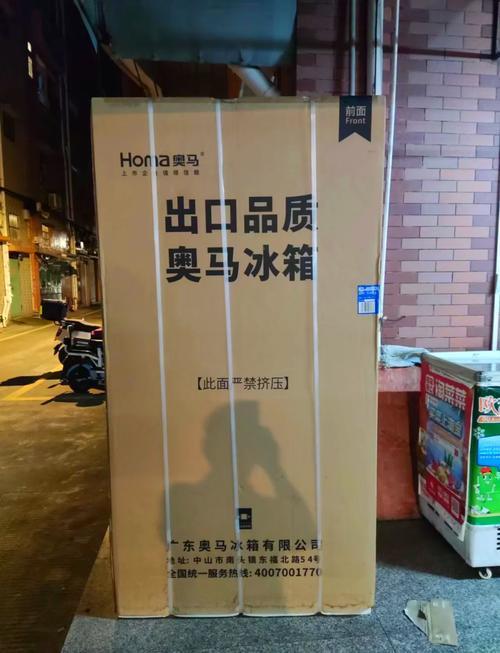
中国家电又出黑马!1400万台背后是“代工王”的逆袭
Xin Lang Cai Jing· 2025-06-29 21:48
Core Insights - The article highlights the success story of Oma Refrigerator, a company that has become a leading player in the global refrigerator market, selling 14 million units annually and generating revenue of 18.3 billion yuan, while remaining relatively unknown compared to giants like Haier and Midea [1][9]. Group 1: Company Background - Oma Refrigerator was founded by Cai Shier, who left his position at Rongsheng Refrigerator to pursue opportunities in the challenging European market, recognizing that high barriers to entry could provide a competitive advantage [3][4]. - The company initially gained traction by securing a significant order from Whirlpool, which recognized the quality and cost-effectiveness of Oma's products compared to local competitors [4][6]. Group 2: Business Strategy - Oma's strategy focuses on extreme cost efficiency, producing refrigerators at a lower cost than competitors by optimizing production processes and reducing mold costs by 90% [6][7]. - The company employs a "20/80 rule," concentrating on producing 20% of popular models that meet local consumer preferences, allowing it to dominate market share in countries like the UK and France [6][9]. Group 3: Financial Performance - Despite a lower gross margin of 15% compared to Haier, Oma achieved a net profit growth rate of 29.58%, demonstrating the effectiveness of its low-cost, high-volume business model [7][9]. - During the 2008 global financial crisis, while competitors were cutting back, Oma capitalized on low raw material prices by stockpiling, leading to a significant increase in export volume [8][9]. Group 4: Recent Developments - In 2021, TCL acquired a 48% stake in Oma, allowing the company to leverage TCL's distribution channels while continuing to serve as an OEM for major brands [9][10]. - Oma's overseas revenue reached 13.5 billion yuan in 2024, accounting for 73.5% of total revenue, indicating a successful expansion strategy in international markets [9][10]. Group 5: Industry Insights - The story of Oma Refrigerator challenges conventional business wisdom, emphasizing that success does not always require high-profile marketing or celebrity endorsements; instead, focusing on product quality and cost efficiency can lead to significant achievements in the global market [10].