标准化管理体系

Search documents
呼和浩特机场消防支队开展装备技师专项培训 筑牢空港应急保障防线
Zhong Guo Min Hang Wang· 2025-12-23 07:16
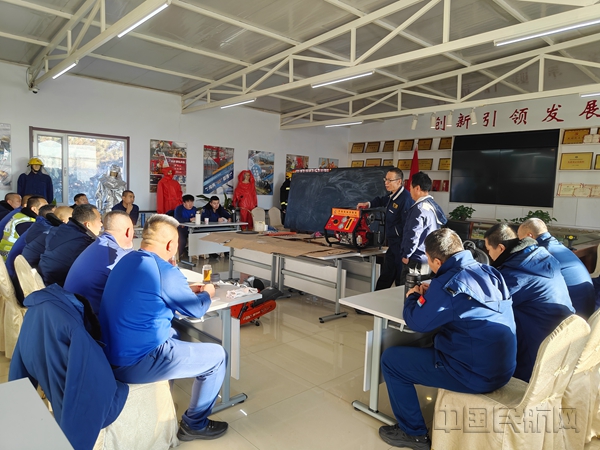
Group 1 - The training program for firefighters at Hohhot Airport focuses on enhancing skills in three core areas: firefighting vehicles, rescue equipment, and personal protective gear through a dual-track model of theoretical instruction and practical exercises [1][2] - The training is tailored to meet the specific needs of airport firefighting scenarios, including specialized courses on aircraft fire response equipment [2] - The training incorporates innovative technology such as thermal imaging for assessing protective gear and smart pressure testing for mask integrity, enabling visual evaluation of equipment status [2] Group 2 - A notable feature of the training is the practical simulation of emergency scenarios, where trainees must diagnose and repair typical faults within a set time frame, significantly improving their troubleshooting efficiency by an average of 65% [2] - The training also emphasizes the establishment of a standardized management system, introducing ISO equipment management standards and a digital management platform for equipment lifecycle management [5] - The fire brigade plans to implement a "red-yellow-green" warning mechanism for equipment maintenance to ensure all firefighting gear is always in optimal readiness [5]

虹桥机场率先推出《航站楼精品卫生间规划建设及运行管理要求》
Zhong Guo Min Hang Wang· 2025-11-25 05:12
Core Viewpoint - Shanghai Hongqiao Airport has officially released the "Planning, Construction, and Operational Management Requirements for Boutique Restrooms at Hongqiao Airport Terminal," aiming to enhance passenger experience and showcase humanistic care and refined management standards [1] Group 1: Overview of the Requirements - The document consists of 7 chapters and 122 articles, covering key aspects such as planning, construction, operational management, and continuous improvement, forming a comprehensive system from spatial layout to daily cleaning and emergency response [3] - The requirements emphasize four main characteristics: design feasibility, measurable standards, manageable processes, and tangible experiences, establishing a PDCA (Plan, Do, Check, Act) closed-loop mechanism to ensure standards are executable and implementable [3] Group 2: Data-Driven Approach - The requirements introduce quantifiable metrics, converting 29 qualitative requirements into quantitative indicators, enhancing 13 existing standards, and establishing 13 new indicators, including specifications for faucets, toilet water seal height, flushing pressure, and replacement cycles for consumables [3][4] - By implementing clear numerical standards, the management chain achieves measurability, traceability, and evaluability, further improving operational efficiency and management transparency [3] Group 3: Human-Centric Design - The requirements enhance sensory experience and humanistic design by specifying environmental conditions such as temperature, humidity, and lighting, while also improving accessibility features and detailing emergency response processes for various scenarios [4] - The implementation of these requirements is a key initiative for the airport's "boutique airport" development, with a focus on standardization and continuous improvement in service quality and management efficiency [4]

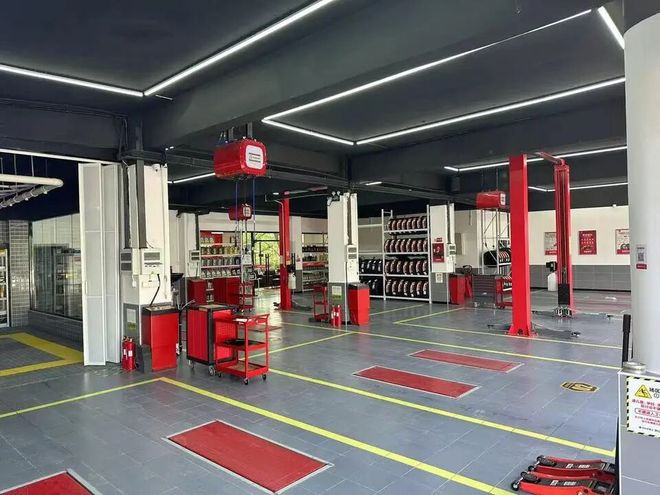
超九成工场店实现盈利,途虎成为加盟商稳定赚钱的“新大陆”
Zhong Guo Jing Ying Bao· 2025-09-21 02:44
Core Insights - The article highlights the success of the Tuhu car maintenance franchise model, showcasing how individual entrepreneurs have leveraged the brand to achieve significant financial success in a short period [1][6]. Group 1: Franchise Success Stories - Huang Rui, a 1994-born entrepreneur, opened three Tuhu stores in Guangxi, with the largest store generating an annual income of 2 million yuan [1]. - Other young franchisees, such as Chen Yong and Wang Yan, have also reported rapid growth and profitability, with monthly revenues reaching tens of thousands of yuan [4][5]. - The franchise model has attracted many young entrepreneurs, with a notable increase in the number of stores and their profitability [4][5]. Group 2: Financial Performance and Growth - As of mid-2025, Tuhu has expanded to 7,205 stores across 320 administrative regions, achieving over 95% coverage [3]. - The profitability rate for stores open for more than six months is 90%, with a 5% year-on-year increase in the proportion of profitable new stores [3]. - Tuhu's financial data shows significant growth in revenue, user numbers, and store count, with registered users reaching 150 million, a year-on-year increase of 18.8% [6]. Group 3: Standardization and Support - Tuhu's standardized service model allows franchisees to operate efficiently, reducing uncertainty and increasing operational effectiveness [6]. - The company has implemented various initiatives to support franchisees, including the "New Store Improvement Plan" and "Ten Billion Subsidy, Ten Thousand Stores Together" program [8]. - Tuhu has established a robust supply chain and warehousing network, with 32 regional warehouses and over 662 front warehouses, ensuring efficient operations for its franchisees [8].