标准化连锁餐饮

Search documents
东北985学霸在广州做出了川渝面馆老大,想做“面条界麦当劳”
3 6 Ke· 2025-12-05 04:18
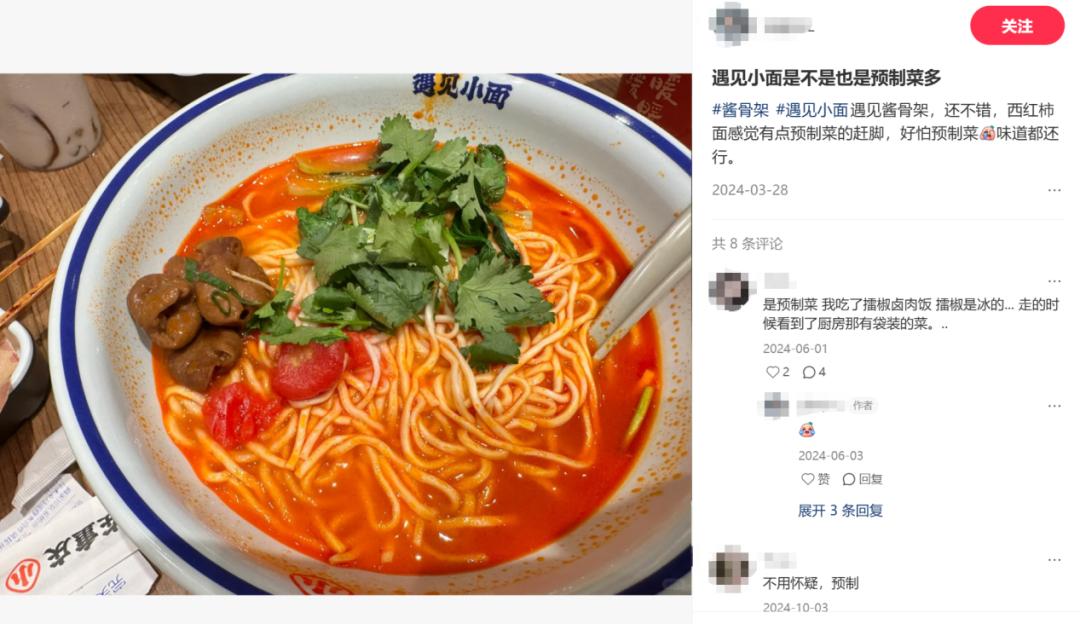
Core Viewpoint - The rapid expansion of the company "Yujian Xiaomian" raises concerns about "diseconomies of scale," as the more it expands, the lower the efficiency of individual stores, leading to a growth model that is increasingly competitive and self-defeating [3][15][20] Company Overview - "Yujian Xiaomian" has become the largest brand of Sichuan-Chongqing style noodle restaurants in China and the fourth largest operator of Chinese noodle restaurants, despite having no stores in the Sichuan-Chongqing region [2] - The company has rapidly increased its number of restaurants from 417 to 465 in less than six months as of mid-2025 [2] Expansion Strategy - The company has adopted a strategy of aggressive expansion, with a goal of reaching 1,000 stores within three years, supported by a central kitchen system [15][19] - The number of stores increased from 170 in 2022 to 360 in 2024, with a compound annual growth rate of 45.5% [15] Financial Performance - The company's revenue grew from 418 million yuan to 1.154 billion yuan from 2022 to 2024, with an annual compound growth rate of 66.2% [14] - In 2023, the company turned a profit of 45.914 million yuan after a loss of 35.973 million yuan in 2022 [12] Market Position and Challenges - Despite being the fourth largest in the industry, the company's market share is only 0.5%, indicating a weak head effect in a highly fragmented market [19] - The company faces challenges in maintaining profitability due to high debt levels, with asset-liability ratios around 90%, compared to the industry norm of 50%-70% [19][20] Consumer Behavior and Pricing Strategy - The company has lowered its average customer spending from 36 yuan in 2022 to 32 yuan in 2024 to attract more customers, but this has led to a decline in the average order value [15][18] - The shift in consumer dining habits towards takeout has also impacted the company's profitability, as takeout orders typically have lower average spending than dine-in [17] Operational Efficiency - The company has implemented a standardized production process to ensure consistent quality across its outlets, which has been crucial for its expansion [11][12] - However, this standardization has led to a perception of the product as "pre-made noodles," which may affect its appeal compared to traditional street vendors [12][20]