核酸药物研发

Search documents
2025年核酸药物品牌推荐:技术迭代浪潮下的创新领航者
Tou Bao Yan Jiu Yuan· 2026-02-28 12:02
Investment Rating - The report indicates a positive investment outlook for the nucleic acid drug industry, anticipating it to become the third major category of drugs, driven by technological innovation and increased capital investment [5]. Core Insights - Nucleic acid drugs are emerging as a new therapeutic approach with high efficiency and low toxicity, particularly in rare diseases, and are expanding into common diseases. The global market for nucleic acid drugs is rapidly growing, supported by expanded indications, policy backing, and research collaborations [5]. - The nucleic acid drug market size grew from 18.816 billion RMB in 2019 to 155.828 billion RMB in 2023, with a compound annual growth rate (CAGR) of 69.64%. However, it is expected to decline to 117.545 billion RMB by 2028, with a negative CAGR of -3.82% [10]. - The industry is witnessing a shift from rare diseases to chronic diseases and tumors, with significant advancements in technology and delivery systems, including AI-assisted design and liver-targeted delivery [34][36][38]. Market Background - Nucleic acid drugs are defined as drugs that utilize nucleic acids to intervene in disease by regulating gene expression. They have shown potential in treating metabolic diseases, genetic disorders, and cancers [6]. - The exploration of nucleic acid drugs began in 1978, with the first commercial product, Vitravene, launched in 1998. The market has since evolved, with significant developments in RNA therapies [7][8]. Market Status - The nucleic acid drug market is primarily focused on rare diseases but is gradually expanding to common diseases. The demand for treatment is urgent due to the high prevalence of rare diseases, with over 7,000 known globally [15]. - Capital investment in the nucleic acid sector has increased, with 23 financing events reported in 2024, totaling nearly 3 billion RMB. This funding supports the development of innovative drug delivery systems and clinical trials [12]. Market Competition - The competitive landscape features a tiered structure, with leading companies such as Saint No Biopharma and Hegia Biopharma in the first tier, followed by companies like Rebio and Haobo Pharmaceutical in the second tier [19][20]. - The report highlights ten recommended brands in the nucleic acid drug space, including Rebio, Watson Biopharma, and Saint No Biopharma, each with unique strengths and challenges in their product pipelines [22][23][24]. Development Trends - Technological breakthroughs in liver-targeted delivery and AI design are driving innovation in the nucleic acid drug industry, with expectations that over 50% of the pipeline will utilize these advancements by 2030 [34]. - The commercialization of nucleic acid drugs is accelerating through licensing agreements and healthcare payment reforms, enhancing drug accessibility and market growth [35]. - The industry is expanding its focus from rare diseases to chronic diseases and tumors, with significant research and clinical trials underway for conditions such as hypertension and Alzheimer's disease [38].
又一核酸药物研发企业入驻生物城
Xin Lang Cai Jing· 2026-02-11 18:46
Group 1 - The core focus of the company is on the research and development of circular RNA drugs, positioning itself as a high-tech enterprise in the nucleic acid drug sector [1] - The company has established partnerships with leading global firms such as Agilent, Thermo Fisher, and Merck to drive innovation from drug development to industrialization [1] - Currently, the company has seven research pipelines, including ODC drugs for tumors and immune therapy antibody drugs, with some pipelines already entering preclinical research stages [1] Group 2 - The company plans to expand its research pipelines to ten by the end of the year and has initiated preparations for business development transactions [1]
中国空间站完成空间生命科学在轨实验任务 还刷新一项新纪录
Yang Shi Xin Wen Ke Hu Duan· 2025-08-25 01:52
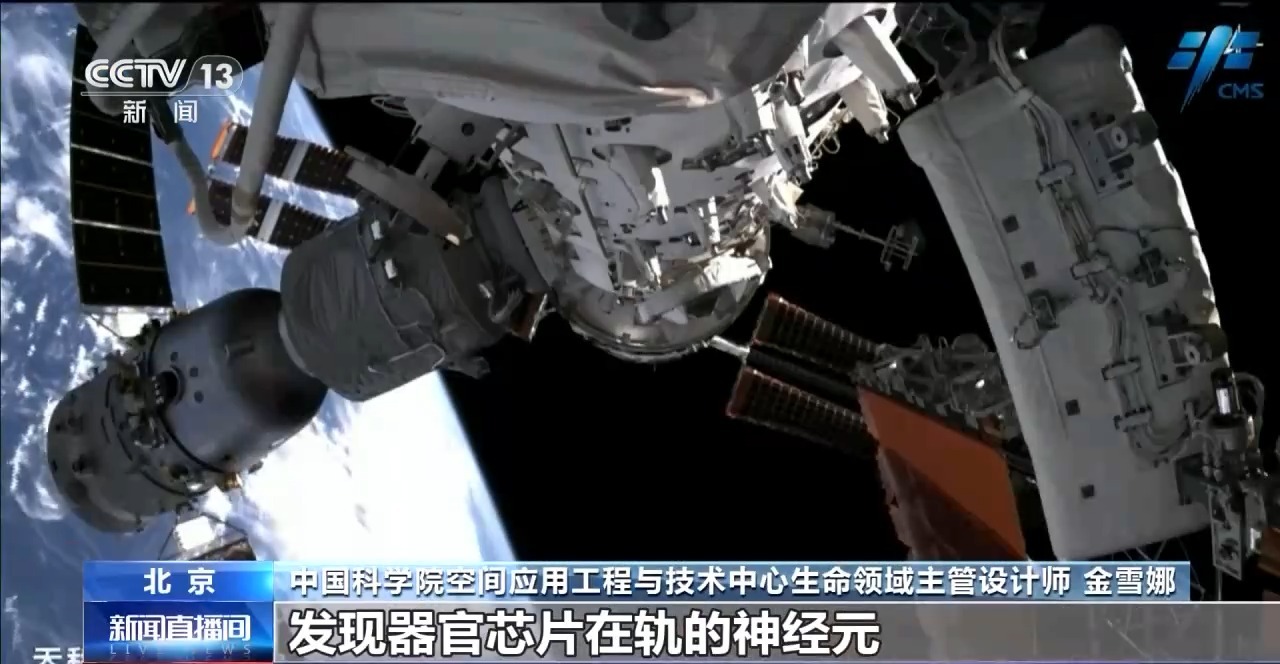
Group 1 - The Tianzhou-9 cargo spacecraft successfully delivered 23 scientific experiment materials to the Chinese space station, with ongoing experiments showing positive progress, particularly in space life sciences [1][11] - Recent experiments in microgravity have revealed that brain cells move faster in space, while muscle repair processes slow down, and the treatment effects of lipid metabolism disease drugs are significantly improved, potentially opening new avenues for Alzheimer's disease treatment and drug development [2][10] Group 2 - Three space life science experiments were conducted to explore the effects of microgravity on brain organoid structure and function, the migration behavior of skeletal muscle precursor cells, and the transport mechanisms of nucleic acid lipid nanoparticles within cells, enhancing understanding of physiological and pathological processes [4][17] - Observations indicate that neurons in organ-on-a-chip experiments move faster in space, suggesting that the unique environment may promote cell movement and maturation, offering new treatment strategies for neurodegenerative diseases [6][15] Group 3 - The experiments also found that skeletal muscle precursor cell migration slows down in microgravity, delaying muscle regeneration, which could hinder muscle repair [8] - The study of nucleic acid lipid carriers in microgravity showed increased cellular uptake efficiency of nucleic acid drugs and a rapid decrease in disease-related protein expression, indicating potential advantages for space applications [8][10] Group 4 - The samples from the completed experiments are currently stored in a low-temperature storage cabinet and are expected to return to Earth with a crewed spacecraft for further research [11][15] - The Chinese space station has conducted a total of 58 scientific and application projects this year, achieving significant advancements, including a record-setting experiment that heated tungsten alloy to over 3100 degrees Celsius [18][24] Group 5 - The tungsten alloy experiment, conducted by a research team from Northwestern Polytechnical University, utilized microgravity conditions to achieve a uniform state of the alloy, which is beneficial for enhancing material properties [20][22] - The successful heating of tungsten alloy to such high temperatures not only validates the performance of China's self-designed space materials science experiment cabinet but also provides valuable data for the development of new tungsten alloys and their applications in extreme environments [24][26]

悦康药业构建mRNA技术生态,加速生物医药创新步伐
Quan Jing Wang· 2025-04-29 10:27
Core Insights - Recently, Yuyuan Pharmaceutical achieved a breakthrough in new drug development with its mRNA vaccine YKYY025 for respiratory syncytial virus (RSV) receiving clinical trial approval from the National Medical Products Administration (NMPA) in China, following prior approval from the FDA in the United States, showcasing the company's strong innovation capabilities and international competitiveness [1][3] Group 1: Innovation in mRNA Vaccine Development - Yuyuan Pharmaceutical's subsidiary, Hangzhou Tianlong Pharmaceutical, has successfully submitted clinical trial applications for multiple mRNA vaccines, including YKYY026 for shingles, which has also been accepted by the NMPA [3] - The company has received clinical approvals for its broad-spectrum anti-coronavirus peptide YKYY017 aerosol inhalation and long-acting lipid-lowering nucleic acid drug YKYY015 in both China and the U.S. [3] - Yuyuan's proprietary nucleic acid delivery system has been granted patents in multiple countries, including the U.S., Japan, and Israel, establishing a solid foundation for its mRNA vaccine and nucleic acid drug development [3] Group 2: Comprehensive R&D Platform - The company has built a complete platform system for nucleic acid drug development, covering target discovery, high-throughput screening, process development, and quality control, which is rare among domestic pharmaceutical companies [4] - Yuyuan Pharmaceutical has multiple innovative products nearing commercialization, with three class 1 innovative drugs receiving acceptance for market application, and its peptide drug YKYY017 entering phase III clinical trials [4] - The anti-liver cancer antisense oligonucleotide drug CT102 has completed phase IIa clinical trials, indicating a strong pipeline that could provide new treatment options for patients and drive future growth for the company [4]