
阿尔茨海默病治疗

Search documents
Alpha Cognition Inc(ACOG) - 2025 Q4 - Earnings Call Transcript
2026-03-26 21:32
Financial Data and Key Metrics Changes - For Q4 2025, the company generated total revenues of $2.8 million, with net product revenues of $2.5 million from ZUNVEYL, and total revenues for the full year reached $10.2 million, including $6.8 million from ZUNVEYL [8][17] - Operating expenses for Q4 were $10.7 million, compared to $2.7 million in Q4 2024, leading to an operating loss of $7.9 million for the quarter, up from $2.7 million year-over-year [18][19] - The net loss for Q4 2025 was $6.9 million, or $0.30 per share, compared to a net loss of $5.8 million, or $0.52 per share in the same period last year [19][20] Business Line Data and Key Metrics Changes - ZUNVEYL's sales growth continued, with 4,941 bottles dispensed in Q4, marking a 62% quarter-over-quarter growth, and December alone saw 1,859 bottles dispensed, the strongest month since launch [22] - The number of prescribing doctors increased by 50% compared to Q3, and cumulative homes with prescriptions rose by 69% in Q4, indicating expanding adoption [10][22] Market Data and Key Metrics Changes - The company has signed contracts with two of the four major pharmacy benefit managers (PBMs), enhancing payer access and coverage for ZUNVEYL [10][11] - The long-term care market for Alzheimer's treatment is valued at $2 billion, and the company is focused on expanding its presence in this high-volume market [6][10] Company Strategy and Development Direction - The company aims to achieve operational profitability by 2027, supported by ongoing investments in commercial infrastructure and payer engagement strategies [7][29] - The focus for 2026 includes expanding penetration per home, deepening prescriber relationships, and accelerating payer pull-through [26][29] Management's Comments on Operating Environment and Future Outlook - Management expressed confidence in ZUNVEYL's market positioning, citing strong prescriber feedback and the potential for increased adoption as payer access improves [17][29] - The company anticipates continued sequential growth in ZUNVEYL sales through 2026, driven by increased physician awareness and expanded payer access [21] Other Important Information - The company raised $40 million in Q3 2025, which has been allocated to expand the sales force and enhance marketing efforts [7][16] - Three real-world studies are set to be initiated in 2026 to provide further evidence of ZUNVEYL's efficacy and tolerability [7][12] Q&A Session Summary Question: Timing for conversion of additional payers and promotion into neurologist prescriber base - Management expects to see some acceleration in Q2 for regional plans, with significant pickup in Q3, and plans to expand into neurology as they approach profitability in 2027 [31][33] Question: Key takeaways from the CONVERGE study - The study will evaluate polypharmacy in long-term care and is expected to provide data on adherence, tolerability, and dosing, which will be crucial for positioning ZUNVEYL with health plans [35][36] Question: Clinical development timeline for the sublingual formulation - A PK comparative study is set to initiate, and if successful, the sublingual formulation could enter the clinic in early 2027 [40][41] Question: Sales rep expansion and inflection points - The sales force expansion is complete, and management believes this will significantly accelerate business growth [53][54] Question: Changes in marketing strategy towards psychiatry customers - The company has shifted its messaging to emphasize behavioral benefits alongside tolerability, which has broadened its prescriber base [61][63] Question: Aspirational outlook for the BEACON study - The BEACON study aims to demonstrate strong cognitive effects and tolerability for ZUNVEYL, which is crucial for market positioning [65][66]
Nature Medicine:阿尔茨海默病新药2期临床试验失败
生物世界· 2026-03-08 05:28
Core Viewpoint - TREM2 is a significant risk gene for Alzheimer's disease, and its deficiency or mutation can significantly increase the risk of developing the disease [2] Group 1: Clinical Trial Overview - Alector's humanized TREM2 agonistic monoclonal antibody AL002 is undergoing clinical trials for Alzheimer's disease [2] - A phase 2 randomized controlled trial involving 381 early Alzheimer's disease patients was conducted, with participants receiving AL002 or a placebo [4] - The trial had a 1:1:1:1 randomization ratio for doses of AL002 (15mg/kg, 40mg/kg, or 60mg/kg) or placebo, administered intravenously every 4 weeks for 48-96 weeks [4] Group 2: Trial Results - AL002 showed sustained target engagement and pharmacodynamic response in the central nervous system, indicated by decreased soluble TREM2 levels and increased osteopontin levels in cerebrospinal fluid [4] - The trial did not meet its primary endpoint, with the least squares mean differences at week 96 for the 15mg/kg, 40mg/kg, and 60mg/kg groups compared to the placebo being -0.31, 0.13, and -0.17, respectively [4] - The most common adverse events were MRI findings resembling amyloid-related imaging abnormalities (ARIA) [4] Group 3: Implications - The negative results of this first TREM2 agonistic antibody trial for early Alzheimer's disease provide important references for TREM2-targeted therapies and ARIA research [4]


“瘦身术”砍成本+押注阿尔茨海默病药等新药产品线 百健(BIIB.US)利润展望强于预期
智通财经网· 2026-02-06 12:41
Core Viewpoint - Biogen (BIIB.US) reported its Q4 2025 earnings and future outlook, indicating that cost-cutting measures are mitigating the impact of declining sales in its multiple sclerosis (MS) business, with 2026 profit projections exceeding Wall Street expectations [1][2] Financial Performance - Q4 2025 total revenue was approximately $2.3 billion, a slight year-over-year decline of 7%, while adjusted EPS was $1.99, both exceeding Wall Street forecasts [1][2] - For the full year 2025, total revenue was $9.891 billion, reflecting a 2% year-over-year increase, with adjusted EPS at $15.28, down 7% year-over-year, but still above analyst expectations [2] Product Performance - Sales of the drugs Skyclarys and Spinraza fell short of analyst expectations, with Spinraza affected by shipping delays outside the U.S. [1] - Leqembi, a new Alzheimer's treatment, generated approximately $134 million in Q4 2025, showing a sequential increase from $121 million in the previous quarter, but still facing growth constraints due to systemic bottlenecks [2][4] Strategic Initiatives - The company is focusing on reducing reliance on its neuroscience portfolio by acquiring Reata to enhance its rare disease offerings and shifting R&D focus towards immunology [3][5] - Cost discipline has been emphasized, with significant job cuts and reductions in spending since the current CEO took office over three years ago [4] Regulatory Developments - The FDA is expected to make a decision on a higher dose of Spinraza by April 2026, which has been approved in Japan and Europe [6] - Biogen is also awaiting key trial data for a new Alzheimer's drug and a lupus treatment, which could further diversify its product pipeline [6]

万邦德(002082.SZ):石杉碱甲控释片II/III期临床试验完成100例受试者入组
智通财经网· 2026-02-01 08:30
Core Viewpoint - Wanbangde (002082.SZ) announced that its wholly-owned subsidiary, Wanbangde Pharmaceutical Group Co., Ltd., has completed the enrollment of 100 subjects for the Phase II/III pivotal registration clinical trial of its Class 2 new drug, Huperzine A controlled-release tablets, aimed at treating mild to moderate Alzheimer's disease dementia [1] Group 1 - Huperzine A is a cholinesterase inhibitor used to improve cognitive function, showing potential in preclinical studies to delay the progression of Alzheimer's disease and offering broad benefits, including the reduction of beta-amyloid protein, anti-inflammatory, antioxidant stress, and neuroprotective effects [1] - The company is actively advancing subject enrollment and will continue to collaborate closely with over 50 research institutions nationwide, including Xuanwu Hospital of Capital Medical University, to further validate the drug's safety and efficacy [1] - The data obtained from this trial will provide critical support for the drug's final market application [1]

中国科研团队解锁阿尔茨海默病治疗新路径
Zhong Guo Xin Wen Wang· 2026-01-23 07:56
Core Viewpoint - A research team from Huazhong University of Science and Technology has discovered a new pathway for treating Alzheimer's disease by utilizing a molecule secreted by tumor cells that effectively clears amyloid plaques in the brain, which are a key pathological feature of the disease [1][2]. Group 1: Research Findings - The research, which took 15 years, identified a molecule named "Cystatin C" (Cyst-C) that has the ability to remove amyloid plaques, providing a novel approach to Alzheimer's treatment [1]. - Traditional treatment strategies focus on preventing the formation of amyloid plaques, while this new strategy emphasizes enhancing the clearance of existing plaques, offering hope for patients with significant plaque accumulation [2]. Group 2: Future Directions - The research team plans to focus on drug development based on Cyst-C, as well as translational research and precision treatment strategies, with the potential for innovative therapies to enter clinical trials [2].
Cell重磅:鲁友明团队揭示癌症对抗阿尔茨海默病的机制,带来全新治疗思路
生物世界· 2026-01-23 00:21
Core Viewpoint - The research reveals a surprising link between peripheral cancers and a reduced risk of Alzheimer's disease, suggesting that certain cancer patients may possess a protective mechanism against Alzheimer's through the protein cystatin-c [2][6]. Group 1: Research Findings - The study published in Cell demonstrates that tumor cells secrete cystatin-c, which acts as a "molecular glue" to activate TREM2 receptors on microglial cells, facilitating the clearance of amyloid plaques associated with Alzheimer's disease [3][5]. - In experiments with Alzheimer's model mice implanted with peripheral cancer cells, a significant reduction in amyloid plaques and improved cognitive function were observed [6][12]. Group 2: Mechanism of Action - Cystatin-c binds to toxic amyloid oligomers in the brain, activates microglial cells via TREM2, and enhances the clearance of existing amyloid plaques [9][15]. - The protective effect of cystatin-c was confirmed through gene knockout experiments, where the absence of cystatin-c eliminated the protective benefits, which were restored upon reintroduction of normal cystatin-c [13][14]. Group 3: Therapeutic Implications - This research opens new avenues for Alzheimer's treatment by focusing on the removal of existing amyloid plaques rather than solely preventing their formation [17][21]. - Direct injection of recombinant cystatin-c into Alzheimer's model mice successfully reduced amyloid burden and improved learning and memory capabilities [18][20].

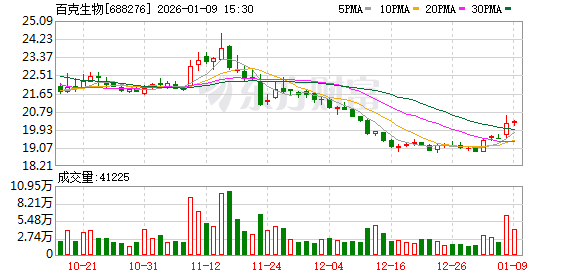
百克生物:公司在研的阿尔茨海默病治疗性疫苗正处于临床前研究阶段
Zheng Quan Ri Bao· 2026-01-09 12:36
Core Viewpoint - The company is developing an Alzheimer's disease therapeutic vaccine targeting Aβ and Tau proteins, aiming to induce the body to produce antibodies to clear pathological Aβ and Tau proteins in the brain, thereby slowing disease progression. The project is currently in the preclinical research stage [2]. Group 1 - The therapeutic vaccine is designed based on internationally recognized antigens targeting Aβ and Tau proteins [2]. - The goal of the vaccine is to stimulate the immune system to produce antibodies against Aβ and Tau [2]. - The project is still in the preclinical research phase, indicating it has not yet entered clinical trials [2].

Neumora Therapeutics, Inc. (NMRA) Discusses Positive Phase 1b Results for NMRA-511 in Alzheimer's Disease Agitation Transcript
Seeking Alpha· 2026-01-05 18:28
Core Viewpoint - Neumora is discussing top line data from the Phase Ib signal-seeking study of NMRA-511, aimed at addressing agitation in Alzheimer's disease [2]. Group 1: Company Overview - The presentation is led by Helen Rubinstein, Vice President of Investor Relations and Communications at Neumora, who introduces the management team [2]. - Key members of Neumora's management team include Co-Founder and CEO Paul Berns, President Josh Pinto, Chief Scientific Officer Nick Brandon, and Chief Operating and Development Officer Bill Aurora [2]. Group 2: Study Focus - The focus of the discussion is on the Phase Ib study of NMRA-511, which targets agitation in patients with Alzheimer's disease [2].


茅台董事长陈华:聚焦“哪里买”,要找到“谁来买”|首席资讯日报
首席商业评论· 2025-12-29 04:07
Group 1 - Moutai's Chairman Chen Hua emphasizes the need to focus on "where to buy" and "who will buy" to enhance channel networks and consumer experience for 2026 [2][6] - ST Huluwa has received a notice from the China Securities Regulatory Commission regarding suspected violations of information disclosure laws, with ongoing operations unaffected [2] - Vanke's recent failure to secure debt extensions indicates a strategy of "buying time" to restructure debts amid challenges related to its cooperative development model [4] Group 2 - A new breakthrough in late-stage Alzheimer's treatment has been achieved through the development of compounds that regulate glucose metabolism, providing new insights for treatment [3] - The total grain production in China has reached a record high of 1.43 trillion jin, marking a 1.2% increase from the previous year [7] - Over 12,000 private equity securities investment funds have been registered this year, showing a significant increase compared to the previous year, with stock strategies dominating the market [8] Group 3 - The Ministry of Finance plans to enhance educational funding and establish a new mechanism for allocation based on changes in school-age population [9] - The Ministry of Finance will continue to support consumer goods replacement programs to stimulate consumption in the upcoming year [10] Group 4 - Aerospace Development's subsidiary focused on commercial low-orbit satellite operations reported that its revenue accounted for less than 1% of the company's total revenue in the first three quarters of 2025 [5] - The global first vertical large language model "Ruixue" has been launched in Jiangsu, marking a significant advancement in agricultural technology [6]


动物实验显示: 药物能逆转阿尔茨海默病进程
Ke Ji Ri Bao· 2025-12-29 01:11
Core Insights - A recent study by American scientists reveals that energy supply imbalance in the brain is a significant factor in the progression of Alzheimer's disease, suggesting a potential for reversing the disease process [1][2] - The research indicates that the drug P7C3-A20 can restore the balance of a key cellular energy molecule, NAD+, leading to the repair of damaged brain tissue and full recovery of memory and cognitive functions in late-stage mice [1][2] Group 1 - The study marks a shift in Alzheimer's research focus from prevention or slowing progression to functional recovery [2] - The research team utilized mouse models and human brain tissue to identify that Alzheimer's patients struggle to maintain normal levels of NAD+, which directly contributes to disease progression [1] - The results showed that after restoring energy balance, cognitive functions in mice were fully recovered, and biomarkers associated with Alzheimer's returned to normal levels [1] Group 2 - The therapy differs from common NAD+ supplements, which may increase cancer risk by excessively raising NAD+ levels; P7C3-A20 precisely regulates NAD+ balance under cellular stress [2] - This discovery opens new avenues for Alzheimer's treatment and lays the groundwork for future human trials [2] - The research team plans to further explore the mechanisms of brain energy balance and assess the therapy's applicability to other age-related neurodegenerative diseases [2]