
棉花产业智能化

Search documents
棉花耕种收综合机械化率连续5年超95% 新疆沙雅有片“聪明的棉田”
Ren Min Ri Bao Hai Wai Ban· 2026-01-20 06:26
Core Insights - The cotton production in Xinjiang is projected to exceed 6 million tons for the first time in 2025, reaching 6.165 million tons, accounting for 92.8% of the national total [1] - The cotton industry in China is advancing towards automation and high-end development, with significant improvements in mechanization and efficiency [1][2] Group 1: Mechanization and Efficiency - The comprehensive mechanization rate for cotton farming in Shaya County has remained above 95% for five consecutive years, with 54,700 agricultural machines available [2] - Farmers are increasingly forming cooperatives to purchase advanced machinery and provide services, with 112 cooperatives currently operating in the county [2] - A single cotton harvesting machine can now harvest 5,000 acres in 12 days, compared to 12 workers taking two months for 100 acres previously [1] Group 2: Scientific Seed Selection - The seed selection process has become more scientific, with annual variety promotion meetings and comparative trial reports provided to farmers [3] - A dedicated crop testing station has been established to track the performance of cotton varieties, resulting in the identification of 12 suitable high-quality varieties for local conditions [3][4] - The average cotton yield in Shaya has increased from 285 kg per mu in 2017 to 442 kg per mu in 2025, with an average income increase of 1,000 yuan per mu [4] Group 3: Future Plans and Investments - Farmers like Ababake Li plan to expand their operations by purchasing additional harvesting machines and tractors to increase service areas [4]
新疆沙雅有片“聪明的棉田”
Ren Min Ri Bao· 2026-01-19 19:13
Core Insights - The cotton production in Xinjiang is projected to exceed 6 million tons for the first time in 2025, reaching 6.165 million tons, which accounts for 92.8% of the national total [2] - The cotton industry in China is evolving towards automation and high-end development, with significant advancements in mechanization and data-driven agricultural practices [2][3] Group 1: Mechanization and Efficiency - The comprehensive mechanization rate for cotton farming in Shaya County has maintained over 95% for five consecutive years, with 54,700 agricultural machines available [3] - The use of advanced machinery has drastically reduced labor costs and increased efficiency, allowing one machine to harvest 5,000 acres in 12 days compared to 12 workers taking two months for 100 acres [2][3] Group 2: Scientific Seed Selection - The Shaya County Seed Development Center conducts annual variety promotion meetings and provides comparative trial reports to help farmers select the best cotton varieties based on disease resistance, heat tolerance, fiber length, and yield [4] - The introduction of scientific seed selection has led to a significant increase in cotton yield per acre, from 285 kg/acre in 2017 to 442 kg/acre in 2025, resulting in an average income increase of 1,000 yuan per acre [5] Group 3: Agricultural Cooperatives and Services - More cotton farmers are forming cooperatives to purchase advanced machinery and provide agricultural services, with 112 cooperatives currently operating in Shaya County [3] - One cooperative reported a total income of over 1.1 million yuan last year, with approximately 40% coming from machinery services [3]

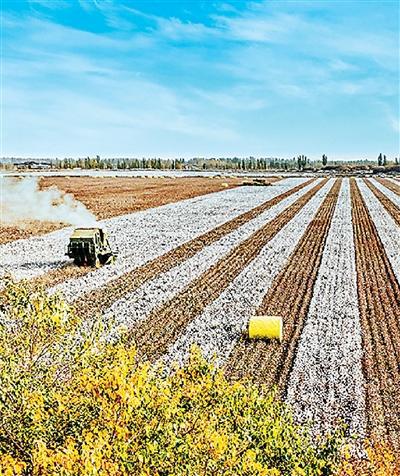
从新疆沙雅棉田看产业智能化
Ren Min Ri Bao· 2026-01-16 13:19
Core Insights - The cotton production in Xinjiang has surpassed 6 million tons for the first time, reaching 6.165 million tons, accounting for 92.8% of the national total [1] - The cotton industry in China is evolving towards mechanization, intelligence, and a complete industrial chain, enhancing efficiency and stability in production [1][2] Mechanization and Efficiency - The use of machinery in cotton farming has significantly increased, with a comprehensive mechanization rate of over 95% in cotton planting and harvesting in Shaya County [2] - Farmers have transitioned from manual labor to technology-driven practices, with advanced machinery reducing labor costs and increasing productivity [2][3] - The agricultural cooperative in Shaya County has serviced over 7,000 acres, generating significant income from machinery services [3] Scientific Seed Selection - The seed selection process has become more scientific, with farmers now relying on data and expert recommendations rather than traditional methods [4][5] - The introduction of a comprehensive testing station has allowed for the evaluation of cotton varieties, leading to the identification of 12 high-quality strains suitable for local conditions [5][6] - The average cotton yield in Shaya County has increased from 285 kg per mu in 2017 to 442 kg per mu in 2025, resulting in an average income increase of 1,000 yuan per mu [6] Extended Industrial Chain - The cotton processing industry has become more localized, reducing transportation costs and time, with cotton being processed within 20 kilometers of the farms [7] - The local textile industry has expanded, allowing for higher value-added products to be produced locally, significantly increasing profitability for farmers [7] - The establishment of a complete industrial chain from cotton production to textile manufacturing has created more job opportunities and enhanced income for local communities [7]
探访|从新疆沙雅棉田看产业智能化
Ren Min Ri Bao· 2026-01-16 03:04
Core Viewpoint - The cotton industry in Xinjiang is experiencing significant advancements in mechanization, scientific seed selection, and an extended industrial chain, leading to increased efficiency, higher yields, and improved income for farmers [1][2][3][4][5][6][7][8]. Mechanization and Efficiency - The mechanization of cotton farming has transformed the industry, with farmers now using advanced machinery for planting, pest control, and harvesting, resulting in a dramatic reduction in labor costs and time [2][3]. - The comprehensive mechanization rate for cotton farming in Shaya County has remained above 95% for five consecutive years, with farmers increasingly forming cooperatives to share resources and services [2][3]. Scientific Seed Selection - The process of seed selection has become more scientific, with farmers now relying on data and expert recommendations rather than traditional methods, leading to better crop resilience and higher yields [4][5][6]. - The introduction of high-quality seed varieties has increased the cotton yield per acre in Shaya County from 285 kg in 2017 to 442 kg in 2025, resulting in an average income increase of 1,000 yuan per acre [6]. Extended Industrial Chain - The cotton industry in Shaya County has developed a complete industrial chain, allowing for local processing of cotton into various products, which significantly increases the added value compared to selling raw cotton [7][8]. - Local processing facilities have reduced transportation costs and time, enabling farmers to receive payments more quickly after selling their cotton [7][8]. Economic Impact and Employment - The advancements in the cotton industry have not only improved the income of farmers but have also attracted young people back to rural areas, creating more job opportunities and contributing to local economic growth [8].
从新疆沙雅棉田看产业智能化(探访)
Ren Min Ri Bao· 2026-01-15 23:58
Core Insights - The cotton production in Xinjiang has surpassed 6 million tons for the first time, reaching 6.165 million tons, accounting for 92.8% of the national total [1] - The cotton industry is evolving towards mechanization and smart technology, enhancing efficiency and stability in production [2][3] Mechanization and Efficiency - The transition to mechanized farming has significantly reduced labor costs and increased efficiency, with a single machine now able to harvest 5,000 acres in just 12 days compared to 100 acres requiring 12 workers for two months previously [2] - The comprehensive mechanization rate for cotton farming in Shaya County has remained above 95% for five consecutive years, with 54,700 agricultural machines available [2] Scientific Seed Selection - The seed selection process has become more data-driven, with farmers now relying on scientific reports and trials to choose varieties based on disease resistance and yield potential [4][5] - The coverage rate of quality cotton seeds in Xinjiang has increased to over 98%, with significant improvements in yield per acre from 285 kg in 2017 to 442 kg in 2025 [6] Extended Industry Chain - The cotton industry chain has been extended, allowing for local processing of cotton, which reduces transportation costs and time, enhancing profitability for farmers [7] - The textile industry in Xinjiang has developed a comprehensive value chain, contributing to job creation and increased income for local communities [7]
棉花耕种收综合机械化率连续5年超95% 从新疆沙雅棉田看产业智能化(探访)
Ren Min Ri Bao· 2026-01-15 22:08
Core Viewpoint - The cotton industry in Xinjiang is experiencing significant advancements in mechanization, scientific seed selection, and an extended industrial chain, leading to increased efficiency, higher yields, and improved income for farmers [1][2][3][4][5][6][7]. Group 1: Mechanization and Efficiency - The mechanization of cotton farming has transformed the industry, with farmers now using advanced machinery for planting, pest control, and harvesting, resulting in a dramatic reduction in labor costs and time [2][3]. - The comprehensive mechanization rate for cotton farming in Shaya County has remained above 95% for five consecutive years, with 54,700 agricultural machines available [2][3]. - Farmers are transitioning from manual labor to technology-driven practices, enhancing productivity and operational efficiency [2][3]. Group 2: Scientific Seed Selection - The process of seed selection has become more scientific, with farmers now relying on data and research rather than traditional methods, leading to better crop resilience and yields [4][5][6]. - Xinjiang has achieved a cotton seed coverage rate of over 98%, with significant improvements in cotton yield per acre, increasing from 285 kg/acre in 2017 to 442 kg/acre in 2025 [6]. Group 3: Extended Industrial Chain - The cotton industry in Shaya County has developed a complete industrial chain, allowing for local processing of cotton, which reduces transportation costs and time, and increases profitability for farmers [7]. - Local textile enterprises are now able to process cotton into various products, significantly increasing the added value compared to selling raw cotton [7]. - The development of the textile and garment industry in Xinjiang is creating job opportunities and contributing to the economic well-being of local communities [7].
棉田里的“丰”景——从新季棉花采收看产业发展新图景
Xin Hua Wang· 2025-10-07 13:09
Core Viewpoint - The cotton industry in Xinjiang is experiencing significant growth and modernization, driven by advancements in mechanization and technology, leading to increased production and efficiency [1][2][3]. Group 1: Production and Yield - In 2025, China's total cotton production is expected to reach 7.22 million tons, an increase of 8.3% year-on-year, marking the highest level since 2013 [1]. - The average yield per acre in Xinjiang is reported to be over 400 kilograms, indicating a strong harvest season [1]. Group 2: Mechanization and Efficiency - Xinjiang plans to deploy over 7,500 cotton-picking machines this year, with a mechanization rate of over 97% and a machine-picking rate of over 90% [2]. - The use of large cotton-picking machines has drastically improved efficiency, with one machine capable of harvesting several hundred acres in a day [1][2]. Group 3: Technological Advancements - The integration of drones for precision spraying and efficient operations has become standard in cotton farming, with some drone operators earning over 200,000 yuan annually [2]. - The development of genetically engineered cotton capable of producing astaxanthin represents a significant innovation, enhancing the economic value of cotton byproducts and increasing farmers' income [3]. Group 4: Industry Transformation - The cotton industry is transitioning from manual harvesting to mechanized operations, and from a single agricultural product to an extended industrial chain, driven by technological advancements [3].