楼市价格调整

Search documents
卖爆了!3字头遍地,兰亭盛荟25天成交14套!
Sou Hu Cai Jing· 2026-01-28 15:21
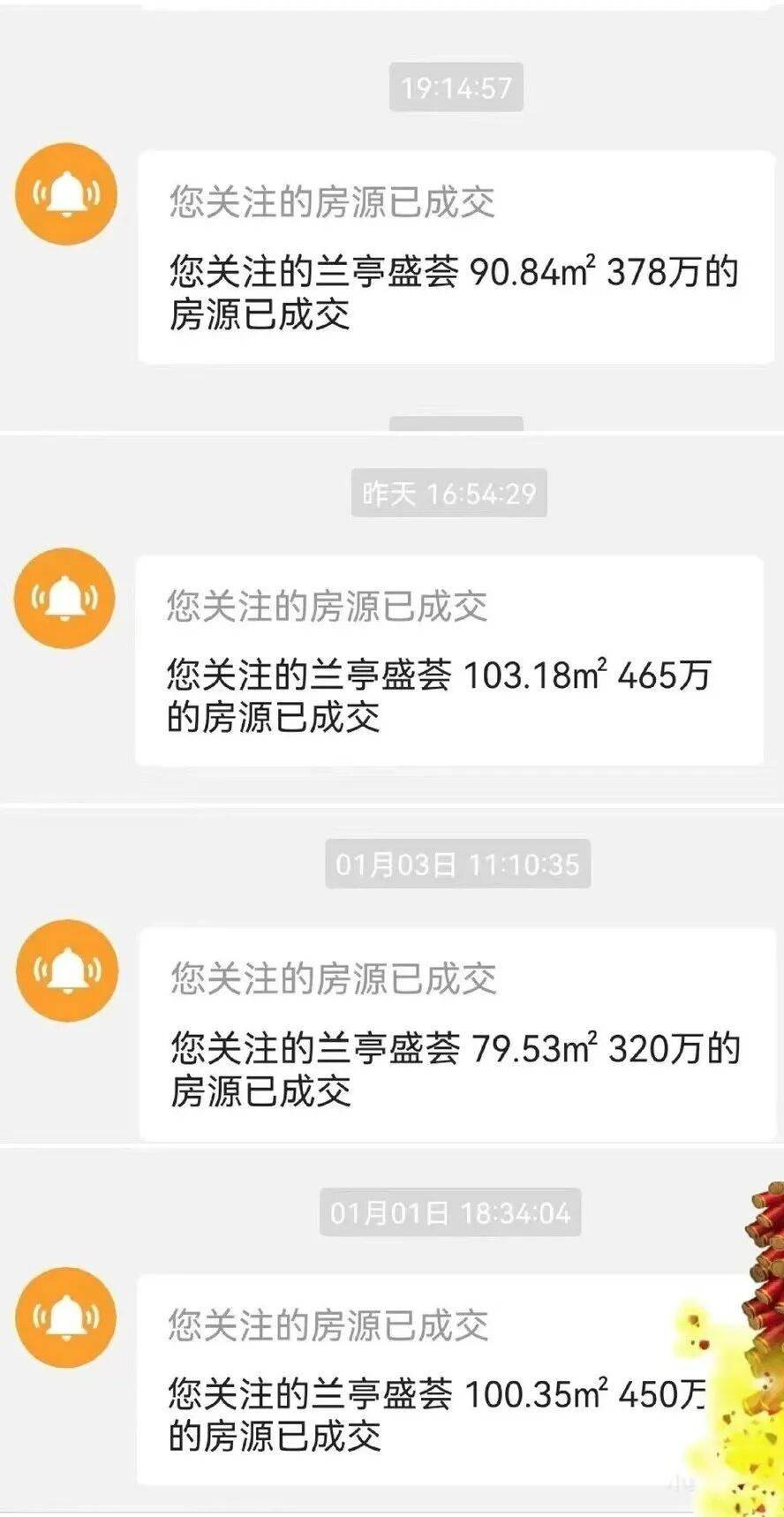
Core Viewpoint - The article highlights a surprising surge in sales at Lanting Shenghui amidst a declining real estate market, indicating a shift in buyer demographics and market dynamics. Group 1: Sales Performance - In January, Lanting Shenghui sold 14 units in just 25 days, achieving one-third of last year's total sales of 38 units within a month [4] - The average price per square meter has dropped significantly, with January sales averaging 38,000 per square meter, compared to 58,000 in 2024 and 45,000 in 2025 [7][9] - The sales volume indicates a strong recovery, with 9 out of 14 units sold being under 100 square meters, appealing to first-time buyers [12] Group 2: Buyer Demographics - The recent buyers are primarily end-users rather than speculative investors, suggesting a fundamental shift in the market [9][21] - The new buyers are more focused on practical living conditions, such as proximity to workplaces and family-friendly amenities, rather than potential price appreciation [18][19] - The previous high-leverage financial investors are being replaced by self-occupying buyers due to significant price corrections [21] Group 3: Market Conditions - Recent policy changes, including tax incentives and lower mortgage rates, have contributed to a more favorable market environment, with total transactions in Guangzhou expected to exceed 9,000 in January [21] - The overall sentiment in the second-hand market is improving, with previously hesitant buyers now entering the market [21] - The article suggests that the stability of property prices can be gauged by the presence of self-occupying buyers rather than speculative investors [21]

去年12月70城二手房价格均下跌
第一财经· 2026-01-19 05:38
Core Viewpoint - The article discusses the current state of China's real estate market, highlighting a decrease in sales volume and value, but with a narrowing decline rate, indicating a potential stabilization in the market [3][4]. Group 1: Sales Performance - In 2025, the total sales area of new residential properties reached 88,101 million square meters, a decrease of 8.7% from the previous year, with residential sales area down by 9.2% [3]. - The sales revenue for new residential properties was 83,937 billion yuan, reflecting a decline of 12.6%, with residential sales revenue down by 13.0% [4]. - The sales area and revenue for new residential properties in 2024 were 97,385 million square meters and 96,750 billion yuan, respectively, both showing a year-on-year decline of 12.9% and 17.1% [4]. Group 2: Market Dynamics - The real estate market is transitioning from a phase of "housing shortage" to "basic balance," with sales volume not reaching the "1 billion" scale in recent years [3]. - The decline in sales area and revenue is attributed to strict control over new developments and an accelerated inventory reduction process [4]. - As of the end of 2025, the unsold housing inventory was 76,632 million square meters, an increase of 1.6% from the previous year, indicating ongoing inventory pressure [8]. Group 3: Price Trends - In December 2025, the new home prices in 70 major cities continued to decline, with a significant number of cities experiencing price drops [5][6]. - The average price of second-hand homes also saw a decline, although the rate of decrease in first-tier cities was narrowing [6][7]. - The trend of price stabilization is emerging, with more cities reporting flat prices, suggesting a phase of negotiation between buyers and sellers [5][9]. Group 4: Future Outlook - The article suggests that the policy direction of "controlling new supply, reducing inventory, and optimizing supply" will continue to shape the market in 2026 [8]. - There is an increasing trend of demand shifting towards second-hand homes and rentals, which is expected to help alleviate inventory pressure and stabilize prices [8][9]. - The active participation of first-time buyers and new citizens in the market is anticipated to drive transactions in both new and second-hand homes, contributing to market stability [9].
广州科学城大壮名城“骨折价”,压力给到了周边楼盘
Sou Hu Cai Jing· 2025-12-12 10:21
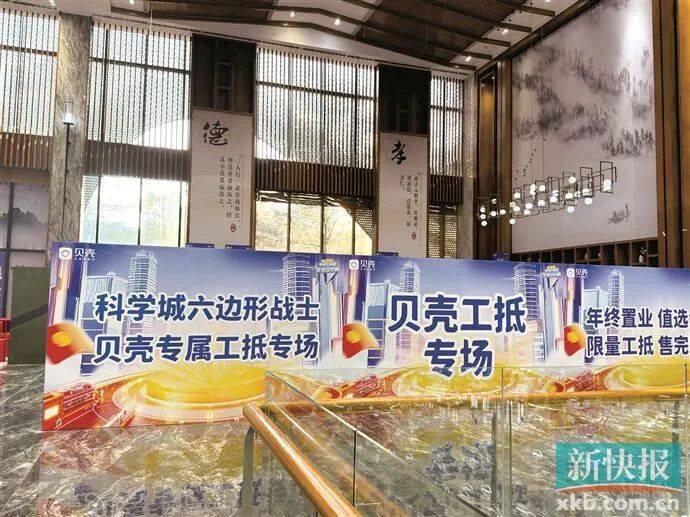
Core Viewpoint - The recent significant price adjustment of the Dazhuang Mingcheng project in Guangzhou Science City, due to the developer's financial strain, has drawn market attention and impacted surrounding property prices. Group 1: Price Adjustment Details - The Dazhuang Mingcheng project has reduced its unit price from an average of 4.5 to 6.5 million yuan per square meter last year to approximately 2.8 million yuan per square meter for some "work offset" units, representing a nearly 40% decrease [1][4] - The adjustment has led to a surge in customer visits, with over 600 groups visiting in one day, resulting in the sale of more than 90 units over the weekend, which is rare in the current market environment [4][5] Group 2: Developer's Financial Situation - The developer is facing financial difficulties, necessitating the release of "work offset" units to recover funds for construction payments [4][5] - The project has only partially completed its construction, with three out of six buildings finished, and requires substantial funds for ongoing construction and relocation costs [5] Group 3: Market Impact - The price drop at Dazhuang Mingcheng has triggered similar adjustments in nearby properties, although the response from other new developments has been less favorable, as seen with the New World project, which has not attracted significant customer interest despite lowering prices [8][11] - The second-hand housing market in the Science City area is under pressure, with instances of price inversion between new and second-hand properties, leading to stagnation in the circulation of second-hand homes [11][12] Group 4: Broader Market Trends - The adjustment in the Science City housing market is attributed to a reversal in supply and demand dynamics, with an influx of new and second-hand properties leading to increased competition [13] - The trend of developers offering "work offset" promotions is expected to continue as year-end financial pressures mount, potentially affecting the pricing structure across the Science City and Huangpu districts [13]