正向现金流

Search documents
先别吹了,看看谷歌的进步,承认中美AI有代差很难吗?
Xin Lang Cai Jing· 2025-11-27 00:24
Core Insights - The article discusses the competitive landscape of AI, highlighting the significant advancements made by companies like Google with their Gemini model, which has surpassed the combined usage of all major models in China within 24 hours, reaching over 7 billion tokens [8][27]. - It emphasizes the importance of multi-modal capabilities and underlying architecture in determining the future success of AI technologies, rather than just focusing on language processing capabilities [14][16]. - The article warns that by mid-2026, companies relying on government subsidies and low-price bidding will face severe challenges, as investors will demand proof of profitability and positive cash flow [30][31]. Group 1 - Google's Gemini model achieved over 7 billion tokens in usage within 24 hours, indicating a significant leap in AI capabilities [8]. - The article points out that the current AI landscape is marked by a gap in multi-modal capabilities and underlying architecture, which are crucial for future competitiveness [14][16]. - Companies like Google are investing heavily in AI infrastructure, with Google spending $42 billion on AI in a single quarter, which accounted for 42% of their revenue [27]. Group 2 - The article highlights the disparity in funding density, with companies like Baidu investing ¥21 billion in AI, showcasing the financial gap in the industry [32][33]. - It suggests that companies must either become rule-makers or scenario owners to survive in the future AI landscape, emphasizing the need for substantial computational power and integration into core workflows [37]. - The focus should be on companies that have established a strong presence in specific fields, as they are more likely to endure economic cycles and provide real value [39].



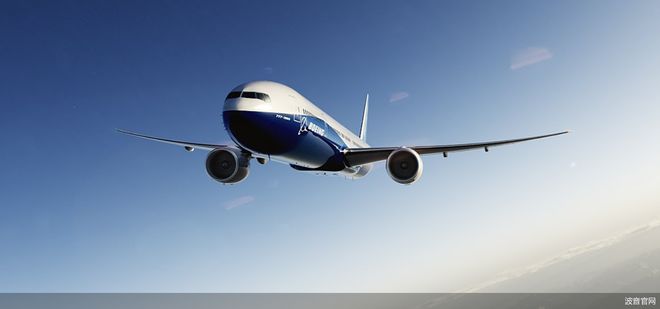
波音复苏现曙光
Bei Jing Shang Bao· 2025-07-30 15:19
Core Viewpoint - Boeing is showing signs of recovery as quarterly losses narrow significantly and sales revenue increases, following a series of positive developments that are restoring investor confidence [1][3]. Financial Performance - Boeing's Q2 revenue reached $22.75 billion, up 35% from $16.87 billion in the same period last year [3]. - The net loss for Q2 was $612 million, a substantial improvement from a loss of $1.439 billion in the previous year [3]. - The company consumed only $200 million in cash over three months, far below analysts' expectations of $1.8 billion [3]. - The commercial airplanes division saw an 81% revenue increase to $10.87 billion, while the defense and space division grew 10% to $6.6 billion [3]. Orders and Deliveries - Boeing's order volume surged to 625 aircraft in the first half of the year, with a backlog of $619 billion, including $522 billion worth of over 5,900 commercial aircraft orders [3]. - In Q2, Boeing received 455 new commercial aircraft orders, including significant orders from Qatar Airways and British Airways [3]. - Commercial aircraft deliveries increased by 63% year-over-year, totaling 280 aircraft in the first half of the year, the highest since 2018 [4]. Production and Operational Improvements - Boeing has increased the monthly production rate of the 737 Max to 38 units, adhering to FAA limits set after a safety incident [4]. - The company aims to achieve positive cash flow by Q4 and has sold part of its digital aviation solutions business for $10.55 billion to alleviate financial pressure [7][8]. Challenges and Strategic Moves - Boeing has faced significant challenges, including safety incidents and labor strikes, leading to a net loss of $11.82 billion in 2024 [5]. - The company has been forced to seek additional funding sources due to ongoing losses, which have totaled $35.685 billion since 2019 [8]. - Boeing's reliance on foreign suppliers for 80% of its commercial aircraft and components poses ongoing risks, especially in light of tariff issues affecting deliveries to China [6][8].