
多模态

Search documents
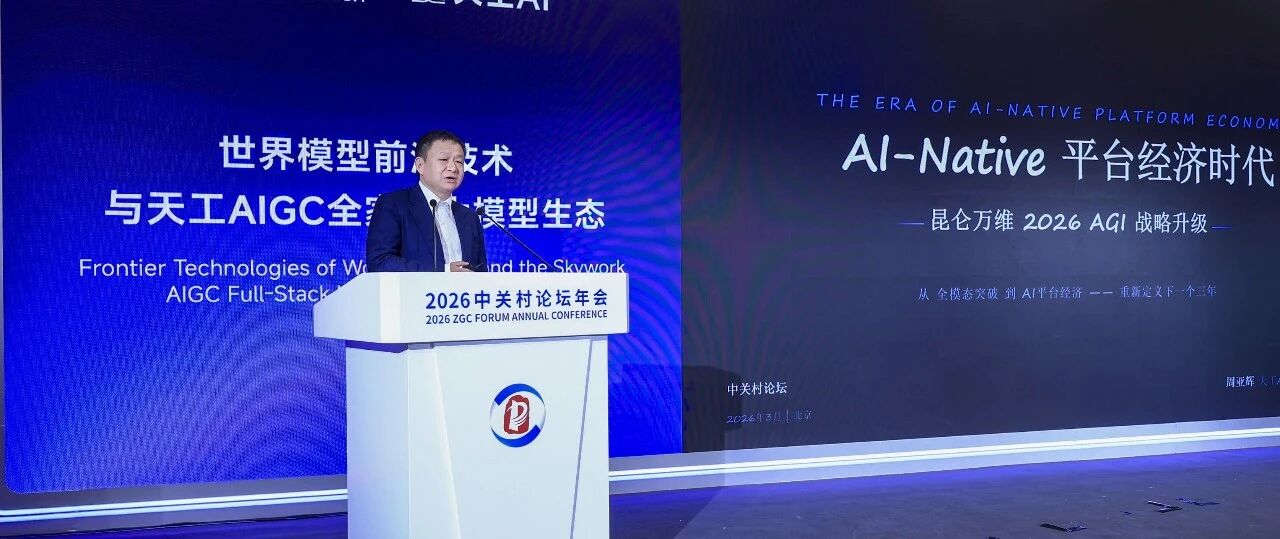
三大模态模型全部登顶后,昆仑万维正式披露了 2026 年 AGI 战略
Founder Park· 2026-03-30 10:14
Core Insights - Kunlun Wanwei and its subsidiary Tiangong AI are positioned uniquely in the Chinese AI landscape, not fitting into the typical categories of major tech players like BAT or ByteDance, yet their diverse business operations and unique market position make them a significant player across technology, finance, and the internet [2][3]. Group 1: AGI Strategy and Ecosystem - In 2026, Kunlun Wanwei's video model SkyReels V4 achieved the top position in the global evaluation platform Artificial Analysis for "text-to-video (including audio)," surpassing competitors like Google Veo 3.1 [3]. - The company's AGI strategy has evolved into a "3+1" ecosystem architecture, consisting of four SOTA models at the base, three AI-native platforms in the middle, and a super agent at the top, aimed at enhancing creativity and transitioning to an AI Native platform economy [3][10]. - The three AI-native platforms include DramaWave, an AI version of Netflix with 80 million monthly active users, Mureka, an AI music platform, and a gaming platform that allows voice interaction [12][10]. Group 2: Technological Innovations - The Matrix-Game 3.0 model addresses key challenges in interactive world modeling, significantly improving memory, scene generalization, and generation quality, achieving real-time generation at 40 FPS in 720P resolution [16][24]. - SkyReels V4 is the first video generation model to support multi-modal input and joint audio-video generation, utilizing a dual-stream architecture for precise alignment of audio and video [32][34]. - Mureka V9 enhances music creation by integrating reasoning capabilities, allowing the model to understand the emotional context and structure of music, thus producing higher quality outputs [37][40]. Group 3: Market Position and Future Outlook - The AI video generation market is highly competitive, with major players like OpenAI and Google, but Kunlun Wanwei aims to redefine the landscape by reconstructing the logic of video generation from the ground up [30][31]. - The company's ambition is to create a comprehensive multi-modal ecosystem that benefits content creators by lowering barriers and costs, potentially leading to a significant increase in the number of creators globally [41][44]. - Kunlun Wanwei aspires to transition from a tool provider to a standard-setting entity in the AI-native platform economy, similar to Apple's ecosystem approach, aiming for a complete system and experience for users [45][46].

时隔5年半,程一笑再谈快手与字节竞争
21世纪经济报道· 2026-03-26 15:51
Core Insights - Kuaishou Technology reported a total revenue of RMB 142.8 billion for 2025, representing a year-on-year growth of 12.5%, with adjusted net profit reaching RMB 20.6 billion, up 16.5% year-on-year, and an adjusted net profit margin of 14.5% [1] - The company's focus on AI commercialization is highlighted, with Kuaishou's AI revenue reaching RMB 340 million in Q4 2025, and significant investments planned for 2026 [1][2] - Kuaishou's CEO Cheng Yixiao addressed competition with ByteDance's Seedance 2.0 during the earnings call, emphasizing the complexity and potential of video generation models [5][6] Financial Performance - Kuaishou's total revenue for 2025 was RMB 142.8 billion, a 12.5% increase from the previous year [1] - The adjusted net profit for the year was RMB 20.6 billion, reflecting a 16.5% year-on-year growth [1] - The adjusted net profit margin improved to 14.5% [1] AI Investment and Strategy - Kuaishou plans to significantly increase its capital expenditures (Capex) to approximately RMB 26 billion in 2026, up by about RMB 11 billion from 2025 [2][10] - The Capex will support the development of Kuaishou's AI models, including the Keling model and other foundational models, as well as infrastructure for data storage and processing [2][10] - The annual recurring revenue (ARR) for Keling AI exceeded USD 300 million as of January 2025, with expectations for over 100% year-on-year growth in 2026 [5] Competitive Landscape - Cheng Yixiao noted that the introduction of Seedance 2.0 has positively impacted the industry by lowering the creation barriers for ordinary users and increasing the penetration of AI video generation [6] - Kuaishou's approach to video generation emphasizes a multi-modal strategy, with ongoing model iterations aimed at enhancing user creativity and interaction [6][9] - The company aims to leverage AI in various business scenarios, including automated marketing and e-commerce, to improve user experience and operational efficiency [9]

时隔5年半,程一笑再谈快手与字节竞争
2 1 Shi Ji Jing Ji Bao Dao· 2026-03-26 03:22
Core Insights - Kuaishou Technology reported a total revenue of RMB 142.8 billion for the year 2025, representing a year-on-year growth of 12.5%, with adjusted net profit reaching RMB 20.6 billion, up 16.5% from the previous year, and an adjusted net profit margin of 14.5% [1] - The company's focus on AI commercialization is highlighted, with Kuaishou's AI revenue reaching RMB 340 million in Q4 2025, and significant investments in AI expected to accelerate [1][2] Financial Performance - For 2025, Kuaishou's total revenue was RMB 142.8 billion, a 12.5% increase year-on-year, while adjusted net profit was RMB 20.6 billion, marking a 16.5% increase [1] - The adjusted net profit margin improved to 14.5% [1] AI Investment and Strategy - Kuaishou plans to significantly increase its capital expenditure (Capex) to approximately RMB 26 billion in 2026, an increase of about RMB 11 billion compared to 2025, focusing on AI model development and infrastructure [2][7] - The investment will cover computing power for Kuaishou's AI models, server procurement, and data center construction [2][7] Competitive Landscape - Kuaishou's CEO Cheng Yixiao discussed the competition between Kuaishou's AI model Keling and ByteDance's Seedance 2.0, emphasizing the complexity and openness of video generation models [3] - As of January 2025, Keling AI's annual recurring revenue (ARR) exceeded USD 300 million, with expectations for over 100% revenue growth in 2026 [3] Technological Advancements - Kuaishou has been iterating its AI models, with the introduction of multi-modal capabilities in Keling, enhancing user creativity and interaction [5] - The company aims to integrate multi-modal input and output within a unified model framework, advancing video generation capabilities [5][6] Future Directions - Kuaishou will focus on developing AI agents for e-commerce, enhancing automated marketing processes, and improving user search experiences [6][7] - The company aims to maintain healthy free cash flow growth despite increased Capex, with a target of achieving nearly RMB 12 billion in free cash flow in 2025 [7]


——GenAI系列报告之73:从MiniMax看国产大模型出海投资机遇
Shenwan Hongyuan Securities· 2026-03-24 10:06
Investment Rating - The report maintains a positive outlook on the investment opportunities in the domestic large model sector, particularly focusing on MiniMax as a key player [5][6]. Core Insights - The large model technology path has converged, with domestic models emphasizing cost-effectiveness while overseas commercialization accelerates. The emergence of applications like OpenClaw is driving significant increases in token consumption, indicating a strong demand for domestic large models in high-frequency scenarios such as programming and office tasks [4][5][6]. - MiniMax is positioned as a pioneer in self-developed multimodal large models, with a global strategy driving high revenue growth. The company achieved total revenue of $79.04 million in 2025, a year-on-year increase of 159%, and its annual recurring revenue (ARR) surpassed $150 million by February 2026 [4][5][6]. - MiniMax's M2.5 model offers extreme cost-effectiveness, making it suitable for agent scenarios like programming and office automation. The model's API output price is 1/10 to 1/20 of that of leading overseas models, enhancing its competitive edge [4][5][6]. Summary by Sections 1. Industry: Overseas Performance Leading, Domestic Models Provide Cost Advantages - The competition in large models has shifted from finding the right path to optimizing efficiency on mainstream paths. The pre-training paradigm has converged to a Decoder-Only + MoE architecture, focusing on mid-training and post-training optimizations to enhance model capabilities [12][14]. 2. MiniMax: Dual Drive of Self-Developed Models and Commercial Applications - MiniMax is a leading global company in multimodal models, established in 2021, focusing on general large models and multimodal capabilities (text, speech, video). The company has a high proportion of R&D personnel, with over 70% of its workforce dedicated to research [34][40]. 3. MiniMax: Rapid Model Iteration Drives Revenue Growth - MiniMax's revenue structure is diverse, with AI-native applications accounting for 67.2% of total revenue. The company has seen a significant increase in token consumption, with daily token usage from its M2 series models growing over six times from December 2025 [40][41].
Meta又一AI大将跟LeCun跑了
量子位· 2026-03-22 06:28
Core Viewpoint - The departure of John Nguyen from Meta to join AMI, a company founded by Yann LeCun, highlights the ongoing challenges and internal turmoil at Meta, particularly within its FAIR team, as it struggles with technological advancements and employee retention [1][5][30]. Group 1: John Nguyen's Background and Contributions - John Nguyen, a key figure at Meta's FAIR, has a strong academic background with dual degrees in statistics and computer science from the University of California, Davis, and has been with Meta for over six years [12][15]. - His research trajectory at Meta included significant contributions to federated learning, large-scale deep learning training, and multi-modal systems, aligning with Meta's technological evolution [16][18][20]. - Nguyen's expertise in both foundational training and practical system implementation positions him as a valuable asset in the AI industry, particularly as the focus shifts from language modeling to real-world modeling [20][28]. Group 2: Meta's Current Challenges - Meta is experiencing significant internal challenges, including rumors of leadership changes and difficulties in model development, particularly with the delayed release of its new model "Avocado," originally expected by late last year [30][34]. - The company has faced public relations issues, including a recent incident involving unauthorized data leaks, contributing to a negative perception of its operational stability [36][37]. - The contrast between Meta's struggles and the rapid growth of AMI, which secured $1.03 billion in seed funding, suggests a potential trend of further departures from Meta's FAIR team to join LeCun's new venture [28][38].


DeepSeek V4迟迟不发,中国开源王者为何越来越慢?
阿尔法工场研究院· 2026-03-17 09:35
Core Viewpoint - DeepSeek's development has slowed down significantly, raising concerns among developers and the AI community about its future competitiveness compared to other players like OpenAI and Anthropic [5][8][18]. Group 1: DeepSeek's Development Timeline - DeepSeek V4 is expected to launch in April 2026, following multiple delays in its announcement timeline [6][14]. - The previous version, DeepSeek V3.2, was released on December 1, 2025, marking a high point for the company with rapid updates and significant community engagement [8][11]. - Since the release of V3.2, updates have been minimal, focusing on small adjustments rather than major advancements, leading to community frustration [12][13]. Group 2: Comparison with Competitors - OpenAI and Anthropic have maintained a rapid release cycle, with OpenAI launching multiple updates and products almost monthly, while DeepSeek has not released any major updates since V3.2 [15][18]. - The competitive landscape has shifted, with DeepSeek lagging behind in terms of update frequency and innovation, which could impact its market position [42]. Group 3: Challenges Faced by DeepSeek - The transition from releasing basic models to developing a comprehensive system has increased the complexity and duration of DeepSeek's development cycles [21][25]. - DeepSeek is under pressure to meet high expectations from the open-source community, where any perceived failure could damage its reputation significantly [28][31]. - The need for DeepSeek to ensure that each release is impactful is critical, as minor updates may not suffice in a competitive environment [32]. Group 4: Strategic and Technical Considerations - The upcoming V4 is expected to focus on multi-modal capabilities, long-term memory, and enhanced code abilities, alongside deep adaptation to domestic chipsets [38][42]. - The development of V4 is seen as a response to both external technological pressures and internal resource limitations, which may extend the research and development timeline [39][40]. - The ability to adapt to the evolving hardware ecosystem is crucial for DeepSeek's future success in the AI landscape [37].

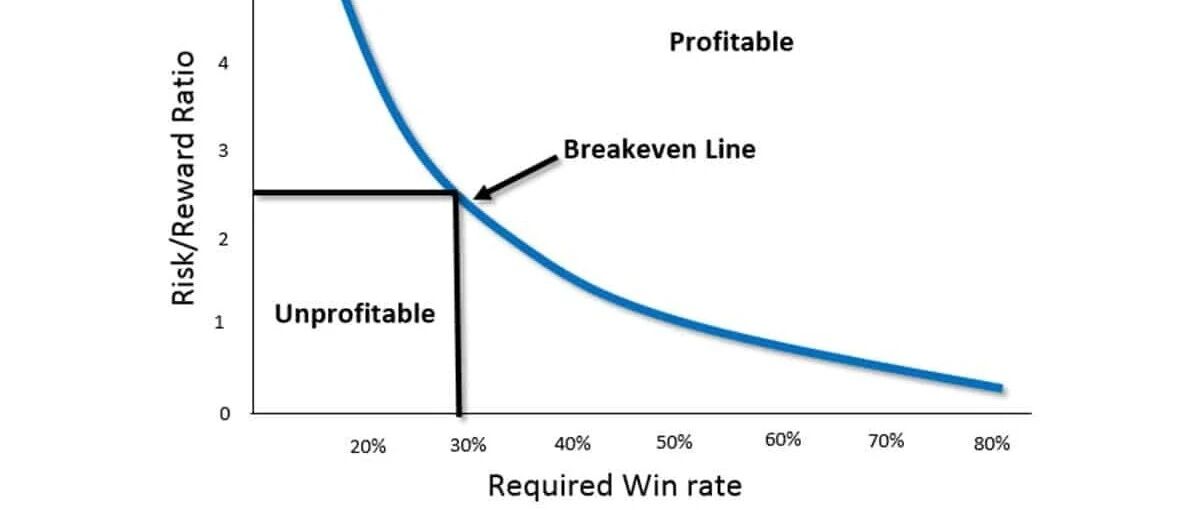
优化胜率而非赔率,把一件事做到理论上该有的样子|42章经
42章经· 2026-03-15 13:09
Core Insights - The article discusses the shift from an odds-driven approach to a probability-driven approach in entrepreneurship, emphasizing the importance of understanding user needs and market dynamics [4][7][11] - It highlights the distinction between optimizing for odds, which is akin to gambling, and optimizing for probability, which focuses on solving real user problems [12][14] - The conversation also touches on the evolving landscape of AI, particularly in content creation and user engagement, and the challenges of competing with established platforms [16][19][23] Group 1: Entrepreneurial Strategies - The transition from an odds-driven mindset to a probability-driven mindset is crucial for identifying viable business opportunities [7][11] - Successful entrepreneurs often focus on optimizing for probability by addressing specific user problems rather than chasing high-odds ventures [12][14] - The article contrasts different entrepreneurial philosophies, such as those of Zhang Yiming and Duan Yongping, emphasizing the importance of understanding market dynamics and user needs [15][10] Group 2: AI and Content Creation - AI is categorized into two main types: those that help users save time and those that provide entertainment, with implications for business models [16][17] - The competitive landscape for interactive content is challenging, as established platforms like Douyin and Honor of Kings dominate user engagement [19][20] - The article suggests that the future of AI in content creation will depend on finding new interaction models that resonate with users [19][23] Group 3: Market Dynamics and User Engagement - The success of a product is often determined by the alignment of user demographics, content type, and delivery modality [20][22] - The article argues that the best content will gravitate towards platforms with the highest monetization efficiency, driven by network effects [19][23] - It emphasizes the need for innovative interaction models to capture user attention and engagement in a saturated market [19][23]
Jeff Dean最新访谈:未来开发者人均50个智能体,写需求成核心技能
量子位· 2026-03-10 02:13
Core Insights - Google's Chief AI Scientist Jeff Dean predicts that in the future, each engineer may manage 50 AI agents, completing numerous parallel tasks with higher communication efficiency than humans [1] - The most important skill in the future will be "writing clear requirements," as the output quality of AI agents depends entirely on how well problems are defined [2][3] Group 1: AI Model Development - Google follows a Pareto frontier strategy, focusing on both high-end models for complex tasks and cost-effective models for low-latency scenarios [3][19] - The Gemini 3 Flash model achieves speed and intelligence through a process called distillation, allowing smaller models to closely match the performance of larger models [5][6][8] - Distillation enables small models to learn from large models' outputs, resulting in refined behaviors and capabilities [7][24][25] Group 2: Low Latency and Multi-Modal Models - Jeff Dean emphasizes the value of low latency, believing that reducing latency by 20-50 times will significantly enhance user experience [9][153] - The Gemini model is designed to be multi-modal, understanding not just human-perceived modalities like text and images, but also "non-human" modalities such as LIDAR and medical imaging data [39][44][46] Group 3: Future of AI and Engineering - The future will require engineers to spend more time on design and specifications, as clear communication will be crucial for effective AI collaboration [144][150] - The ability to express requirements clearly will become a core skill, impacting not just software engineering but any complex task [145][146] - Dean predicts that truly personalized models will be extremely important, capable of understanding individual user contexts and histories [156] Group 4: Hardware and Efficiency - The collaboration between hardware design and machine learning is essential for optimizing performance and efficiency [80][84] - Future advancements in specialized hardware will lead to significant reductions in model latency and improvements in capabilities, transforming various application scenarios [158]


MINIMAX-WP:领先的大模型开发公司,产品商业化迅速推进-20260309
Guoxin Securities· 2026-03-09 03:00
Investment Rating - The investment rating for the company is "Outperform" [2] Core Insights - The company, MiniMax, is a leading developer of large models, rapidly advancing product commercialization [1] - The company has established a comprehensive multi-modal model system, focusing on foundational model research and AI-native application development [4] - The company is expected to achieve significant revenue growth, with projected revenues of $250 million, $646 million, and $1.293 billion for 2026, 2027, and 2028 respectively, representing year-on-year growth rates of 218.7%, 156.4%, and 100.2% [4][75] Company Overview - MiniMax was founded in 2021 and has focused on multi-modal large model development from the outset, creating a model system that includes text and voice capabilities [5] - The company has released several products, including the M series of models, which are designed for various applications, and has established a strong product matrix [12][25] - The management team is experienced, with decision-making power concentrated in the founding team, ensuring strategic and technical alignment [7] Product Development - The company has developed a series of models, including M1, M2, M2.1, and the latest M2.5, which have shown significant improvements in various tasks, particularly in programming and productivity scenarios [12][59] - The M2.5 model has achieved a 30% task completion rate autonomously in real business scenarios, with notable performance in programming tasks [15][60] - The company has also launched video generation models and voice models, enhancing its multi-modal capabilities [19][22] Financial Analysis - The company is expected to see a rapid increase in revenue, with a projected revenue of $79 million in 2025, a 159% increase from the previous year [29] - The gross margin is expected to improve, reaching 25.4% in 2025, as the company benefits from enhanced model capabilities and a shift towards higher-value products [31] - The company is currently in a phase of significant investment in technology and product commercialization, with net losses projected at $1.872 billion in 2025 [29] Industry Trends - The large model capabilities are continuously improving, with rapid expansion of application boundaries driven by technological advancements [34] - The market for large models is expected to grow significantly, with a projected CAGR of 80.7% from 2024 to 2029, indicating a strong demand for AI applications [44] - The competitive landscape is evolving, with domestic companies like MiniMax narrowing the performance gap with international leaders [50][54] Competitive Advantages - MiniMax's multi-modal capabilities provide a platform-level technological advantage, allowing for long-term evolution and adaptability [58] - The company has established a dual-driven approach, validating its model capabilities through consumer applications before expanding into enterprise services [64] - The company's global strategy has led to a significant increase in overseas revenue, which accounted for 73.1% of total revenue in the first three quarters of 2025 [71]
MINIMAX-WP(00100):领先的大模型开发公司,产品商业化迅速推进
Guoxin Securities· 2026-03-09 01:23
Investment Rating - The report maintains an "Outperform" rating for the company [2][4][78] Core Insights - The company, MiniMax, is a leading developer of large models, rapidly advancing product commercialization and focusing on multimodal model development [4][5] - The company has established a comprehensive multimodal capability matrix covering text understanding, visual generation, and speech generation, which positions it for long-term evolution rather than just temporary capability leadership [4][58] - The company is expected to achieve significant revenue growth, with projected revenues of $250 million, $650 million, and $1.29 billion for the years 2026, 2027, and 2028 respectively, reflecting year-on-year growth rates of 218.7%, 156.4%, and 100.2% [4][76][78] Company Overview - MiniMax was founded in 2021 and has focused on developing foundational models and AI-native applications, launching several products including the M series models and various API services [5][12] - The company has a strong management team led by founder and CEO Yan Junjie, who has extensive experience in the AI field [7][8] Product Development - The company has released several iterations of its models, including M2.5, which autonomously completes 30% of tasks in real business scenarios, demonstrating significant capabilities in programming and productivity tasks [3][15][60] - The M2.5 model has shown remarkable performance in various benchmarks, achieving a 37% faster task completion rate compared to its predecessor [15][17] Financial Analysis - The company is experiencing rapid revenue growth, with a projected revenue of $79 million in 2025, a 159% increase from the previous year [29][76] - The gross margin is expected to improve significantly, reaching 25.4% in 2025, as the company benefits from enhanced model efficiency and a shift towards higher-value products [31][76] Industry Trends - The large model industry is witnessing rapid advancements in model capabilities and application boundaries, with significant cost reductions in computing power driving market expansion [34][40] - The global large model market is projected to grow from $14.6 billion in 2024 to $206.5 billion by 2029, with a compound annual growth rate (CAGR) of 80.7% [44][46] Competitive Landscape - The competitive landscape shows that while overseas companies currently lead, the gap is narrowing as domestic players like MiniMax enhance their capabilities [50][54] - The report highlights the importance of continuous model improvement and the ability to meet diverse user needs across various sectors, including productivity and entertainment [51][52]