民航数据共享

Search documents
海南航空助力推动民航数据共享
Hai Nan Ri Bao· 2026-01-08 01:37
Core Viewpoint - The launch of the first national flight delay information data sharing pilot project marks a significant breakthrough in addressing the industry's pain points related to asymmetric and unsynchronized flight information for passengers [2][3]. Group 1: Data Sharing Initiative - Hainan Airlines is the first domestic airline to participate in the pilot project at Hohhot Airport, enhancing transparency and timeliness in service for travelers [2][3]. - The data sharing initiative aims to break down information barriers between airlines, airports, and air traffic control, facilitating a more efficient operation [2][3]. Group 2: Operational Improvements - The project includes a new "flight delay reason" data item and a dynamic update mechanism every 30 minutes, allowing passengers to receive real-time updates through multiple channels [3]. - Hainan Airlines utilizes real-time airport parking information to send accurate parking spot details to flight crews while the aircraft is still in the air, improving ground operation efficiency and safety [3]. Group 3: Data Quality Assurance - The company prioritizes data quality, implementing strict controls to ensure that shared data is accurate, complete, timely, and standardized [4]. - An internal data verification mechanism is established to oversee the format, logic, and timeliness of flight information shared on the platform [4]. Group 4: Future Expansion - Hainan Airlines plans to expand its data sharing network and aims to apply the pilot project's results more broadly under the guidance of the Civil Aviation Administration [4].

海南航空数据共享实践推动智慧民航服务升级
Zhong Guo Min Hang Wang· 2026-01-07 03:13
Core Insights - The article highlights a significant transformation in civil aviation services driven by data sharing, with Hainan Airlines leading the initiative to improve flight delay information accessibility for passengers [1][4]. Group 1: Data Sharing Initiative - Hainan Airlines has launched the first national flight delay information sharing pilot project in collaboration with the Civil Aviation Administration and Hohhot Airport, aiming to address the issue of asymmetric and unsynchronized flight information for travelers [1][5]. - The project includes a new data item for "flight delay reasons" and establishes a closed-loop system for data sharing among airlines, service platforms, and airports, enhancing operational efficiency and passenger experience [5]. Group 2: Operational Efficiency - By actively participating in the civil aviation data sharing system, Hainan Airlines has improved its operational efficiency, allowing real-time access to airport parking information and enabling pilots to receive accurate parking spot details before landing [5][7]. - The implementation of a dynamic update mechanism for delay status every 30 minutes ensures that passengers receive timely updates through multiple channels, significantly enhancing service quality and reducing coordination costs [5][6]. Group 3: Data Quality Assurance - Hainan Airlines prioritizes data quality by establishing internal verification mechanisms to ensure that shared data is accurate, complete, timely, and standardized, which supports the overall health of the civil aviation data sharing system [7]. - The company's commitment to data quality not only enhances its operational efficiency but also lays a solid foundation for the sustainable development of the data sharing ecosystem in the aviation industry [7]. Group 4: Future Plans - Looking ahead, Hainan Airlines plans to expand its data sharing network and deepen collaboration with airports and air traffic control units, aiming to create a more intelligent, transparent, and efficient civil aviation service ecosystem [7].


全国首创 呼和浩特机场航延信息数据共享项目进入试运行阶段
Zhong Guo Min Hang Wang· 2025-11-13 09:57
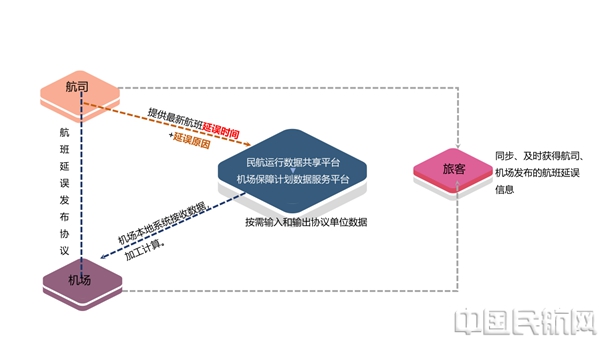
Core Insights - The civil aviation flight delay information data sharing project has entered the trial operation phase, addressing the long-standing issues of information asymmetry and synchronization between airports and airlines [1][2] - Hohhot Airport has become the first airport in China to implement a data sharing mechanism that synchronizes flight delay information with airlines for passenger dissemination [1][2] Group 1: Project Overview - The project aims to resolve the persistent problems of delayed information transmission, data inconsistency, and unsynchronized releases in the civil aviation sector, which have led to high coordination costs between airports and airlines [2] - The initiative was proposed by Hohhot Airport and adopted by the Civil Aviation Administration of China (CAAC), with the second research institute of civil aviation leading the development [2][3] Group 2: Technical Implementation - A pilot project was initiated on May 19, with the CAAC's operational monitoring center guiding the collaboration between the second research institute, Hohhot Airport, and Hainan Airlines [3] - The second research institute developed a data service platform that serves as the technical backbone of the project, establishing a closed-loop system for data flow from airlines to the airport [3][5] Group 3: Operational Mechanism - The second research institute plays a crucial role in data verification, ensuring the accuracy, completeness, and timeliness of shared data, while Hainan Airlines is responsible for providing flight delay information to the data sharing platform [5] - Hohhot Airport is tasked with receiving and disseminating the flight delay information to various stakeholders, enhancing the application of data [5][6] Group 4: Value Creation - The synchronization of flight delay information is expected to improve passenger convenience, allowing them to receive updates through multiple channels, thereby enhancing service experience [7] - The project is projected to reduce telephone coordination costs and communication workload by 40%, significantly improving operational efficiency [7] - Hohhot Airport aims to serve as a model for data sharing, promoting the initiative to other airports nationwide and contributing to the development of a smarter and more efficient civil aviation service ecosystem [7]