
民营企业转型升级

Search documents
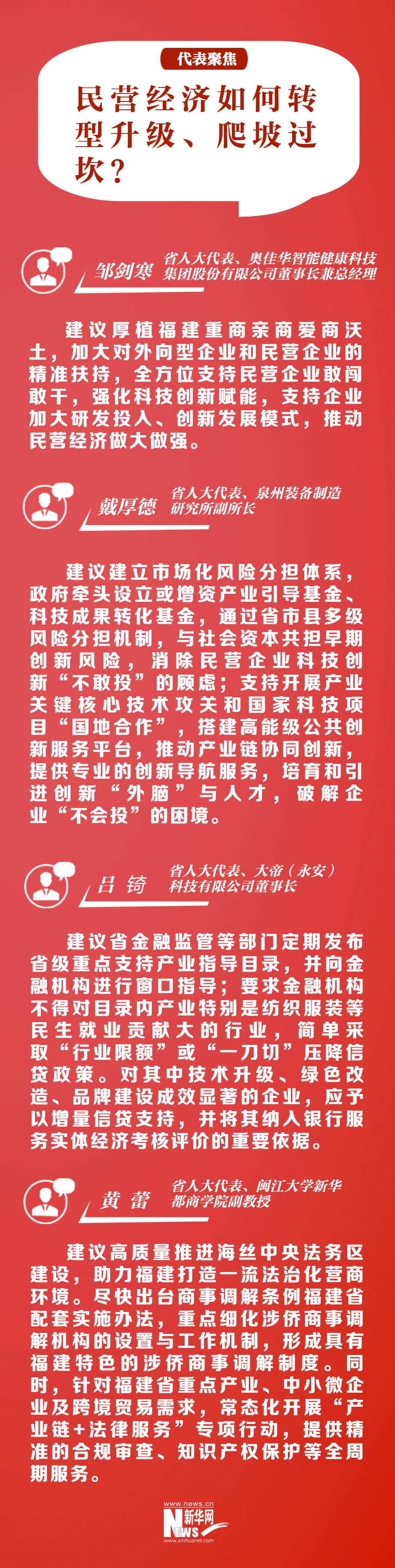
民营经济如何转型升级、爬坡过坎?
Xin Hua Wang· 2026-01-31 04:02
Core Viewpoint - The private economy is a key advantage and contributor to the development of Fujian, currently facing challenges in financing and technological innovation during a critical transformation phase [1] Group 1: Financing Challenges - Fujian's private enterprises are experiencing difficulties in financing, prompting representatives to suggest various policy supports and financial guarantees [1] - A market-oriented risk-sharing system is recommended, with government-led funds to alleviate early-stage innovation risks for private enterprises [3] Group 2: Technological Innovation - Support for tackling key core technologies and national science projects through collaboration between national and local entities is emphasized [3] - Establishing high-level public innovation service platforms to promote collaborative innovation across the industry chain is proposed [3] Group 3: Financial Regulation - Regular publication of provincial key support industry guidance directories by financial regulatory departments is suggested to assist financial institutions [4] - Financial institutions are urged not to apply blanket credit reduction policies to key industries, particularly those contributing significantly to employment [4] Group 4: Legal Environment - High-quality advancement of the Maritime Silk Road Central Legal Zone is recommended to create a first-class legal business environment in Fujian [5] - The establishment of commercial mediation regulations and specialized legal services for key industries and small to medium enterprises is proposed to enhance compliance and intellectual property protection [5]

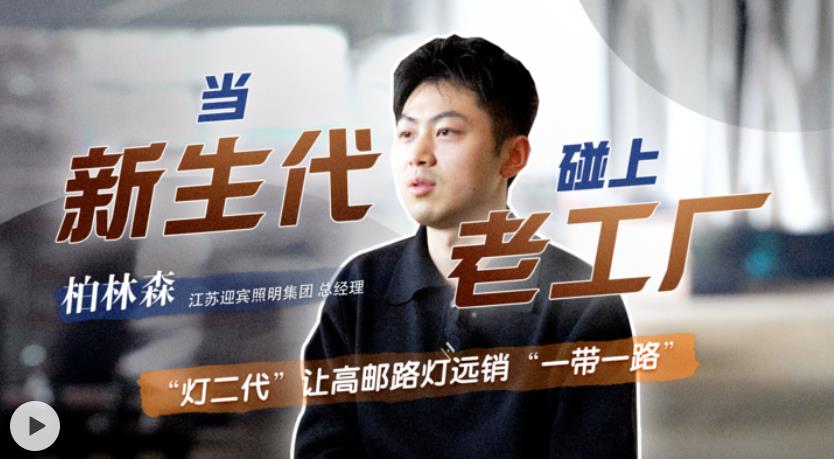
当“新生代”碰上“老工厂” | “灯二代”让高邮路灯远销“一带一路”
Xin Lang Cai Jing· 2026-01-01 14:35
Core Viewpoint - The article highlights the transition of leadership in private enterprises in China, focusing on the new generation of entrepreneurs who are revitalizing traditional industries through innovation and adaptation, particularly in the context of the "Belt and Road" initiative [1][12]. Group 1: Industry Development - The "14th Five-Year Plan" period has seen significant growth in China's private economy, with a focus on quality and scale improvements [1]. - The article emphasizes the importance of institutional support for private enterprises to unleash their potential in the upcoming "15th Five-Year Plan" [1]. Group 2: Company Case Study - The story of Jiangsu Yingbin Lighting Group illustrates the successful transition from a traditional manufacturing company to a smart lighting solution provider under the leadership of the second-generation entrepreneur, Bairinsen [3][5]. - Bairinsen faced skepticism upon taking over the company but committed to proving his capabilities through hard work and innovation [6][8]. Group 3: Innovation and Market Adaptation - Bairinsen recognized the need for technological innovation and product upgrades to address market challenges, leading to the development of smart lighting products that integrate energy efficiency and intelligent management [9][11]. - The company achieved significant growth in orders, from 2 million yuan in the first year to 45 million yuan by the fourth year, demonstrating the success of its transformation [11]. Group 4: International Expansion - Bairinsen aimed to expand into international markets, particularly under the "Belt and Road" initiative, but faced challenges such as international certification barriers [12][14]. - The company adapted its products to meet the specific needs of different markets, enhancing their features to withstand various environmental conditions [14][16]. - The establishment of local training bases for maintenance personnel in overseas markets has contributed to the positive reputation of "Chinese brands, high-quality manufacturing" [14][16].
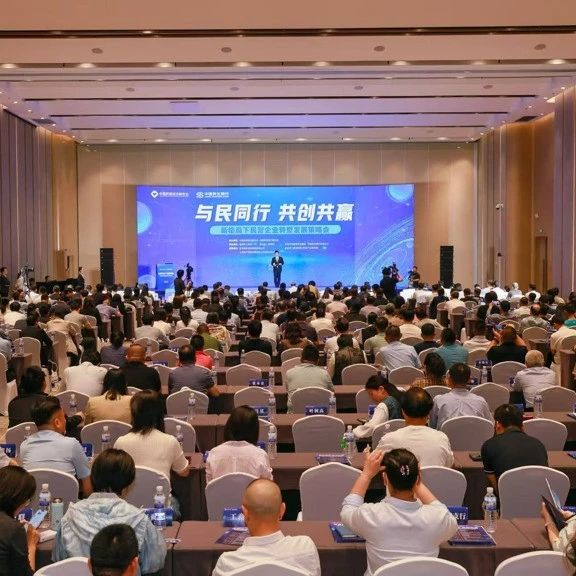
“与民同行·共创共赢”!青岛市民营企业转型发展策略会圆满举行
券商中国· 2025-05-28 06:42
Core Viewpoint - The conference on the transformation and development strategies of private enterprises in Qingdao emphasized the importance of the "Private Economy Promotion Law" in enhancing the vitality and creativity of the private sector, aiming for sustainable development amidst complex economic conditions [1][2]. Group 1: Conference Overview - The conference, themed "Walking with the People, Creating Win-Win Together," was held in Qingdao, attended by over 300 representatives from quality private enterprises [1]. - Leaders and experts discussed strategies for the transformation and development of private enterprises, focusing on policy interpretation, experience sharing, and resource connection [1]. Group 2: Key Insights from Speakers - Former Vice Chairman of the All-China Federation of Industry and Commerce, Zhuang Congsheng, highlighted that the implementation of the "Private Economy Promotion Law" will address market entry barriers, payment delays, and internal corruption issues, thus stimulating the private economy [1]. - Shen Lixia, Executive Vice President of the China Private Economy Research Association, encouraged private entrepreneurs to seize opportunities and align with national strategies for responsible and capable business leadership [2]. - Qingdao's Vice Chairman of the Political Consultative Conference, Cui Zuo, emphasized the role of the Federation in serving and guiding private enterprises to enhance their core competitiveness [2]. Group 3: Economic Outlook and Support - The Chief Economist of China Minsheng Bank, Wen Bin, projected that with the acceleration of the dual circulation development pattern and enhanced economic resilience, private enterprises should align with national strategies for high-quality development [2]. - The Qingdao branch of China Minsheng Bank reported serving over 1,800 private enterprise clients with a loan balance exceeding 27.6 billion yuan, indicating strong support for the sector [3]. - Attendees expressed that the conference deepened their understanding of the "Private Economy Promotion Law" and boosted their confidence in transformation and upgrading [3].
拔节生长见未来——民营企业加快技术突破和转型升级
Jing Ji Ri Bao· 2025-05-11 21:52
Core Insights - The private sector is increasingly focusing on technological breakthroughs, industrial innovation, and green transformation, as evidenced by the establishment of 94,000 new private enterprises in the new generation information technology industry and 254,000 in AI software development in Q1 [1][2]. Group 1: Industry Trends - Private enterprises are accelerating their development towards high-end, intelligent, and green industries, with industrial investment maintaining double-digit growth [2][4]. - The emergence of new industries is highlighted by the successful development of a 5 million pixel infrared detector by GaoDe Infrared, breaking foreign technology monopolies and filling domestic technological gaps [2][6]. - The establishment of 836,000 new "four new" economic private enterprises in Q1 indicates a strong trend towards innovation and new business models [5]. Group 2: Technological Innovation - Continuous technological innovation is crucial for private enterprises to transition from followers to leaders in their respective fields [2][6]. - The development of the Huazhong 10 intelligent CNC system demonstrates advancements in smart manufacturing, enhancing production efficiency through AI integration [3][6]. - The flexibility of private enterprises allows for rapid adjustments in production strategies and innovation applications, which is essential for maintaining competitiveness [6][9]. Group 3: Green Development - The integration of green technologies is becoming a significant opportunity for enterprises, as seen in the 550MW fish-solar complementary project by ZhengTai Group, which promotes ecological upgrades [3][4]. - The commitment to green transformation is reflected in ZhengTai Group's 2030 sustainable development strategy, emphasizing the importance of green practices across all operational processes [6][8]. Group 4: Challenges and Opportunities - Private enterprises face challenges such as funding constraints and talent shortages, which can hinder their ability to innovate and transform [8][9]. - The government is encouraged to provide support through policies that facilitate innovation and reduce financial burdens on technology-driven SMEs [9].