气温起伏

Search documents
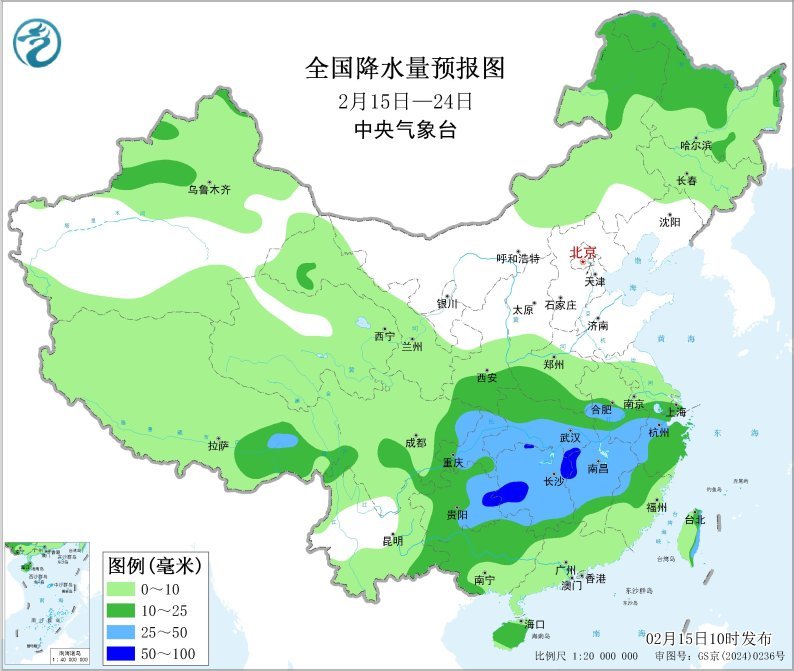
中央气象台:江南北部有较强降水过程 全国大部平均气温偏高但冷暖起伏大
Xin Lang Cai Jing· 2026-02-15 03:15
Summary of Key Points Core Viewpoint - The article discusses recent and upcoming weather patterns in China, highlighting significant rainfall in the Jiangnan region and temperature fluctuations across the country. Group 1: Recent Weather Conditions - Over the past ten days (February 5-14), most regions in China experienced below-average rainfall, with Jiangnan and parts of Guangxi, Guizhou, and Chongqing receiving 5-20 millimeters of precipitation, and some areas in northeastern Jiangnan receiving 30-40 millimeters. Overall, rainfall was less than the historical average for this period [1][2]. - The average temperature across most of the country was 1-2°C higher than normal, with northern Xinjiang seeing an increase of 3-4°C [2]. Group 2: Upcoming Weather Forecast - In the next ten days (February 15-24), significant rainfall is expected in Jiangsu, Jianghan, Jiangnan, and parts of southwestern China, with total precipitation ranging from 10-30 millimeters, and some areas in northern and western Jiangnan and eastern Guizhou could see 40-60 millimeters. This is above the historical average for this time of year [3][4]. - The average temperature in most regions will be 1-3°C higher than the historical average, with areas in Xinjiang, Northeast China, and Huanghuai experiencing increases of 4-6°C [4]. Group 3: Major Weather Events - On February 15-16, a strong cold front will impact northeastern Inner Mongolia, northern Heilongjiang, and parts of Jiangnan, leading to temperature drops of 6-10°C, with some areas in Jiangnan experiencing drops exceeding 12°C. The minimum temperature line will move southward, affecting various regions [6][10]. - Rainfall is expected in southwestern China, Jiangnan, and Huabei, with potential thunderstorms and severe weather conditions, including hail and freezing rain in some areas [9][10]. - From February 21-23, another cold front will further decrease temperatures by 4-8°C across central and eastern regions, with some areas experiencing drops over 10°C [11]. Group 4: Visibility and Air Quality - On February 15, dense fog is anticipated in southern Jiangsu, northern Zhejiang, and parts of Hunan and Jiangxi, with visibility dropping below 1 kilometer in some areas. Additionally, light to moderate haze is expected in regions such as Huabei and Huanghuai starting from the night of February 16 [12].

春打六九头,气温大起伏
Xin Lang Cai Jing· 2026-02-03 23:53
Summary of Key Points Core Viewpoint - The weather in Jilin Province is experiencing significant temperature fluctuations, with a warming trend expected to be followed by a strong cold front, leading to a "rise, fall, and then rise again" temperature pattern [1]. Group 1: Temperature Trends - During the "Four Nine" period, the average temperature in Jilin Province was -20.8℃, which is 5.4℃ lower than the historical average for the same period [1]. - The "Five Nine" period saw an average temperature of -16.8℃, also 2.7℃ below the historical average, marking one of the coldest phases of the winter [1]. - The average temperature during the "Six Nine" period (February 4 to 12) is expected to be -12.5℃, which, while still slightly below the historical average, shows improvement compared to the previous cold periods [1]. Group 2: Precipitation and Weather Conditions - The expected precipitation during this period is projected to be in line with historical averages, at about 1.0 millimeter, with slightly more in the eastern regions [2]. - A significant snowfall event is anticipated from the night of February 4 to February 5, particularly affecting the central and eastern mountainous areas [2]. Group 3: Public Advisory - Despite the arrival of "Lichun" (the beginning of spring), Jilin Province remains in winter, and the meteorological spring is still some time away [2]. - Public advisories emphasize the need for appropriate clothing adjustments due to the large temperature fluctuations and the importance of safety during travel [2].
@去东北玩的小伙伴,气温起伏大,保暖衣物要带足
Xin Lang Cai Jing· 2025-12-27 05:19
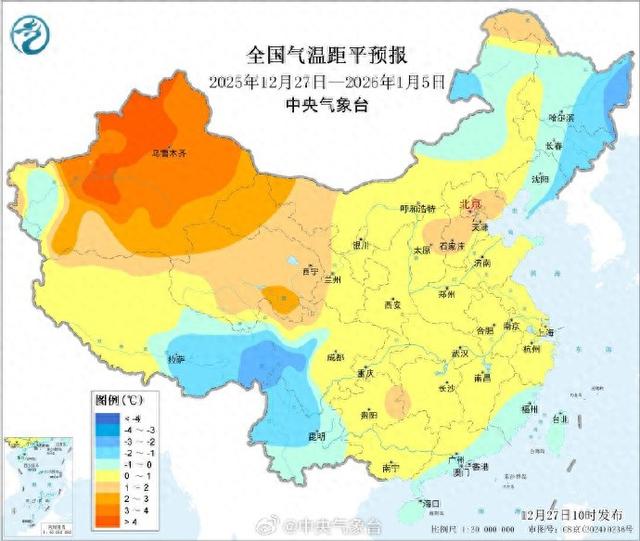
Group 1 - The Northeast region is experiencing a rapid temperature increase today, indicating a significant weather change [1] - There will be two consecutive cold air masses affecting the region next week, leading to large temperature fluctuations [1] - Travelers to the Northeast are advised to bring sufficient warm clothing to prepare for the changing weather conditions [1]
12月中下旬气温有起伏,“时间表”提前看
Ren Min Ri Bao· 2025-12-17 04:32
Core Viewpoint - The claim that "a significant warming will occur before December 20" is not entirely accurate, as the temperature rise is mainly concentrated in specific regions, with a new cold front expected to impact the central and eastern parts of the country shortly [2][4]. Group 1: Temperature Changes - From December 17 to 18, most of the central and eastern regions of China experienced a temperature increase of 4 to 6 degrees Celsius, with some areas in Northeast China and eastern Inner Mongolia seeing increases of over 10 degrees Celsius [2][4]. - A new cold air mass is expected to arrive from Xinjiang on December 19, affecting most of the central and eastern regions, leading to a temperature drop of 4 to 6 degrees Celsius [2][4]. Group 2: Weather System Influences - The recent temperature fluctuations are attributed to frequent cold air activities, with a significant cold wave occurring from December 10 to 13, followed by a warming trend due to warm air advection and clear weather conditions [3]. - The direct cause of the cold air activities is linked to the eastward movement of a mid-latitude high-altitude trough and the southward splitting of the polar vortex, which enhances the cold air's influence [3]. Group 3: Future Weather Developments - The temperature in the central and eastern regions of China is expected to fluctuate significantly in mid to late December, with another cold air mass expected to bring temperature drops of 4 to 6 degrees Celsius from December 19 to 21, and localized drops exceeding 8 degrees Celsius [4]. - The forecast indicates that cold air will continue to affect China frequently over the next ten days, with notable cooling expected primarily in northern regions during the cold air processes around December 22 to 24 [4].
大雪节气将至 长三角气温“搭过山车”
Zhong Guo Xin Wen Wang· 2025-12-04 11:47
Core Viewpoint - The temperature in the Yangtze River Delta region is experiencing significant fluctuations, with a notable drop followed by a rapid rebound expected around the "Major Snow" solar term on December 6-7, where temperatures may rise to around 20°C [1] Group 1: Temperature Changes - On December 4, the minimum temperature in many areas of the Yangtze River Delta dropped to recent lows due to the influence of cold air and clear sky radiation cooling [1] - From December 6 to 7, the highest temperatures are expected to reach around 21°C in Shanghai, 20°C in most parts of Zhejiang, and approximately 19°C in Nanjing, Jiangsu [1] - A weak cold air mass is expected to affect the northern part of the Yangtze River Delta from December 7 to 8, leading to a slight temperature drop, but temperatures will rise again shortly after [1] Group 2: Weather Forecast - The Central Meteorological Observatory indicates that from December 3 to 12, cold air activities will be frequent but overall weak, leading to a general warming trend across most of the country [1] - The weather in the Yangtze River Delta is expected to be generally dry with little rain in the coming days, and the public is advised to pay attention to weather forecasts and adjust clothing accordingly [2]
大雨大暴雨,要来了!
Zhong Guo Ji Jin Bao· 2025-11-02 05:05
Summary of Key Points Core Viewpoint - The weather in China is experiencing significant changes, with heavy rainfall and temperature drops in the south, while the north sees fluctuating temperatures. [1] Group 1: Weather Conditions - Rain and snow in northeastern regions and the Tibetan Plateau are expected to decrease, while rainfall in the south is intensifying, with some areas facing heavy rain or torrential rain. [2][3] - The Central Meteorological Administration forecasts small to moderate snow or sleet in parts of Heilongjiang, Tibet, and Qinghai, with localized heavy snow expected in northeastern Tibet. [3] - In the south, areas such as Yunnan, Hunan, and Hainan are likely to experience moderate to heavy rain, with some regions facing heavy rain or torrential rain. [3][4] Group 2: Temperature Changes - Southern regions are experiencing a drop in temperature, with maximum temperatures significantly lower than the same period in previous years. For instance, Guiyang's maximum temperature is expected to be only 11°C, and Kunming's is forecasted at 10°C. [5] - Northern regions, including Northeast and North China, are seeing notable temperature fluctuations, with cities like Shenyang experiencing a drop from 14°C to 8°C due to cold air and rain. [5]
大雨大暴雨,要来了!
中国基金报· 2025-11-02 04:50
Summary of Key Points Core Viewpoint - The article discusses the weather conditions in China, highlighting significant rainfall and temperature fluctuations across different regions, with a focus on the southern areas experiencing heavy rain and the northern regions facing temperature changes. Group 1: Weather Conditions - The northeastern region and the Tibetan Plateau are expected to see a reduction in rain and snow, while the southern regions, particularly Southwest and Jiangnan, will experience intensified rainfall, with some areas facing heavy rain or even torrential downpours [1][3][4]. - Specific forecasts indicate that areas such as southeastern Heilongjiang, eastern Jilin, and parts of Tibet will experience light to moderate snow or sleet, with localized heavy snow expected in northeastern Tibet [3][4]. Group 2: Temperature Changes - The article notes a significant drop in temperatures across many southern cities, with maximum temperatures in Guiyang reaching only 11°C and in Kunming dropping to 10°C, potentially setting new lows for the second half of the year [8]. - In contrast, northern regions like Northeast and North China are experiencing notable temperature fluctuations, with cities like Shenyang seeing a drop from 14°C to 8°C due to cold air and precipitation [8].