氢燃料电池市场

Search documents
美智库:氢燃料电池市场规模2030年将增六成
Zhong Guo Hua Gong Bao· 2025-12-05 02:52
Core Insights - The global hydrogen fuel cell market is projected to reach $3.64 billion in 2024 and grow to $5.9 billion by 2030, with a compound annual growth rate (CAGR) of 8.3% from 2024 to 2031, driven by technological advancements, government subsidies, infrastructure development, and decarbonization mandates [1] Market Overview - Major economies have committed over $200 billion to national hydrogen strategies, focusing on fuel cell deployment and infrastructure development, with the United States, Japan, the EU, and China being key players [1] - The U.S. is expected to be the largest market for fuel cells in 2024, accounting for 36% of the market share, primarily supported by an $8 billion allocation from the Infrastructure Investment and Jobs Act for regional hydrogen production and distribution centers [1] - Japan is a mature market contributing 11% of global revenue in 2024, having deployed over 430,000 home fuel cells and established 165 hydrogen stations, leading the world in hydrogen station density [1] Application Segments - The transportation sector is the core demand area, projected to account for 46% of the market in 2024, with fuel cell electric vehicles rapidly penetrating high-frequency applications such as buses and long-haul trucks [2] - The fixed power sector follows closely with a 40% share, driven by increasing demand for resilient low-carbon off-grid power sources in data centers, hospitals, and industrial facilities [2] Technology Trends - Proton exchange membrane fuel cells dominate the market with a 52% share (approximately $1.89 billion), recognized as the mainstream technology in the transportation sector due to their high power density and quick start capabilities [2] - Solid oxide fuel cells (SOFC), currently holding 24% of the technology market, are predicted to become standard configurations for industrial clean heating and baseload power in the next decade due to their efficient combined heat and power characteristics [2] Future Outlook - Despite challenges such as high initial infrastructure costs and insufficient hydrogen supply, technological innovations are expected to accelerate breakthroughs, with analysts predicting a 40% to 60% reduction in green hydrogen costs by 2030, significantly enhancing the economic viability of fuel cell systems [2] - Hydrogen fuel cells are gradually becoming a normalized component of the global energy structure, supported by policy and industry collaboration [2]
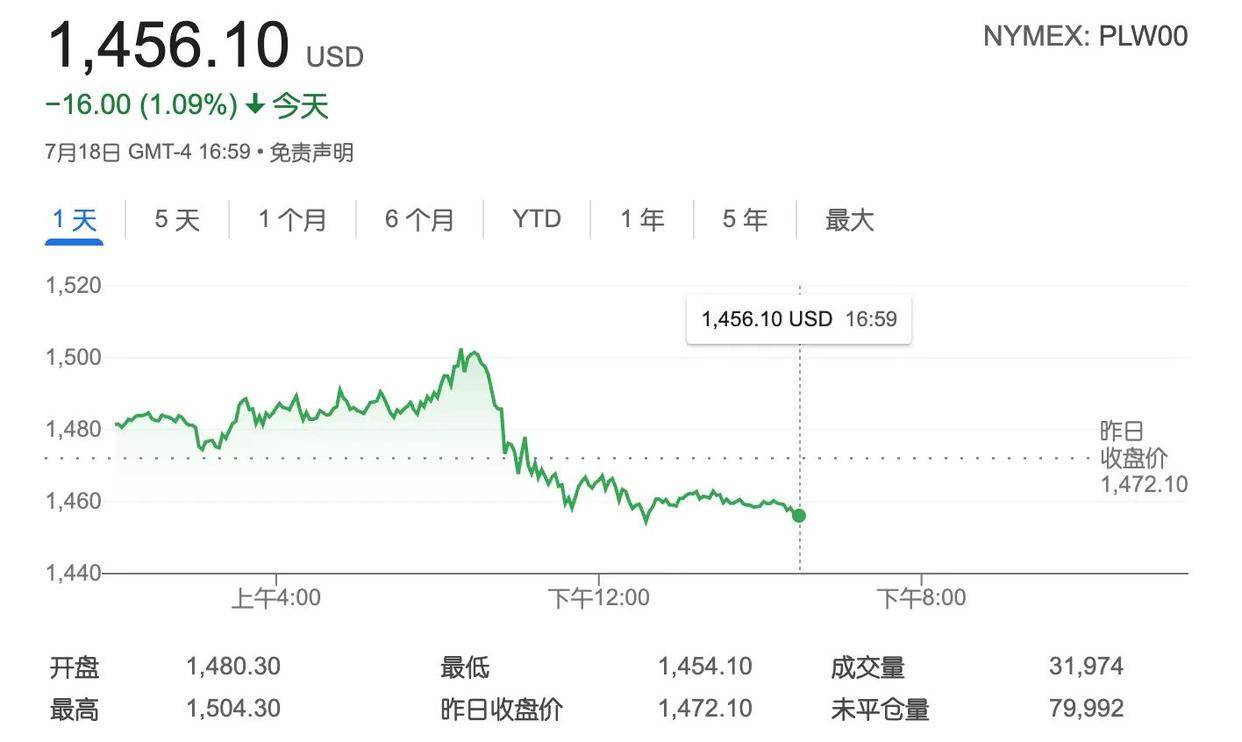
铂金大跌引爆市场恐慌!
Sou Hu Cai Jing· 2025-08-05 08:53
Group 1 - The core viewpoint is that platinum prices have experienced a significant decline of over 20% in a few weeks, driven by three major "black swan" events affecting demand and supply dynamics [1] Group 2 - The first event is the "new energy vehicle revolution," which is reducing the demand for platinum traditionally used in automotive catalysts due to the rise of electric vehicles [1] - The second event is the unexpected recovery of mining production in South Africa, leading to a surge in supply and increased price pressure [1] - The third event is the strong return of the US dollar, which has shifted market preferences towards gold, resulting in reduced buying interest in platinum [1] Group 3 - Short-term impacts include narrowing profit margins for South African mining companies, with some high-cost mines facing potential shutdowns due to the price drop [3] - Automotive catalyst manufacturers are adjusting material compositions, favoring alternatives like palladium, which is eroding platinum's market share [3] - Conversely, the hydrogen fuel cell market is emerging rapidly, with platinum being a key catalyst, indicating potential future demand growth [3] Group 4 - The decline in platinum prices is viewed as a cyclical adjustment in the industry, with short-term volatility expected but long-term fundamentals likely to support a price rebound [4] - Companies are encouraged to optimize recycling processes and improve resource utilization in response to price fluctuations [4] - Investors are advised to focus on emerging opportunities in the new energy and hydrogen sectors [4]