
中华文化认同

Search documents
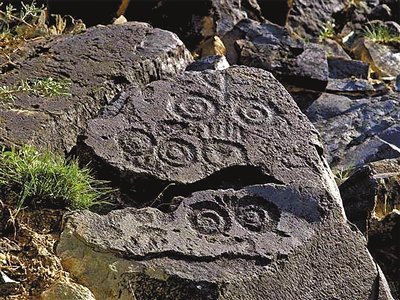
千里阴山 千古岩画
Xin Lang Cai Jing· 2026-02-24 20:22
Core Viewpoint - The "Thousand Miles Yinshan · Ancient Rock Paintings" art exhibition showcases over a hundred contemporary artworks inspired by the ancient rock paintings of the Yinshan Mountains, aiming to create a dialogue between ancient and modern art while promoting cultural identity and heritage [4][9][13]. Group 1: Exhibition Overview - The exhibition is hosted by the Bayannur Municipal Government and features various art forms including Chinese painting, oil painting, printmaking, and watercolor, all rooted in the Yinshan rock paintings [4]. - It aims to enhance cultural recognition and continuity of Chinese civilization through artistic expression, showcasing the historical significance and cultural value of the Yinshan rock paintings [4][6]. Group 2: Historical and Cultural Significance - The Yinshan Mountains are recognized as a significant geographical feature in northern China, with the rock paintings being one of the most concentrated and diverse collections globally, dating back thousands of years [6][7]. - These rock paintings serve as a cultural memory of early human societies, reflecting their spiritual world and societal practices, and are considered a vital part of Chinese cultural heritage [6][8]. Group 3: Artistic Dialogue and Innovation - The exhibition creates a dynamic dialogue between ancient cultural heritage and contemporary art, allowing for reinterpretation and recontextualization of the rock paintings [9][10]. - Artists utilize various techniques to explore and express the essence of the rock paintings, moving beyond mere replication to engage in a deeper spiritual and aesthetic conversation [10][11][12]. Group 4: Cultural Continuity and Future Implications - The exhibition emphasizes that cultural heritage is not merely a relic of the past but a source of contemporary creativity and vitality, encouraging artists to draw inspiration from ancient art to express modern narratives [13]. - It highlights the importance of actively continuing cultural threads, showcasing the enduring impact of human creativity and the rich tapestry of Chinese civilization [13].

时代专论丨铸牢中华民族共同体意识——深入学习贯彻习近平文化思想
Zhong Yang Ji Wei Guo Jia Jian Wei Wang Zhan· 2026-01-07 23:39
Group 1 - The core viewpoint emphasizes the importance of strengthening the consciousness of the Chinese national community as a fundamental task for national unity, social stability, and the overall progress of the Chinese nation [9][11][12] - The historical inevitability of the formation and development of the Chinese national community is rooted in thousands of years of civilization and governance logic, reflecting a deep cultural and political unity [3][4][5] - The Chinese national community is characterized by a multi-ethnic structure that promotes cultural recognition and unity, emphasizing the coexistence of diversity and the importance of a shared destiny [5][6][10] Group 2 - Strengthening the consciousness of the Chinese national community is crucial for achieving the great rejuvenation of the Chinese nation, as it fosters political, cultural, and national identity among all ethnic groups [10][11][20] - The consciousness of the Chinese national community is deeply embedded in the historical experiences and emotional recognition of the Chinese people, serving as a foundation for social cohesion and national identity [7][9][22] - Promoting the consciousness of the Chinese national community requires a systematic approach that integrates theory with practice, ensuring that it translates into tangible governance and social outcomes [20][22][23] Group 3 - Enhancing cultural recognition is essential for building a shared spiritual home for the Chinese nation, which is vital for uniting the people and promoting national rejuvenation [15][16][19] - The integration of traditional Chinese culture is fundamental in constructing a shared spiritual home, fostering mutual respect and appreciation among different ethnic cultures [16][17][18] - The development of a cultural symbol system is necessary to express the shared values and identity of the Chinese nation, enhancing cultural recognition and emotional belonging [18][19]
扎实推进“一国两制”实践和祖国统一大业
Jing Ji Ri Bao· 2025-12-29 22:17
Core Viewpoint - The article emphasizes the importance of the "One Country, Two Systems" policy as a strategic framework for national rejuvenation and unification, highlighting its role in maintaining stability and prosperity in Hong Kong and Macau while contributing to the overall development of the nation [1][2][7]. Group 1: Implementation of "One Country, Two Systems" - The "One Country, Two Systems" policy is a significant achievement of socialism with Chinese characteristics, aligning with the fundamental interests of the nation and the people, and is essential for the long-term stability of Hong Kong and Macau [2]. - The policy must be implemented accurately and unwaveringly, ensuring that it does not deviate from its original intent, with a focus on maintaining national sovereignty, security, and development interests [3][4]. Group 2: Integration with National Development - Hong Kong and Macau's integration into the national development framework is essential, providing them with unique advantages and aligning their interests with those of the nation [5]. - The construction of the Guangdong-Hong Kong-Macau Greater Bay Area enhances the resilience of Hong Kong and Macau's development, ensuring they have a solid backing from the nation amid global economic fluctuations [5]. Group 3: Achievements and Progress - Since their return to the motherland, Hong Kong and Macau have successfully implemented the "One Country, Two Systems" policy, leading to significant improvements in governance, economic growth, and social stability [7][8]. - Hong Kong's GDP has grown at an average annual rate of approximately 2.6% since its return, surpassing the average growth rate of developed economies during the same period [9]. Group 4: Strengthening National Identity and Values - There is a growing emphasis on patriotism and national identity in Hong Kong and Macau, with educational initiatives aimed at instilling a sense of belonging and understanding of national history among the youth [11]. - The promotion of core values related to patriotism is seen as essential for the long-term success of the "One Country, Two Systems" policy and for fostering a unified national identity [11]. Group 5: Future Directions and Challenges - The article outlines the need for continued exploration of the "One Country, Two Systems" framework as a model for peaceful unification with Taiwan, emphasizing the importance of addressing differences while promoting cooperation [12][16]. - It calls for deepening cross-strait integration and cultural exchanges to enhance mutual understanding and support for national rejuvenation efforts [14][15].
以文化润疆生动实践为新疆高质量发展注入精神力量
Xin Lang Cai Jing· 2025-12-21 19:39
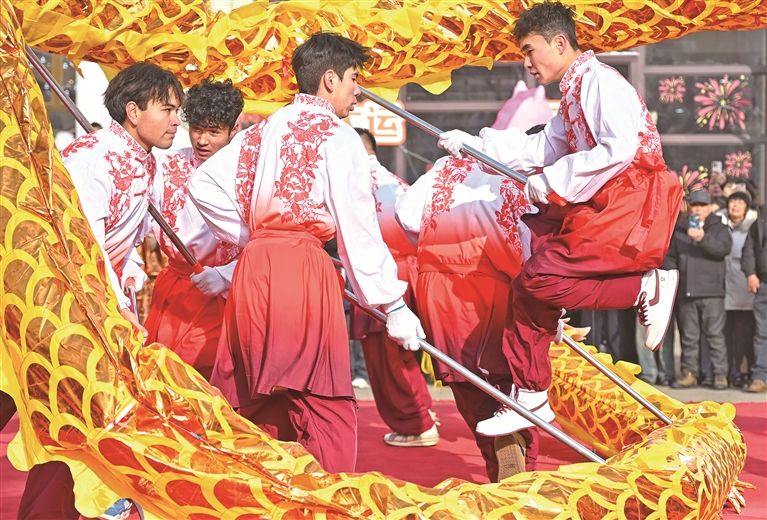
Core Viewpoint - The development of a culturally strong nation is essential for enhancing national unity and social cohesion, as emphasized in the 20th Central Committee's proposal for the 15th Five-Year Plan, which aims to promote a new era of socialism with Chinese characteristics through cultural strength [1] Group 1: Cultural Empowerment and Economic Development - Xinjiang is actively exploring the dual path of "resource transformation + business innovation" to promote cultural development and high-quality economic growth [2] - The region leverages its rich historical and cultural heritage, transforming cultural resources into developmental advantages, such as turning the Kizil Caves and Jiaohe Ancient City into dynamic cultural landmarks that enhance tourism [2] - The integration of culture with industry is being fostered, with traditional crafts like Edir Silk and ethnic embroidery being revitalized through modern design and technology, creating a complete industrial chain [2] Group 2: Cultural Cohesion and Shared Values - The essence of a culturally strong nation lies in the enhancement of spiritual civilization among its people, focusing on the cultural needs of various ethnic groups to foster a sense of community [3] - High-quality cultural products serve as vital carriers of spiritual strength, with notable achievements in artistic creation from Xinjiang, such as award-winning films and literature that promote cultural identity [3] - Efforts to protect and promote minority cultures, such as the Uyghur Muqam and Kyrgyz epic "Manas," are integral to fostering cultural integration and enhancing national identity [3] Group 3: International Influence of Chinese Civilization - The construction of a culturally strong nation requires both adherence to cultural integrity and the responsibility of international cultural transmission, as outlined in the proposal to enhance the influence of Chinese civilization [4] - Xinjiang's approach combines cultural heritage preservation with mainstream value dissemination, creating a framework for cultural promotion and international communication [4] - Various artistic productions, such as stage performances and musicals, effectively convey Chinese values and showcase the region's development, enhancing cultural confidence and international discourse power [5]
“对中华文化的认同让我们心意相通”
Ren Min Ri Bao Hai Wai Ban· 2025-12-03 01:04
Group 1 - The event "Who Am I?" held by Jinan University focused on the identity challenges faced by overseas Chinese youth, with over 60 participants sharing their experiences in multicultural environments [1][2] - Participants expressed that their dual cultural backgrounds are not contradictions but unique advantages, fostering a sense of connection through shared recognition of Chinese culture [2] - The event highlighted the importance of cultural exchange in establishing identity recognition among overseas Chinese youth [1][3] Group 2 - The experiences shared by participants, such as overcoming language barriers and finding self-identity through personal interests like writing, illustrate the journey of self-discovery in a foreign cultural context [2][3] - Scholars emphasized that multicultural backgrounds provide unique advantages for Chinese youth, enabling them to contribute significantly to both their home and host countries [3]
第一观察|总书记身体力行推进中华民族共同体建设
Xin Hua She· 2025-09-27 12:19
Core Viewpoint - The article emphasizes the importance of strengthening the consciousness of the Chinese national community and advancing its construction as a key task for the Party and the people of all ethnic groups in China [4][6][12] Group 1: National Unity and Community Awareness - Xi Jinping highlighted the need to focus on solidifying the consciousness of the Chinese national community and advancing its construction during a meeting with the Xinjiang regional government [4] - Since 2014, the concept of "Chinese national community consciousness" has been a central theme in Xi Jinping's discussions on ethnic work, leading to significant historical achievements in this area [5] - The promotion of national unity and community awareness is seen as a collective responsibility for the entire Party and all ethnic groups in the country [6] Group 2: Cultural Recognition and Development - The article discusses the dual reliance on material and spiritual strength to promote ethnic work, emphasizing the need for high-quality development and cultural recognition to achieve common prosperity [8] - Xi Jinping has called for enhancing cultural confidence and integrating religious practices with traditional Chinese culture to foster a shared spiritual home for all ethnic groups [8][9] - The recognition of diverse ethnic cultures as integral parts of Chinese culture is essential for fostering a strong national identity [9] Group 3: Inter-Ethnic Communication and Integration - Promoting extensive communication and integration among various ethnic groups is deemed crucial for strengthening national unity and community awareness [10] - Xi Jinping has outlined clear requirements for enhancing inter-ethnic exchanges and promoting economic and cultural interactions between regions, such as Tibet and the mainland [10] - The article asserts that the great rejuvenation of the Chinese nation will be achieved through the interactions and integration of all ethnic groups [12]
砥砺奋进七十载 天山南北谱华章|赓续文化血脉 凝聚精神力量——完整准确全面贯彻新时代党的治疆方略之文化润疆篇
Xin Hua She· 2025-09-13 17:00
Core Viewpoint - The article emphasizes the importance of cultural integration in Xinjiang, highlighting efforts to enhance national identity and promote unity among various ethnic groups through cultural initiatives and education [1][3][7]. Group 1: Cultural Integration Efforts - Since the 18th National Congress of the Communist Party, Xinjiang has implemented various measures to promote cultural integration, focusing on deepening the understanding of Xi Jinping's thoughts and enhancing recognition of Chinese culture among different ethnic groups [1][3]. - The promotion of cultural integration has led to a stronger sense of community among the people of Xinjiang, fostering a shared identity and collective spirit [3][7]. Group 2: Educational and Community Initiatives - Local grassroots educators, like Abulaiti Wushuer, have shared personal success stories that reflect the positive impact of government support on education and community development, showcasing the benefits of cultural policies [2][3]. - Various educational programs and initiatives, such as the "New Era Xinjiang Cadre Lecture Hall," have been established to instill loyalty to the Party and enhance the public's understanding of cultural values [3][7]. Group 3: Cultural Heritage and Tourism - Significant archaeological sites and cultural heritage projects, such as the Mor Temple ruins and the Urumqi Museum, have been revitalized to promote cultural awareness and historical appreciation among the public [4][6]. - The integration of culture and tourism has attracted over 6 million visitors, enhancing the visibility of Xinjiang's cultural heritage and promoting national pride [6][7]. Group 4: Artistic Achievements - The region has seen a flourishing of artistic expressions, with various performances and artworks receiving national recognition, reflecting the vibrant cultural scene in Xinjiang [5][6]. - Cultural products that blend traditional elements with modern life have been developed, serving as vehicles for disseminating Chinese cultural heritage [6].