波动率聚集

Search documents
市场低估了风险?诺奖得主恩格尔发出2026预警 | 两说
第一财经· 2026-01-29 04:01
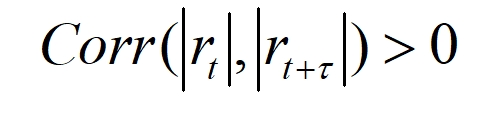
Core Viewpoint - The article emphasizes the underestimation of risks in the current market environment, highlighting the need for awareness and preparedness among investors as uncertainties rise due to various global factors [1][3][4]. Group 1: Current Market Risks - Engel identifies several sources of uncertainty for 2025, including tariff policies, anti-science sentiments in the U.S., immigration issues, and ongoing wars, which are increasing market volatility without sufficient caution from investors [3][4]. - The prevailing market optimism may be a false sense of security, as Engel warns that these issues may not resolve in a way that enhances economic resilience or growth [4][5]. Group 2: ARCH Model Insights - Engel's ARCH model, introduced in 1982, quantifies the phenomenon of "volatility clustering" in financial markets, indicating that high volatility is often followed by more high volatility [8]. - The model serves as a tool for monitoring global financial conditions rather than predicting specific market movements, focusing on when volatility is likely to rise or fall [9]. Group 3: Trade Wars, AI, and Policy - Engel compares current trade wars to the Smoot-Hawley Tariff Act of the 1930s, suggesting that tariffs are detrimental to both parties involved and are unlikely to be sustainable [12]. - He views AI not as an independent source of market volatility but as a probabilistic tool that should assist human decision-making, cautioning against over-reliance on automated trading systems [12]. - Engel stresses the importance of gradual and predictable policy adjustments to mitigate risks, as sudden changes can lead to reduced investment and consumption, further slowing economic growth [12]. Group 4: Strategies for Individual Investors - For non-professional investors, Engel advises against attempting market timing and suggests using volatility control indices that adjust positions based on market volatility levels [15]. - He recommends constructing a diversified investment portfolio with a defined volatility target, emphasizing disciplined risk management over speculative market predictions [16]. Group 5: Future Outlook - Engel expresses concern about three major issues for 2026: escalation of wars, the re-emergence of stagflation, and stagnation in climate action, while remaining hopeful about improved U.S.-China relations [19][20]. - He believes that better collaboration between the U.S. and China could help address inflation and deflation issues, benefiting both countries and the global economy [20].


华宝证券:加强风险防控,优化风险计量,浅谈GARCH类模型在市场风险VaR计量中的应用
Zheng Quan Ri Bao Wang· 2025-07-07 08:54
Group 1 - The core viewpoint of the article emphasizes the necessity for securities firms to enhance market risk measurement models to better identify, warn, expose, and manage financial risks in a complex market environment [1] - Value at Risk (VaR) has become a key indicator for quantitative analysis of market risk since its introduction by JP Morgan in 1994, gaining recognition from regulatory bodies like the Basel Committee [1] Group 2 - Traditional VaR measurement methods such as historical simulation, parametric methods, and Monte Carlo simulation have limitations, particularly in capturing tail risks and the dynamic nature of volatility [2] - GARCH models, which account for volatility clustering and the heavy-tailed characteristics of financial data, are better suited for modeling the dynamic changes in volatility [2][4] Group 3 - Empirical analysis using the CSI 300 index from 2014 to 2016 demonstrates that GARCH models outperform traditional VaR methods during periods of high market volatility, effectively capturing the clustering of volatility and the leverage effect [5][14] - The GARCH(1,1) and EGARCH(1,1,1) models were selected for their ability to fit extreme values and reflect market dynamics accurately, with a confidence level set at 95% [12] Group 4 - The findings indicate that during periods of significant market fluctuations, GARCH models can quickly adjust VaR values to reflect potential risks more accurately, making them essential tools for financial institutions in risk management [14][15] - The research highlights the importance of dynamic risk-related models in preventing systemic financial risks and fulfilling the early identification and management requirements of financial risks [15]