风险价值(VaR)

Search documents
What Is Risk?
Seeking Alpha· 2026-02-03 07:15
Core Viewpoint - The primary focus of the article is on the concept of risk in investing, particularly the risk of permanent capital loss, and how it can be minimized through various measures and indicators [3][11]. Group 1: Understanding Risk - "Risk" is often used in investing but lacks a clear definition, with the most significant aspect being the risk of permanently losing capital [3]. - Two dominant measures of risk in professional investing are equity beta, which indicates a stock's sensitivity to market movements, and Value at Risk (VaR), which estimates the maximum expected loss over a specific time frame at a defined confidence level [4][5]. Group 2: Limitations of Risk Measures - Both equity beta and VaR are criticized for being historical measures that may not predict future outcomes accurately, as they rely on past patterns [6]. - A Monte Carlo model can be used to enhance VaR calculations, but it does not guarantee protection against all potential outcomes [6]. Group 3: Risk Management Strategies - Private investors are encouraged to adopt a pragmatic approach to risk management by identifying key indicators that historically signal the end of a bull market [8]. - The author lists ten indicators that suggest a potential end to the current secular bull market, noting that all indicators are currently met, indicating a possible market downturn [11]. Group 4: Market Behavior and Speculation - The article highlights a prevailing speculative mentality among investors, where the desire to follow trends can lead to dangerous market behavior [14]. - Evidence of speculative fever is illustrated through the performance of unprofitable Nasdaq stocks, which have shown high returns, signaling excessive risk-taking [19]. Group 5: Current Investment Strategy - The company maintains a nearly fully invested position while adopting a defensive strategy, focusing on low beta equities and commodities, particularly gold, to mitigate risks [23]. - Despite a defensive approach, the company achieved a remarkable return of +29.24% for USD investors in 2025, raising concerns about the level of risk taken [24].


华宝证券:加强风险防控,优化风险计量,浅谈GARCH类模型在市场风险VaR计量中的应用
Zheng Quan Ri Bao Wang· 2025-07-07 08:54
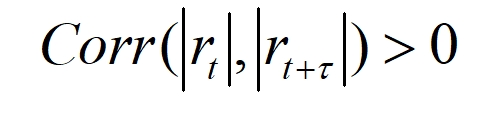
Group 1 - The core viewpoint of the article emphasizes the necessity for securities firms to enhance market risk measurement models to better identify, warn, expose, and manage financial risks in a complex market environment [1] - Value at Risk (VaR) has become a key indicator for quantitative analysis of market risk since its introduction by JP Morgan in 1994, gaining recognition from regulatory bodies like the Basel Committee [1] Group 2 - Traditional VaR measurement methods such as historical simulation, parametric methods, and Monte Carlo simulation have limitations, particularly in capturing tail risks and the dynamic nature of volatility [2] - GARCH models, which account for volatility clustering and the heavy-tailed characteristics of financial data, are better suited for modeling the dynamic changes in volatility [2][4] Group 3 - Empirical analysis using the CSI 300 index from 2014 to 2016 demonstrates that GARCH models outperform traditional VaR methods during periods of high market volatility, effectively capturing the clustering of volatility and the leverage effect [5][14] - The GARCH(1,1) and EGARCH(1,1,1) models were selected for their ability to fit extreme values and reflect market dynamics accurately, with a confidence level set at 95% [12] Group 4 - The findings indicate that during periods of significant market fluctuations, GARCH models can quickly adjust VaR values to reflect potential risks more accurately, making them essential tools for financial institutions in risk management [14][15] - The research highlights the importance of dynamic risk-related models in preventing systemic financial risks and fulfilling the early identification and management requirements of financial risks [15]