海上贸易

Search documents
珍品里的文明解码:从三个时空坐标看“广东外贸一千年”
2 1 Shi Ji Jing Ji Bao Dao· 2025-10-14 05:47
Core Viewpoint - The exhibition "Mutual Benefit in the World: A Thousand Years of Guangdong Foreign Trade" showcases Guangdong's significant role in the global trade system and its unique contributions to China's foreign trade system, emphasizing the province's commitment to high-level openness amid global economic uncertainties [1]. Historical Context - **Song Dynasty**: Guangzhou became a major trading port, with the implementation of the "Guangzhou Shipping Regulations" and incentives for foreign merchants, leading to a prosperous maritime trade environment [1]. - **Southern Song Dynasty**: The "Nanhai I" shipwreck, discovered in 1987, provides insights into the maritime trade of the era, with artifacts like gold jewelry revealing the complexities of trade and craftsmanship [2][4]. - **Ming Dynasty**: The establishment of the Shibosi in Guangzhou regulated maritime trade, and the flourishing of the Shiwankou kiln in Foshan produced high-quality ceramics for both domestic and international markets [8][11]. - **Qing Dynasty**: The opening of maritime trade led to the establishment of the Canton System, with Guangzhou becoming a hub for trade and cultural exchange, producing export paintings that catered to European demand [13][19]. Artifacts and Cultural Significance - The exhibition features over 200 artifacts, including 22 national first-class cultural relics, highlighting Guangdong's historical trade significance [1]. - Artifacts from the "Nanhai I" ship, including gold items, suggest a sophisticated trade network and the existence of a luxury goods supply chain [6][7]. - The Ming period's "Cui Mao Blue" ceramics from the Shiwankou kiln exemplify the region's craftsmanship and its role in international trade [10][12]. - Qing Dynasty export paintings, such as the "Panorama of Guangzhou Port," illustrate the vibrant trade activities and cultural exchanges of the time [16][18].


平陆运河风物志㉕ | 百年会馆两广情
Guang Xi Ri Bao· 2025-05-04 01:37
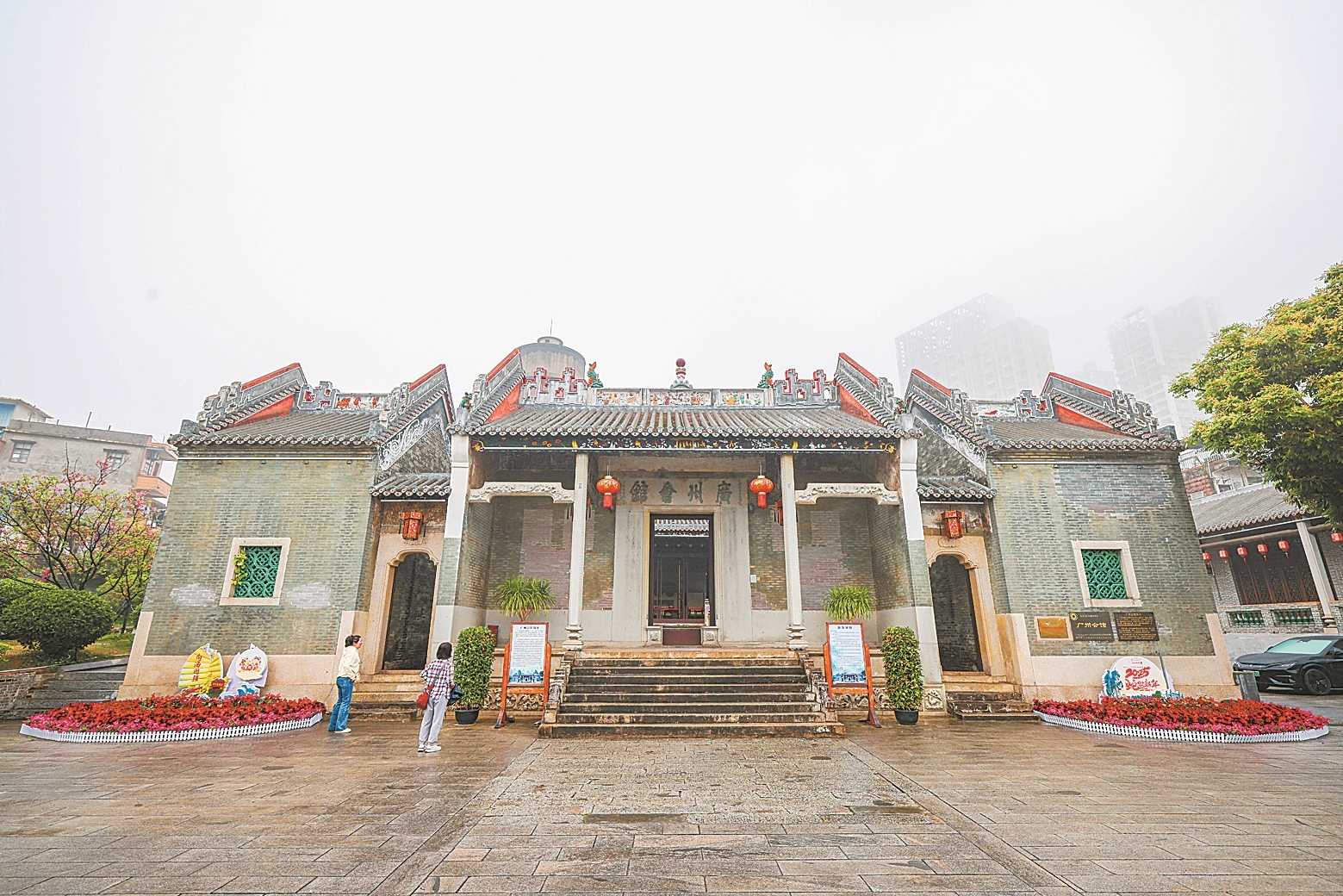
Core Insights - The Guangzhou Guild Hall in Qinzhou, established in 1783, is a historical building that reflects the deep commercial ties between Guangdong and Qinzhou, showcasing the evolution of trade in the region over more than a century [2][3]. Historical Significance - The hall served as a center for Guangdong merchants, known as the "Guangzhou Gang," who organized to support each other in business, significantly influencing the local economy and culture [2][3]. - The architectural style of the hall is typical of the Qing Dynasty, featuring a courtyard layout and high-quality materials, which demonstrate the wealth and status of the merchants [3][4]. Cultural Impact - The presence of Guangdong merchants has shaped the local customs and architectural styles in Qinzhou, evident in the unique Lingnan-style buildings and the prevalence of Cantonese dialect [3][4]. - The hall is adorned with intricate carvings and decorations that reflect the values of friendship and business acumen among merchants, rather than solely focusing on wealth [4]. Modern Developments - The establishment of the Qinzhou Guangdong Chamber of Commerce in 2021 signifies the ongoing commercial relationship between Guangdong and Qinzhou, with over 100 member companies now involved [5]. - The opening of the Pinglu Canal is expected to enhance trade efficiency, reducing transportation costs significantly for local businesses, which is attracting more Guangdong merchants to the area [5]. Future Prospects - Qinzhou is positioning itself as a key investment destination, emphasizing its strategic location for trade and encouraging investment from various sectors [5][6].