朝贡贸易

Search documents
千帆往来有章法
Xin Lang Cai Jing· 2026-01-15 23:33
Core Insights - The article discusses the historical development of maritime trade in ancient China, particularly during the Tang Dynasty, highlighting its significance in cultural exchange and economic growth [1][2]. Group 1: Historical Context - China is one of the earliest countries to engage in foreign trade, with maritime trade routes like the Maritime Silk Road emerging as early as the Qin and Han dynasties [1]. - The Maritime Silk Road facilitated trade and cultural exchanges between China and foreign nations, evolving from the Han Dynasty through the Tang, Song, and Ming dynasties [1][3]. Group 2: Trade Management System - The Tang Dynasty established a relatively complete management system for maritime trade, including laws and regulations that defined tax standards and trade order [2][4]. - The government implemented a licensing system for private maritime trade, requiring merchants to obtain permits for cross-border activities [7]. Group 3: Trade Dynamics - During the Tang Dynasty, the volume of daily necessities and production goods in maritime trade significantly increased compared to previous dynasties, indicating a shift from luxury goods to bulk trade [4]. - The Tang government focused on maintaining trade order and avoiding excessive taxation to encourage foreign trade, as evidenced by the stable tax rates established during this period [8][10]. Group 4: Regulatory Framework - The government defined prohibited items for maritime trade, including strategic materials like weapons and certain luxury goods, to ensure national security [9]. - The establishment of the "Shibo" (maritime trade official) role marked a shift towards centralized management of maritime trade, enhancing oversight and regulatory compliance [10][11]. Group 5: Cultural Significance - The open and inclusive spirit of ancient maritime trade reflects the broader cultural ethos of Chinese civilization, emphasizing the importance of exchange and mutual learning with other cultures [11].
带你走进“大明的世界”
Ren Min Ri Bao Hai Wai Ban· 2025-04-28 22:36
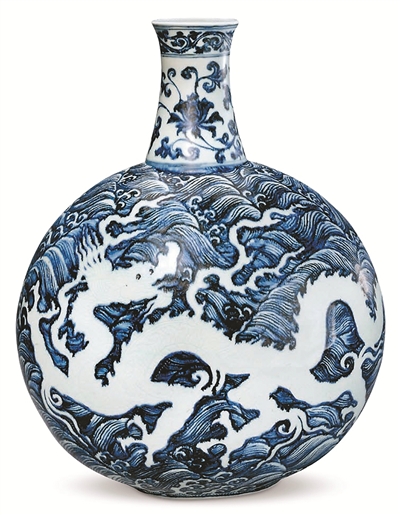
Core Insights - The exhibition "Observing the World: The Ming Dynasty's Global Influence" at the Nanjing Museum showcases over 400 precious artifacts from more than 30 cultural institutions, highlighting the Ming Dynasty's interactions with foreign civilizations through five thematic sections [10][11][12]. Group 1: Historical Context - The Ming Dynasty, established in 1368 by Zhu Yuanzhang, implemented significant institutional reforms that influenced future generations, including a foreign policy centered on peaceful coexistence and tribute trade [11][12]. - The exhibition outlines the political, economic, and diplomatic systems of the Ming Dynasty, featuring artifacts such as the Ming Hongwu red-glazed vase and paintings depicting gatherings of scholars [11][12]. Group 2: Maritime Trade and Globalization - Zheng He's voyages from 1405 to 1433 significantly expanded China's influence, establishing trade routes and cultural exchanges that contributed to early globalization [13][14]. - The exhibition includes artifacts like blue and white porcelain, which reflect the maritime activities and trade during Zheng He's expeditions, showcasing the cultural and economic exchanges that occurred [13][14]. Group 3: Cultural Exchange - The exhibition highlights the cultural exchanges between China and the West, featuring portraits of Matteo Ricci and Xu Guangqi, who collaborated on scientific and mathematical translations, fostering knowledge transfer [16][17]. - The first colored Chinese world map, created by Ricci and Li Zhi, redefined the representation of global geography by placing China at the center, marking a significant moment in cartography [17]. Group 4: Artistic Influence - The exhibition presents artworks that illustrate the blending of Eastern and Western artistic styles, such as the "Wooden Beauty" oil painting and the "Wild Villa and Forest" screen, showcasing the influence of Western techniques on Chinese art [17][18]. - The display of Ming Dynasty artifacts, including cloisonné and lacquerware, reflects a synthesis of local and foreign artistic traditions, emphasizing the era's cultural openness [18].