
海拔经济

Search documents
从山坳到都市:浙江景宁“一抹青绿”何以撬动千万级产业?
Zhong Guo Xin Wen Wang· 2025-11-14 00:02
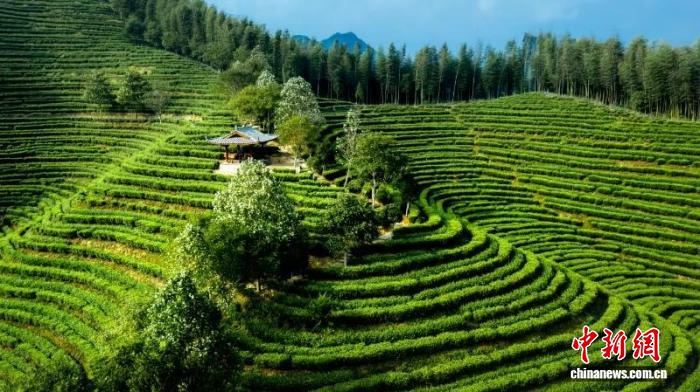
Core Insights - The article highlights how Jingning County in Zhejiang has transformed its ecological resources into economic benefits through high-altitude agriculture and innovative practices, creating a multi-million dollar industry from its natural assets [1][5][11]. Group 1: Agricultural Development - Jingning County leverages its unique "altitude economy" to produce high-quality agricultural products such as highland vegetables, Huiming tea, and medicinal herbs, connecting rural and urban markets [1][5]. - The "Jingning 600" brand has been established to promote high-quality agricultural products from areas above 600 meters, significantly increasing farmers' incomes and attracting external investments [5][11]. - The county has implemented an order-based agricultural model, enhancing product standardization and market competitiveness, which has led to increased commercialization of agricultural products [2][5]. Group 2: Tea Industry - Huiming tea, a traditional product from the region, has seen a revival through modern branding and marketing strategies, with the planting area reaching 80,000 acres and an output value exceeding 970 million yuan by 2025 [10][12]. - Innovative tea products are being developed, integrating traditional tea with modern flavors, appealing to younger consumers and expanding market reach [9][10]. Group 3: Medicinal Herb Industry - The medicinal herb sector in Jingning is projected to grow significantly, with an expected planting area of 96,000 acres and an annual output of 6,500 tons by 2025, contributing to a total industry value of 450 million yuan [11][12]. - The integration of traditional practices with modern technology in the cultivation of medicinal herbs is enhancing product value and market recognition [11][12]. Group 4: Economic Impact - The transformation of ecological resources into economic benefits is creating new business opportunities, such as eco-tourism and agritourism, with local investments in hospitality and related services [5][11]. - The overall strategy of combining agriculture, tourism, and traditional industries is fostering a sustainable economic model that supports rural revitalization and community prosperity [1][11].


(乡村行·看振兴)畲乡景宁:“海拔经济”照亮山区共富路
Zhong Guo Xin Wen Wang· 2025-09-14 11:23
Core Insights - The article highlights the development of the "Jingning 600" regional public brand in Jingning She Autonomous County, Zhejiang Province, which aims to transform ecological advantages into economic growth through the promotion of high-quality agricultural products [1][2]. Group 1: Economic Development - The "Jingning 600" ecological base has reached a scale of 134,700 acres, generating high-quality agricultural products that are popular in cities like Shanghai, Hangzhou, Jiaxing, and Ningbo, with projected sales of 740 million yuan in 2024 [2]. - The county has developed 122 high-quality agricultural products, including Huiming tea and cold water snow bamboo shoots, which serve as key products for economic development [1]. Group 2: Agricultural Production - The production of high mountain cold water bamboo shoots in Jingning is approximately 15,000 jin per day, with over 2,500 jin supplied daily to a major supermarket chain [1]. - The tea industry in Sanstone Village has expanded significantly, with tea planting area increasing to over 5,300 acres, a fivefold increase since 2005 [4]. Group 3: Income Growth - The collective operating income of Sanstone Village is projected to exceed 1.8 million yuan in 2024, with per capita income for villagers nearing 40,000 yuan [4]. - The per capita disposable income of rural residents in Jingning is expected to reach 30,461 yuan in 2024, reflecting an 8.4% year-on-year growth, the highest in Zhejiang Province [6].
杭州10个名优产品入选新一批省级“土特产”
Mei Ri Shang Bao· 2025-05-08 22:25
Core Viewpoint - Zhejiang Province has announced the fourth batch of high-quality "local specialties" and the first batch of "local specialty" new products, showcasing the strength of Hangzhou in integrating agricultural products with industrial wisdom [1] Group 1: Local Specialties - Ten classic products from Hangzhou have been selected for the fourth batch of high-quality "local specialties," with 14 enterprises' products becoming part of the first batch of "local specialty" new products, ranking among the top in the province [1] - The selected local specialties include Yuhang soft-shelled turtle and Qiantang white shrimp, which are recognized for their high protein characteristics and unique ecological farming methods [2] - Fuyang fresh bamboo shoots leverage their historical reputation and carbon sink advantages to contribute to the "taste economy," while Lin'an high-altitude vegetables and Tianmu small sweet potatoes utilize local soil and climate for development [2] Group 2: Cultural Heritage and Innovation - The six traditional handcrafting processes of Tonglu's Xinhao noodles have been included in the intangible cultural heritage protection, symbolizing rural aesthetics in Zhejiang [2] - The unique flavor profiles of Yangshan honey peaches and Qiandao Lake loquats are highlighted as examples of climate geographical indicators [2] - The industrialization path of the "red gold" saffron from Jiande is noted as a model for revitalizing agricultural cultural heritage [2] Group 3: Product Innovation and Market Expansion - The first batch of "local specialty" new products includes a matcha series from six tea companies in Yuhang, extending the advantages of Jing Mountain tea into deep processing [3] - The introduction of Japanese matcha processing techniques by Chun'an Wanshin Tea demonstrates the international transformation of traditional tea industries [3] - Innovative products such as Fuyang sweet persimmons and Tonglu sturgeon caviar are breaking traditional cultivation boundaries and enhancing market presence through value chain integration [3]