海洋安全

Search documents
日舰曾收到中方提示
Xin Lang Cai Jing· 2025-12-09 14:14
Core Viewpoint - The article discusses Japan's recent actions regarding China's Liaoning aircraft carrier group, highlighting that China's military training complies with international law and that Japan has been informed in advance about the training activities [1][2]. Summary by Relevant Sections Military Training Compliance - China's military training is stated to be in accordance with international law and practices, with prior notifications sent to Japanese naval vessels [1][2]. - The training was conducted in the Miyako Strait, with specific details shared with Japan, including the timing and location of the exercises [1][2]. Communication and Notifications - On December 6, the Liaoning carrier group conducted flight training, with notifications sent at 2:10 PM and 2:28 PM, confirming the training would start at 3 PM and last approximately six hours [1][2]. - Japan's "Shirayuki" destroyer confirmed receipt of these notifications, indicating awareness of China's training activities [1][2]. International Law and Freedom of Navigation - According to maritime security experts, China's training in the Miyako Strait is justified under the United Nations Convention on the Law of the Sea, which grants freedom of navigation and overflight [1][2]. - Japan's acknowledgment of the notifications suggests that they were aware of China's legitimate training operations [1][2]. Japan's Response and Intentions - Japan's actions are characterized as attempts to disrupt China's normal training in the Pacific, reflecting a reluctance to accept China's naval presence in the region [1][2]. - Military experts suggest that Japan's exaggerated reactions aim to draw attention and sympathy, ultimately highlighting its own inadequacies [1][2].
2025年中国声呐行业区域竞争分析:江苏技术竞争力强
Qian Zhan Wang· 2025-07-12 04:13
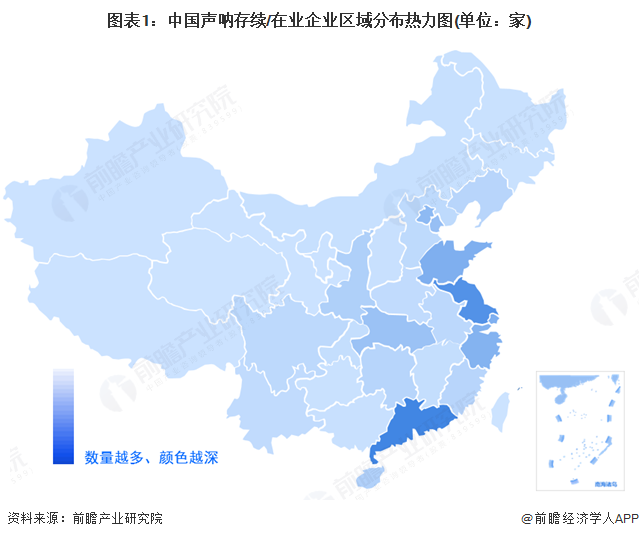
Group 1 - The sonar industry in China has over 690 active companies, with Guangdong province having the highest number at approximately 110 companies, followed by Jiangsu, Shandong, and Zhejiang [1] - Jiangsu province leads in effective patent applications in the sonar industry, with a total of 1,186 applications, indicating its strategic positioning and technological innovation in this field [3] - China Shipbuilding Industry Corporation holds the highest number of effective patent applications among companies, totaling 25, followed by Zhongke Tanhai (Shenzhen) Marine Technology Co., Ltd. with 21 applications [5] Group 2 - Zhejiang province has the highest number of sonar bidding projects, totaling 657, followed by Guangdong, Jiangsu, and Anhui with 492, 420, and 334 projects respectively [7] - Jiangsu province also has the most winning bids in the sonar sector, with 385 projects, followed by Shandong, Zhejiang, and Guangdong with 358, 283, and 195 projects respectively [9]


广东升级维护珠江口至粤西业务化浮标
Zhong Guo Zi Ran Zi Yuan Bao· 2025-06-30 01:25
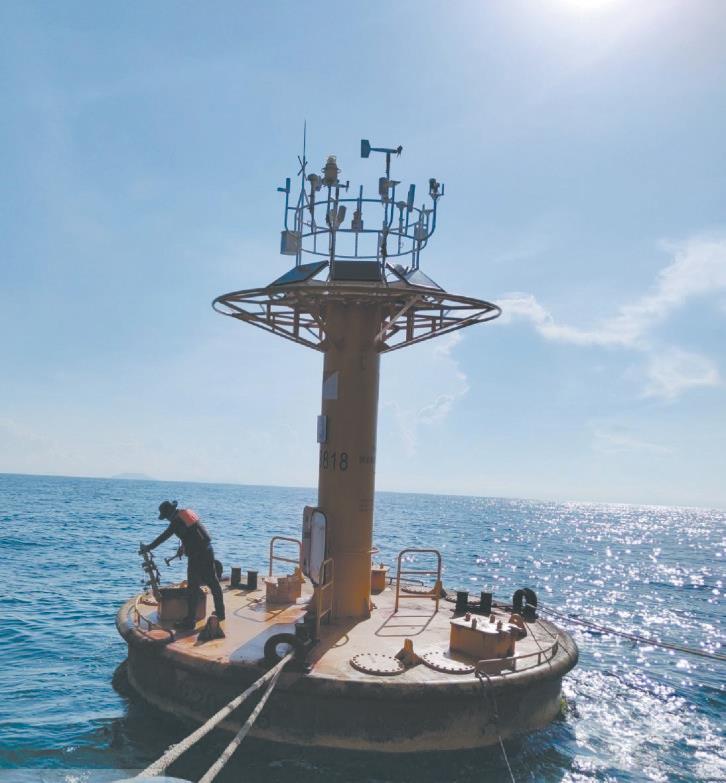
Group 1 - The Guangdong Province has upgraded and maintained its operational buoys in the Pearl River Estuary to the western coastal areas, which provided high-precision data during Typhoon "Butterfly" [2] - The upgraded buoys, equipped with Beidou positioning technology, were successfully deployed from Zhuhai to Zhanjiang, with all buoys operating well and meeting data quality standards [2] - The maintenance of a 6-meter comprehensive observation buoy included calibration of key sensors, enhancement of solar power systems, and anti-biofouling treatments [2] Group 2 - The buoys, particularly those in the Zhanjiang area, captured critical data on typhoon pressure, wind strength, and wave changes, which were transmitted to the Guangdong Marine Forecast Center [3] - The timely and accurate data supported the forecasting agency in creating warning information and helped government emergency departments in formulating evacuation and storm avoidance plans [3] - The Guangdong Provincial Department of Natural Resources plans to strengthen the management and regulation of the marine operational observation buoy system to enhance marine safety and promote high-quality marine economic development [3]