海鲜自由

Search documents
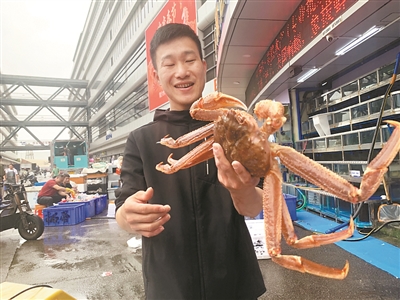
春节来新黄沙 叹“海鲜自由”
Guang Zhou Ri Bao· 2026-02-16 02:04
Core Insights - Huangsha Aquatic Center is experiencing a vibrant trading atmosphere during the Spring Festival, with daily transactions exceeding 600 tons and peak periods reaching 1,000 tons, ensuring ample supply for consumers [2][4] - The center features over 200 varieties of fresh seafood from more than 20 countries, with a notable 10% decrease in prices for mid-to-high-end seafood compared to the previous year, attributed to stable supply [1][4] Group 1: Market Operations - The Huangsha Aquatic Center has been operational 24/7 since its establishment in 1994, maintaining continuous service during the Spring Festival to meet consumer demand [2] - The market's management has implemented rigorous safety and quality controls to ensure that seafood reaches consumers in optimal condition [2][5] Group 2: Pricing and Supply - Mid-to-high-end seafood prices have decreased by approximately 10% year-on-year, with specific examples including松叶蟹 priced at 160 yuan per jin and 帝王蟹 at around 220 yuan per jin, with stable daily sales of 2,000 to 3,000 jin [4][5] - The best-selling seafood item is 石斑鱼, with daily sales reaching 6,000 to 7,000 jin, and prices for 珍珠斑 and 东星斑 have decreased by 10% and 30% respectively compared to last year [4] Group 3: Consumer Protection and Quality Assurance - The Huangsha Aquatic Center has established a professional inspection team to ensure fair trading practices, including comprehensive checks on electronic scales used by vendors [5] - A dedicated testing center conducts rigorous quality checks on seafood, providing a traceable "digital health record" for products, ensuring consumer safety [6]

中西部城市离“海鲜自由”更近一步了
吴晓波频道· 2025-09-22 00:30
Core Viewpoint - The article highlights the increasing consumption of seafood in China, driven by rising incomes and improved supply chains, leading to a significant shift in consumer behavior towards seafood, especially in inland regions [2][3][17]. Group 1: Market Trends - From January to July 2023, the national seafood wholesale market transaction volume reached 5.35 million tons, a year-on-year increase of 3.36%, with western regions like Sichuan and Chongqing also experiencing growth [2][16]. - The consumption of seafood by urban residents increased by 20% from 2013 to 2023, while rural residents saw an 84% increase, indicating a growing preference for seafood across demographics [3][17]. - The opening of fishing seasons in August led to a significant increase in seafood supply, with prices for certain species expected to drop by 20% to 30% [3][5]. Group 2: Regional Consumption Patterns - Coastal provinces have a per capita seafood consumption exceeding 60 kg, while inland provinces like Tibet have consumption as low as 1.23 kg, highlighting a stark regional disparity [13]. - The trend of seafood consumption is shifting westward, with significant increases in sales in western regions during festive seasons [16][17]. Group 3: Supply Chain Innovations - The introduction of strict fishing regulations since 2017 has led to a significant recovery of marine resources, with some species seeing population increases of 20% to 80% [18]. - Technological advancements in aquaculture, such as AI and 5G, have improved the efficiency and sustainability of seafood production [21][22]. - The establishment of a national cold chain logistics network has reduced transportation losses from 20% to below 8%, enhancing the efficiency of seafood distribution [36]. Group 4: Industry Transformation - The seafood industry is evolving from a focus on primary production to a more integrated model that includes processing and value-added products, increasing profitability [26]. - New farming techniques and the development of inland aquaculture are expanding the geographic reach of seafood production, with regions like Xinjiang successfully cultivating various seafood species [23][25].