消费即理财

Search documents
这届年轻人把上万元黄金剪碎贴在指尖!“黄金甲”成新年顶流“社交货币”,专家解读
Sou Hu Cai Jing· 2026-02-15 02:04
Core Viewpoint - The rise of "golden manicure" reflects a shift in consumer behavior, particularly among younger demographics, as they seek new forms of self-expression and social currency through gold, despite traditional gold jewelry facing declining sales and store closures [4][12][18]. Industry Trends - The gold jewelry industry is experiencing a dichotomy, with international gold prices rising since 2025, yet major companies like Chow Tai Fook and Chow Sang Sang reporting declining revenues and store closures [4][18]. - Chow Tai Fook's revenue for the 2026 fiscal year showed a 1.1% year-on-year decline, marking a five-year low, while Chow Sang Sang's revenue dropped by 37.35% in the first three quarters of 2025 [4][18]. - The global nail product market is projected to grow from $25.76 billion in 2025 to $36.26 billion by 2032, with a compound annual growth rate of 5.01% [9]. Consumer Behavior - Younger consumers are increasingly viewing gold as a means of self-expression rather than a traditional investment, with a focus on "self-pleasure consumption" rather than the old mindset of accumulating gold for financial security [11][12]. - The trend of using gold in manicures is seen as a way to transform gold from a low-frequency, high-ticket item to a high-frequency, low-ticket item, potentially revitalizing the gold jewelry market [4][18]. Market Dynamics - The "golden manicure" trend has led to increased demand for gold as a beauty material, with consumers willing to spend thousands on gold nail art, indicating a shift in how gold is perceived and utilized [4][6][12]. - The average cost for a golden manicure ranges from 600 to 1500 yuan, with some customers bringing in their own gold jewelry for customization [8][9]. Challenges and Opportunities - Despite the popularity of golden manicures, there are concerns regarding the cost-effectiveness and durability of gold as a nail material, with some consumers questioning its value [5][12]. - The potential for gold to become a "social currency" is evident, as consumers are more focused on the aesthetic and emotional value of gold rather than its market price [12][13]. - The beauty industry is exploring the integration of gold into nail services, but there are operational challenges, including the need for clear boundaries regarding the handling and recycling of gold materials [20][24].

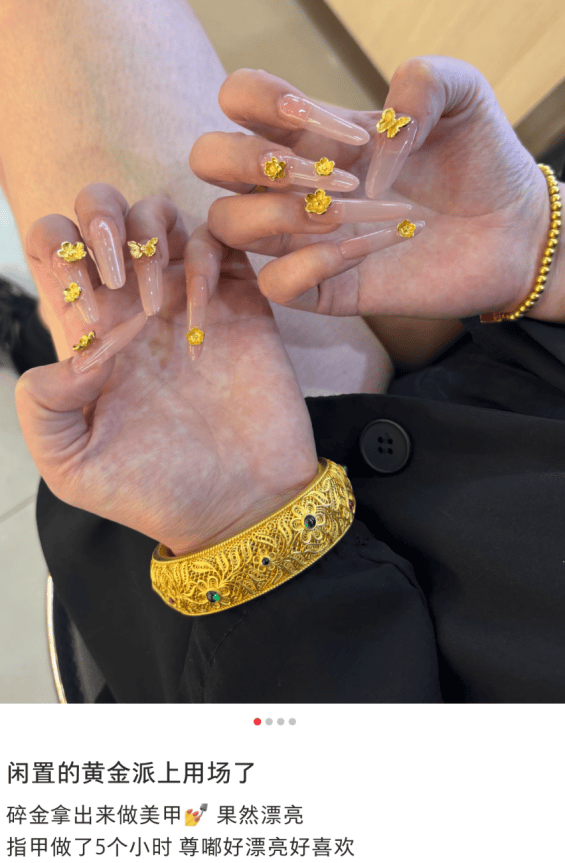
“年终奖发了,做个999黄金美甲”,这届年轻人把上万元黄金剪碎贴在指尖!
Mei Ri Jing Ji Xin Wen· 2026-02-14 23:29
Core Insights - The rise of "golden manicure" reflects a shift in consumer behavior, particularly among younger demographics, who are increasingly viewing gold as a form of self-expression rather than just an investment [5][12][20] - The gold jewelry industry is facing challenges, with major companies like Chow Tai Fook and Chow Sang Sang reporting declining revenues and store closures, indicating a need for innovation and adaptation [5][20] Industry Trends - The international gold price has been on the rise since 2025, yet gold jewelry companies are experiencing pressure on their earnings, with Chow Tai Fook reporting a 1.1% decline in revenue for the 2026 fiscal year [5][20] - The trend of using gold in manicures is seen as a potential solution to the industry's challenges, shifting from high-value, low-frequency purchases to more frequent, lower-value transactions [5][20] Consumer Behavior - Young consumers are increasingly interested in gold as a form of "self-consumption," focusing on aesthetics and social display rather than traditional investment logic [11][12] - The global nail product market is projected to grow from $25.76 billion in 2025 to $36.26 billion by 2032, indicating a significant opportunity for gold-infused beauty products [9] Market Dynamics - The gold jewelry sector is experiencing a dual challenge of losing younger customers and declining purchase frequency, prompting brands to explore new avenues like gold manicures [20][21] - The beauty industry, particularly the nail salon sector, is characterized by low barriers to entry and high competition, with over 1.62 million nail-related businesses in China as of January 2026 [21] Future Outlook - There is potential for brands to introduce micro-gold accessories specifically for manicures, which could enhance profitability and customer engagement [22][26] - The concept of gold manicures is still viewed as a niche innovation, primarily suited for special occasions rather than everyday use, suggesting a limited but unique market segment [26]
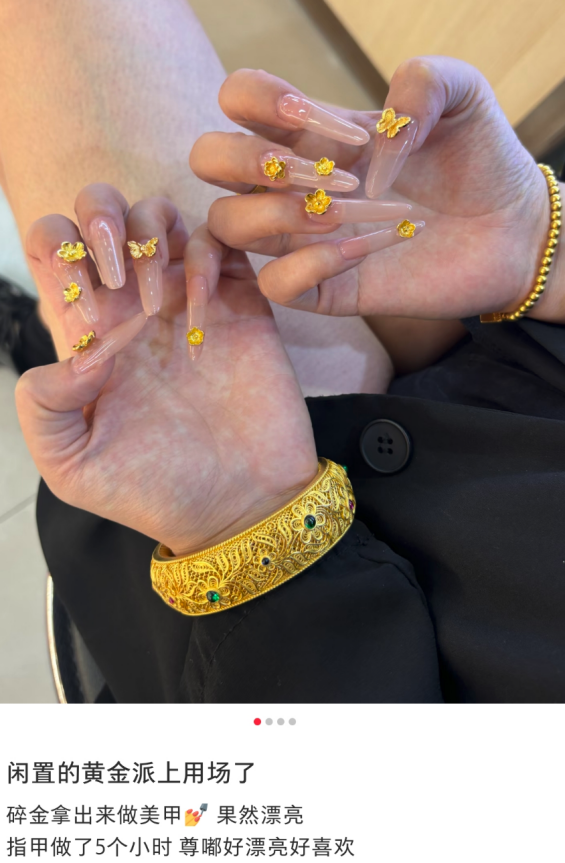
突然火了!“年终奖发了,做个999黄金美甲”,这届年轻人把上万元黄金剪碎贴在指尖!“黄金甲”成新年顶流“社交货币”,专家解读
Mei Ri Jing Ji Xin Wen· 2026-02-14 15:45
Core Insights - The rise of "golden nail art" reflects a shift in consumer behavior, particularly among younger demographics, who are increasingly viewing gold as a form of self-expression rather than just an investment [8][13][24] - The gold jewelry industry is facing challenges, with major brands like Chow Tai Fook and Chow Sang Sang reporting declining revenues and store closures, while the nail art sector is experiencing a surge in demand for gold-infused designs [8][24] Group 1: Market Trends - The demand for gold consumption is increasing as the Chinese New Year approaches, with "small weight" gold items becoming popular among consumers [8] - Golden nail art has emerged as a trendy new consumption form, with consumers willing to spend thousands on creating elaborate designs [8][10] - The global nail products market is projected to grow from $25.76 billion in 2025 to $36.26 billion by 2032, indicating a compound annual growth rate of 5.01% [13] Group 2: Industry Performance - Chow Tai Fook reported a 1.1% year-on-year decline in revenue for the first half of the 2026 fiscal year, marking the lowest performance in five years, alongside the closure of 611 stores [8][24] - Chow Sang Sang's revenue for the first three quarters of 2025 fell by 37.35%, with a net reduction of 560 stores compared to the previous year [8][24] - Despite attempts to raise prices and collaborate with IP brands, the effectiveness of these strategies has been limited [8] Group 3: Consumer Behavior - Younger consumers are shifting their focus from traditional gold investment to "self-gratifying consumption," valuing the aesthetic and social aspects of gold rather than its investment potential [13][15] - The perception of gold is changing from a long-term asset to an "instant emotional expression," with consumers more interested in its symbolic value than its market price [15][17] - The willingness to pay a premium for gold nail art, despite its higher cost compared to traditional gold jewelry, indicates a significant shift in consumer priorities [15][17] Group 4: Industry Challenges and Opportunities - The nail art industry, while booming, faces challenges such as high competition and low entry barriers, with over 1.62 million nail-related businesses in China [25] - The potential for gold to transition from a traditional asset to a high-frequency accessory is noted, but significant barriers to scaling this trend remain [24][29] - There are legal concerns regarding the recycling of gold scraps from nail art, which could pose risks for nail salons if not properly managed [29]
老铺金条变“金甲”,万元黄金上指端记者调查:“微金”消费能撬动多大市场
Mei Ri Jing Ji Xin Wen· 2026-02-14 13:18
Core Insights - The rise of "golden nails" reflects a shift in consumer behavior, particularly among younger demographics, who are increasingly viewing gold as a form of self-expression rather than just an investment [6][9][13] - The gold jewelry industry is facing challenges, with major brands like Chow Tai Fook and Chow Sang Sang reporting declining revenues and store closures, indicating a need for innovation and adaptation [10][9] Industry Trends - The demand for gold in beauty applications, such as nail art, is growing, with consumers willing to spend thousands on "golden nails" made from existing jewelry [3][6] - The global nail product market is projected to grow from $25.76 billion in 2025 to $36.26 billion by 2032, with a compound annual growth rate of 5.01% [6] - The trend of using gold in nail art is seen as a potential solution to the industry's struggles with low consumer frequency and engagement [9][11] Company Performance - Chow Tai Fook reported a 1.1% decline in revenue for the 2026 fiscal year, marking the lowest performance in five years, alongside the closure of 611 stores [10] - Chow Sang Sang's revenue for the first three quarters of 2025 fell by 37.35%, with a net reduction of 560 stores compared to the previous year [10] - The performance of traditional gold jewelry brands is under pressure, prompting them to explore collaborations and price increases, though results have been limited [9][10] Consumer Behavior - Younger consumers are shifting their focus from traditional gold investment to "self-gratifying consumption," valuing the aesthetic and social aspects of gold rather than its investment potential [6][7] - The perception of gold is evolving from a long-term asset to an immediate expression of emotions and social status, particularly through platforms like social media [7][8] - The willingness to pay a premium for gold nail art, despite its higher cost compared to traditional gold jewelry, indicates a significant change in consumer priorities [7][8] Regulatory Considerations - Concerns have been raised regarding the legality of recycling gold scraps in nail salons, as such practices may violate regulations set by the People's Bank of China [12][11] - Legal experts emphasize the importance of nail salons maintaining clear boundaries and not engaging in gold recovery or trading activities [12][11]