悦己消费

Search documents
春季旅游高景气,关注相关行业基本面改善
SINOLINK SECURITIES· 2026-03-29 08:24
Investment Rating - The report indicates a positive outlook for the duty-free market in Hainan, expecting sustained growth throughout the year [11][27]. Core Insights - The duty-free sales in Hainan reached CNY 15.62 billion with a year-on-year growth of 27.64% as of March 24, driven by high demand for cosmetics, jewelry, and electronics [11]. - The hotel sector, particularly Jinjiang Hotels, showed signs of recovery with a RevPAR of CNY 240.77 in Q4 2025, marking a slight year-on-year increase of 0.14% [12]. - Retail data for January-February 2026 showed a total retail sales of CNY 86,079 billion, growing by 2.8% year-on-year, with service consumption being a key growth driver [13][16]. Summary by Sections Core Insights and Company Dynamics - Duty-free market in Hainan has seen significant growth post-border closure, with sales reaching CNY 15.62 billion and shopping visits totaling 1.9684 million, reflecting a year-on-year increase of 27.64% [11]. - Jinjiang Hotels reported a slight recovery in RevPAR, achieving CNY 240.77 in Q4 2025, with an occupancy rate of 63.48% [12]. Industry Data Tracking - Retail sales in January-February 2026 showed a recovery, with service retail growing by 5.6%, outpacing goods retail [13]. - The restaurant sector demonstrated strong recovery, with revenues of CNY 10,264 billion, a year-on-year increase of 4.8% [13][16]. Market Review - The stock market indices showed declines, with the Shanghai Composite Index down by 1.09% and the retail sector down by 1.10% [20]. - Notable stock performances included Lionhead Co. and Nanjing Commercial Travel, which saw significant gains due to favorable restructuring and tourism policies [20]. Investment Recommendations - The report suggests optimism in the duty-free sector due to improved sales data and expected profit margin growth driven by reduced discounts and currency appreciation [27]. - Recommendations for the gold and jewelry sector include brands like Laopu Gold and Chaohongji, which are expected to benefit from strong consumer acceptance of price increases [27]. - For offline retail, the report highlights Yonghui Supermarket's shift towards a selective retail model, which is anticipated to drive long-term growth [27].
美团平台汇聚近130万手艺人
第一财经· 2026-03-28 14:39
Core Viewpoint - Traditional industries relying on "skills" are revitalizing under the influence of consumer self-satisfaction demands, with Meituan reporting nearly 1.3 million skilled workers on its platform, reflecting a year-on-year growth of over 20% [3]. Group 1: Changes in Consumer Demographics and Behavior - The customer base in related industries has become significantly younger, with 65% of customers now around 30 years old, compared to a previous majority aged 40 to 50 [4]. - Younger consumers exhibit higher spending willingness and loyalty, with average annual visit frequency increasing from 1-2 times a decade ago to 5 times currently, and some customers visiting 30 to 40 times a year [4]. - The shift in consumer behavior is attributed to factors such as increased discomfort from electronic devices and a proactive approach to health among younger consumers [4]. Group 2: Industry Trends and Consumer Preferences - In the hairdressing industry, consumers are shifting from "choosing a shop" to "choosing a stylist," with 30% of customers now directly specifying their hairdresser [5]. - Over 70% of users complete their "stylist" and "style" selection before arriving at the shop, indicating a trend towards personalized service [5]. - The growth of the skilled worker industry is closely linked to the rising demand for personalized experiences, with consumers increasingly willing to pay for emotional and experiential satisfaction [5]. Group 3: Income and Talent Attraction - The average monthly income for therapists in the industry is around 15,000 yuan, with top therapists earning between 400,000 to 500,000 yuan annually, which is considered a good income locally [5]. - Many therapists over 50 transition to mentoring roles rather than facing unemployment, maintaining long-term relationships with clients, some lasting over 20 years [5]. Group 4: Challenges and Innovations - Despite the industry's growth, there is a lack of standards, particularly in service quality and pricing [5]. - The application of AI is expected to accelerate the establishment of industry standards, with AI being used for training therapists to analyze and correct their techniques [5].



美团平台汇聚近130万手艺人
Di Yi Cai Jing· 2026-03-28 13:32
Core Insights - The younger demographic shows a higher willingness to spend and greater loyalty compared to previous consumers, revitalizing traditional industries reliant on craftsmanship [1] - The number of artisans on the Meituan platform has reached nearly 1.3 million, with a year-on-year growth exceeding 20% [1] - The consumer base in traditional industries has become younger, with 65% of customers now around 30 years old, compared to a previous majority aged 40 to 50 [1] Group 1: Consumer Behavior Changes - Consumers are increasingly proactive in the hairdressing industry, shifting their focus from "choosing a shop" to "choosing a stylist," with 30% of clients directly specifying their hairstylist [2] - Over 70% of users complete their "stylist" and "style" selection before arriving at the salon [2] - The trend of "self-care" has led to a surge in demand for skilled artisans, as consumers are willing to pay for experiences that enhance their emotional well-being [2] Group 2: Industry Growth and Income - The average monthly income for therapists in the industry is around 15,000 yuan, with top therapists earning between 400,000 to 500,000 yuan annually, which is considered a good income locally [2] - Many therapists over 50 continue to work in mentorship roles, maintaining long-term relationships with clients, some lasting over 20 years [2] Group 3: Challenges and Innovations - Despite the industry's growth, there is a lack of standardized service and pricing structures [3] - The use of AI in training is being implemented to establish industry standards, with therapists using AI glasses to observe and analyze their procedures for improvement [3]
2026女性健康睡眠白皮书
优居视界· 2026-03-28 08:08
Investment Rating - The report indicates a strong investment opportunity in the women's sleep health market, highlighting its transition from a single product focus to a comprehensive ecosystem valued at hundreds of billions [10][12]. Core Insights - The women's sleep market in China is experiencing transformative changes driven by policy support, industry growth, evolving consumer demands, and societal emotional shifts [10][20]. - The report identifies three core structural shifts in women's sleep needs: a move from basic sleep assistance to holistic health management, a shift in decision-making from price sensitivity to value sensitivity, and a differentiation of needs across age groups [13][15][19]. Summary by Sections Macro Background - The women's sleep market has evolved into a multi-faceted ecosystem, with significant growth potential driven by government health initiatives and increasing consumer awareness [10][11]. - Policies such as the "Healthy China 2030" initiative have integrated women's sleep health into national health strategies, creating a supportive regulatory environment [11]. - The sleep economy is projected to reach a trillion yuan, with women's specific needs becoming a key growth driver [12]. Consumer Demand Analysis - A survey of 2048 women aged 25-55 revealed that over 70% experience sleep disturbances, with varying pain points across different age groups [26][31]. - Younger women (Z generation) face emotional sleep issues, while mature women and mothers deal with sleep interruptions and quality concerns due to hormonal changes [19][47]. - The report emphasizes the importance of addressing these unique needs with tailored solutions rather than generic products [19][55]. Core Trends and Solutions - The report outlines three major trends for 2026: emotional empowerment through sleep, customized sleep solutions aligned with women's biological rhythms, and the integration of beauty and anti-aging benefits into sleep products [74][75][83]. - Emotional issues are identified as a primary factor affecting sleep quality, with a significant percentage of women reporting anxiety-related sleep difficulties [75][76]. - Customized sleep solutions are increasingly demanded, particularly for women undergoing significant life changes such as pregnancy and menopause [83][87].
批发和零售贸易行业研究:社零增速环比回暖,服务及悦已消费动力强劲
SINOLINK SECURITIES· 2026-03-22 11:45
Investment Rating - The report does not explicitly state an investment rating for the industry, but it implies a positive outlook for certain segments such as duty-free and gold jewelry [28]. Core Insights - Duty-free: On March 20, China Duty Free Group announced a revenue forecast of 53.694 billion yuan for 2025, a year-on-year decrease of 4.92%, with a net profit of 3.586 billion yuan, down 15.97%. Excluding goodwill impairment, the net profit is projected at 3.924 billion yuan, a decline of 8.04%. The main business gross margin increased by 0.51 percentage points, and inventory turnover rose by approximately 10% [12]. - The gross margin for Q4 2025 exceeded expectations, and the company is expected to maintain an improving profit margin trend in 2026. The gross margin reached 32.66% in Q4 2025, up 4.12 percentage points year-on-year, the highest since 2021. Key drivers for margin improvement include increased customer traffic, reduced discount rates, and RMB appreciation [12]. - Retail data for January-February 2026 showed better-than-expected growth, with service consumption being a highlight. The total retail sales reached 86,079 billion yuan, a year-on-year increase of 2.8%, and service retail sales grew by 5.6%, outpacing goods retail [13][16]. Summary by Sections Industry Data Tracking - The retail sales growth for January-February 2026 was 2.8%, with a notable recovery in service consumption, particularly in the restaurant sector, which saw a 4.8% year-on-year increase [13][16]. - Structural opportunities are emerging, with essential goods like grain and oil retail sales increasing by 10.2%, and discretionary items such as gold and jewelry growing by 13.0% and 10.4%, respectively [16]. Market Review - From March 16 to March 20, 2026, major indices such as the Shanghai Composite Index and Shenzhen Component Index fell by 3.38% and 2.90%, respectively. The retail sector underperformed, with a decline of 4.55% [19][20]. - Notable stock performances included Jifeng Technology and Yiyaton, which benefited from supply chain recovery and increased consumer activity [19]. Investment Recommendations - Duty-free: March data improvements enhance optimistic expectations. Short-term drivers include reduced discounts and currency appreciation, while mid-term prospects hinge on high-end consumption recovery and returning Japanese tourists [25]. - Gold and jewelry: Top brands exceeded expectations, with price acceptance among consumers. Recommendations include Laopu Gold and Chaohongji, both expected to benefit from product updates and operational strategies [25][26].

美丽小家电,被扯下遮羞布
投中网· 2026-03-20 08:10
Core Viewpoint - The small home appliance industry is facing significant challenges due to widespread quality issues and deceptive marketing practices, highlighted by the recent revelation of "fake temperature control knobs" in air fryers, which undermines consumer trust and threatens the industry's reputation [4][5][11]. Group 1: Industry Challenges - The discovery of "fake temperature control knobs" in multiple brands, including Rongshida, Zhigao, and Rongsong, has exposed a collective failure in the small appliance sector, further damaging an already struggling industry [4][11]. - Quality issues are rampant, with a reported 50% non-compliance rate in mini washing machines and an overall appliance non-compliance rate of 14.87%, primarily in low-priced products [14][15]. - The phenomenon of "fake functions" and "false parameters" is pervasive, making it difficult for consumers to identify subpar products, leading to safety concerns and potential hazards [12][13]. Group 2: Market Trends - The small appliance industry experienced explosive growth during the pandemic, but since 2022, it has seen a decline in retail sales and volume, with kitchen appliance retail sales dropping by 0.8% in 2024 [19][20]. - The average price of kitchen appliances is expected to rise by 10.6% in 2025, indicating a shift towards higher-end products, while low-end products continue to struggle [27]. - The market is becoming increasingly polarized, with mid-to-high-end products gaining traction due to technological advancements, while low-end brands face declining sales [28][29]. Group 3: Consumer Behavior - Consumers are becoming more discerning, prioritizing practicality and innovation over aesthetics, leading to a high idle rate of around 70% for small appliances [21][22]. - The demand for genuinely useful products is rising, as consumers are less willing to be swayed by marketing gimmicks and are willing to pay more for quality [24][34]. - The shift in consumer expectations necessitates that brands focus on solving real user pain points rather than relying on superficial features [30][34]. Group 4: Future Opportunities - The future of the small appliance market lies in innovation and targeted product development, with companies encouraged to focus on core products and eliminate inefficient offerings [31][32]. - Expanding into international markets is becoming a common strategy among small appliance companies, with some reporting double-digit growth in regions like Southeast Asia and Europe [32]. - Brands must adapt to the changing landscape by enhancing product differentiation and addressing consumer needs to avoid being left behind [35].

英大证券晨会纪要-20260317
British Securities· 2026-03-17 01:55
Group 1 - The report indicates that A-shares demonstrated resilience with a rebound after initial declines, driven by positive signals from the Hong Kong market and increased attractiveness of RMB assets [1][8][10] - The report highlights two positive signals: the rebound of the Hong Kong market, particularly the Hang Seng Technology Index, and the enhanced appeal of RMB assets due to China's strong economic resilience amid global geopolitical tensions [1][8][10] - The overall market sentiment is described as average, with a trading volume of 23,253 billion yuan across the Shanghai and Shenzhen markets, indicating a mixed performance among the major indices [5][6] Group 2 - The report suggests a mid-term slow bull market trend despite short-term fluctuations, emphasizing the importance of timing in market operations [2][9] - Specific investment opportunities are identified, including focusing on high-quality oil and chemical stocks with stable dividends and strong earnings certainty, as well as technology growth stocks less affected by oil price fluctuations [2][9] - The report anticipates a return to the "performance is king" logic as annual and quarterly reports are set to be disclosed, indicating a potential focus on stocks that exceed earnings expectations [2][9]
春节后“38消费”火热,李佳琦直播间“悦己”产品热度暴涨160%
Sou Hu Cai Jing· 2026-02-28 04:15
Core Insights - The consumption market has shifted focus from "gift-giving" during the Spring Festival to "self-care" and enhancing quality of life post-holiday, particularly evident during the "38 Promotion" event [1][5][10] Group 1: Consumer Behavior Changes - Post-Spring Festival, consumer motivations have transitioned from purchasing for others to prioritizing personal well-being and comfort [5][9] - Data shows a significant increase in searches for personal care and health-related products, with coffee and ergonomic chairs seeing search volume increases of 161% and 132% respectively compared to pre-holiday levels [5][11] Group 2: Product Trends - The product structure during the "38 Promotion" has shifted from family-oriented gifts to items that enhance individual comfort and efficiency in daily life [10][11] - Three main categories of products have gained attention: 1. Skincare products focused on repair and anti-aging, reflecting a shift towards effective personal use rather than gift-giving [11] 2. Office-related items like ergonomic chairs and high-quality mugs, indicating a focus on comfort and productivity for returning workers [11] 3. Health-conscious snacks and beverages that are convenient for work settings, appealing to consumers' desire for low-burden, functional options [11] Group 3: Emotional Consumption Trends - The "self-care" consumption trend is characterized by rational and detailed purchasing decisions, with consumers showing deeper inquiries into product specifications [15] - The "38 Promotion" serves as a window into emotional consumption, highlighting how consumer needs evolve at different life stages and the importance of addressing practical problems through shopping [16]
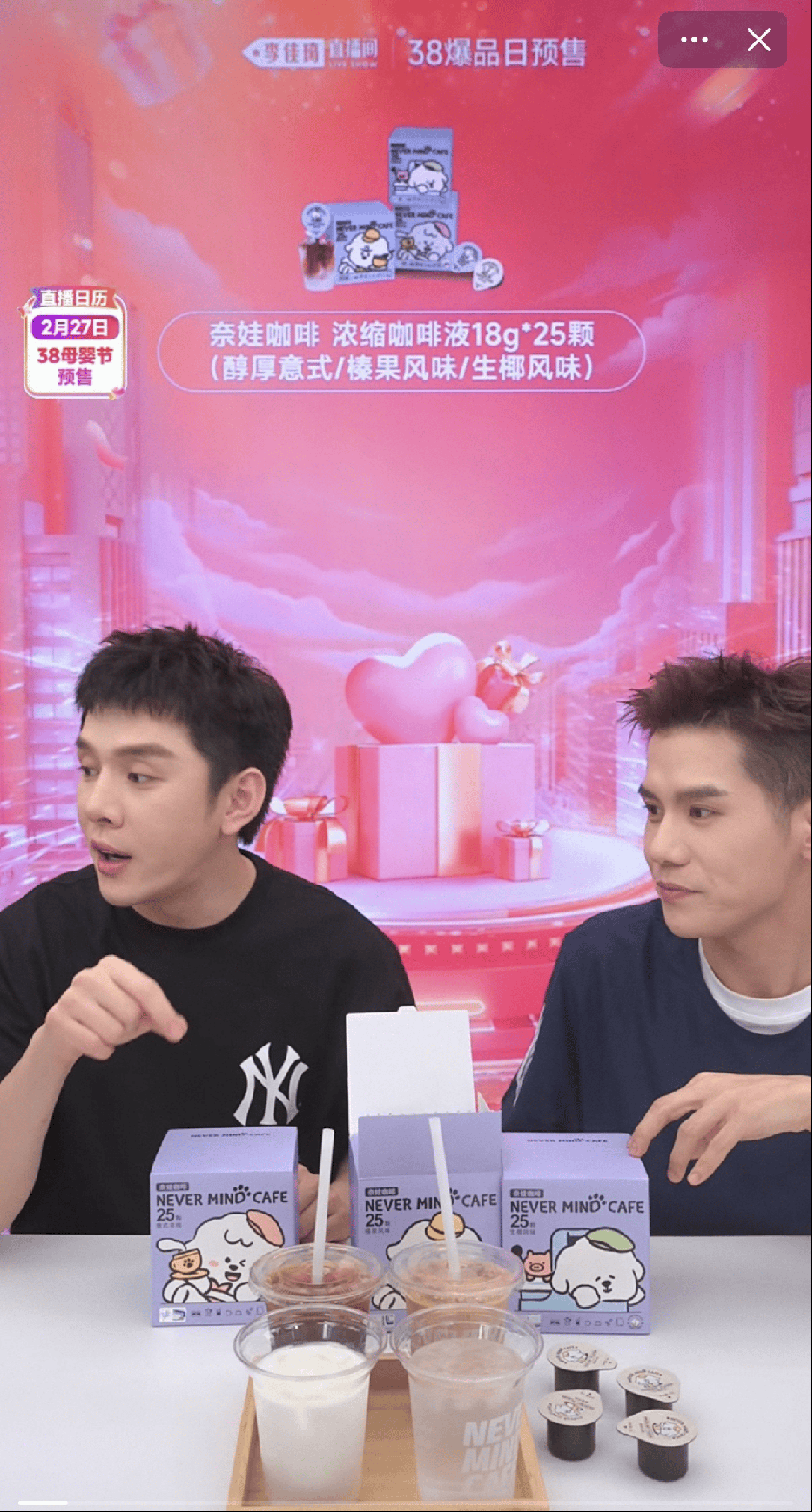
节后“自我犒劳”驱动消费,李佳琦直播间“悦己”产品成交活跃
Qi Lu Wan Bao· 2026-02-27 14:07
Core Insights - The "38 Promotion" serves as a significant consumer event marking the transition from festive to daily shopping habits, with a notable increase in product searches related to personal care, office environment improvement, and health management after the Spring Festival [1] Group 1: Consumer Behavior Changes - Post-Spring Festival, there is a marked increase in the search volume for coffee and sleep pillows, with respective year-on-year growth rates of 161% and 132% [1] - The product structure for the "38 Promotion" has shifted from family-oriented gifts to items that enhance individual comfort and efficiency in daily scenarios [2] Group 2: Product Categories of Interest - Beauty and skincare products focusing on repair and anti-aging have gained attention, reflecting a shift in consumer motivation from gifting to effective personal use [3] - Office-related products such as ergonomic lumbar supports and high-quality thermos cups are actively engaged in live interactions, indicating a focus on comfort and efficiency for the returning workforce [3] - Health-conscious snacks and beverages that are low in burden and functional are increasingly favored in post-festival shopping, showcasing a trend towards rational and refined consumption [3] Group 3: Consumer Engagement - Consumers are demonstrating a deeper inquiry into product details, such as the materials of office chair cushions and the specific ingredient ratios in skincare products, indicating a move towards informed purchasing decisions rather than impulsive buying [3] - The live stream aims to provide options that align with daily life scenarios, addressing the needs for self-care and quality of life improvement [3]
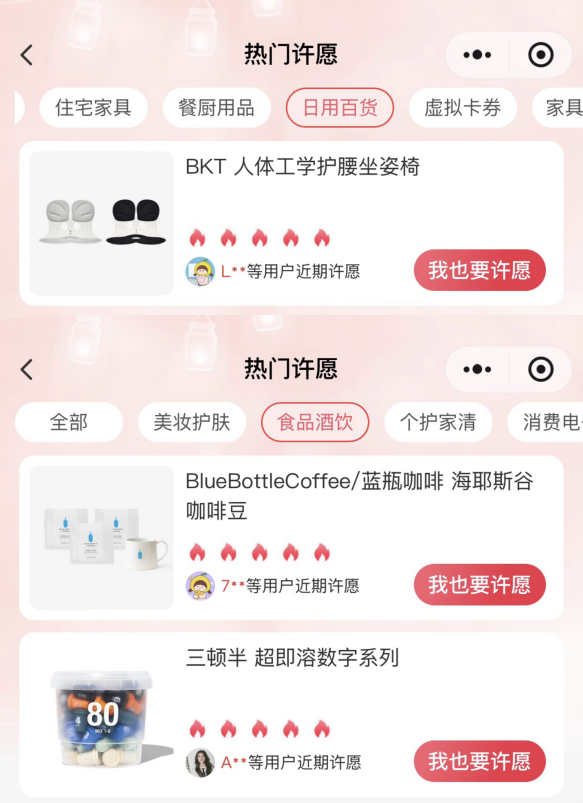
“悦己”产品热度暴涨160% ,38大促折射节后消费新动向
Sou Hu Cai Jing· 2026-02-27 13:32
Core Insights - The consumption market has shifted focus from "gift-giving" during the Spring Festival to "self-care" and enhancing quality of life post-holiday [1][4] - The "38 Promotion" serves as a transitional phase for consumers, moving from festive spending to everyday purchases centered around personal well-being [1][4] Group 1: Changes in Consumer Behavior - Post-Spring Festival, consumer attention has shifted towards self-care, with significant increases in searches for personal care, office improvement, and health management products [4] - Notable search volume increases include coffee and sleep pillows, with growth rates of 161% and 132% respectively compared to pre-holiday levels [4] Group 2: Product Structure Adjustments - The product offerings during the "38 Promotion" have shifted from family-oriented goods to items that enhance individual comfort and efficiency in daily life [5] - Key product categories include skincare focused on anti-aging, ergonomic office supplies, and convenient health-oriented snacks and beverages [5] Group 3: Characteristics of "Self-Care" Consumption - The "self-care" consumption trend is characterized by rational and detailed purchasing behavior, with consumers showing deeper inquiries into product specifications [8] - The live-streaming platforms have become amplifiers of consumer emotions and needs, reflecting the evolving demands of consumers at different life stages [9]