
消费环境建设

Search documents
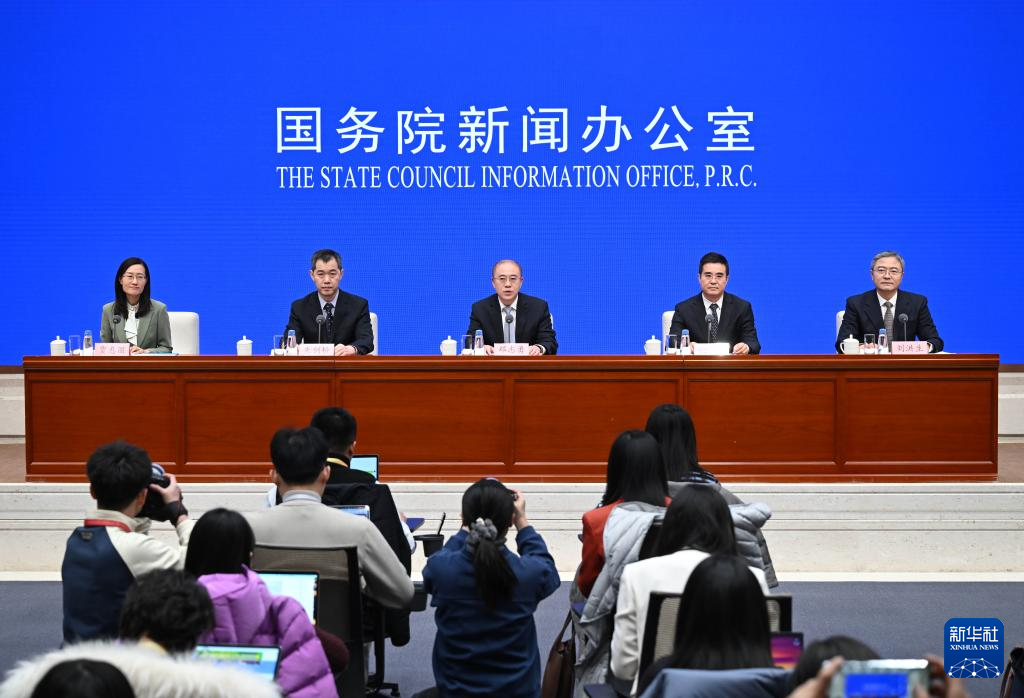
事关消费环境建设、公平竞争等 市场监管服务经济高质量发展有这些举措
Xin Hua Wang· 2026-02-05 12:35
Core Viewpoint - The National Market Supervision Administration (NMSA) is implementing measures to enhance the consumption environment and promote fair competition, aiming for high-quality economic development in China [1][3]. Group 1: Consumption Environment Improvement - The NMSA has launched a three-year action plan to optimize the consumption environment, which has shown preliminary results [3]. - Over 210 national standards for major consumer goods and service sectors have been established, including those for home appliances, furniture, and cultural tourism [3]. - The "Iron Fist" action has been initiated to address consumer pain points, resulting in 26.46 million complaints received and 4.35 billion yuan in economic losses recovered for consumers in 2025 [3][4]. Group 2: Fair Competition and Market Regulation - The NMSA is focusing on eliminating local protectionism and correcting improper market interventions to facilitate economic circulation [5]. - In 2025, the NMSA investigated 5,918 cases of illegal charges by government departments and other entities, imposing fines totaling 347 million yuan and refunding 1.35 billion yuan to businesses [5]. - The NMSA has reviewed over 12,000 important policy measures to ensure compliance with national market standards and fair competition [5]. Group 3: Antitrust and Mergers - The NMSA is responsible for antitrust reviews of mergers and acquisitions, balancing support for resource consolidation with the prevention of monopolies [6][7]. - In 2025, the NMSA concluded 706 merger cases, a 9.8% increase year-on-year, with 83% of cases resolved within 30 days [7]. - The NMSA is committed to enhancing the efficiency and quality of merger reviews while ensuring market safety, particularly in critical sectors like semiconductors and shipping [7].

统筹消费软硬环境建设
Jing Ji Ri Bao· 2025-06-12 22:00
Group 1 - The core viewpoint of the news is the launch of a three-year action plan by five departments to optimize the consumption environment, focusing on systematic governance across the entire production, circulation, and consumption chain to address pain points and blockages in the consumption sector [1] - The construction of the consumption environment is a systematic project that combines both "soft" and "hard" aspects, aiming to enhance consumer activity and inject lasting momentum into high-quality economic development [1][3] - Current shortcomings in China's consumption environment include uneven development of consumption infrastructure between urban and rural areas, and issues such as the "last mile" logistics bottleneck in rural areas affecting consumer experience [1][2] Group 2 - Improving the hard environment for consumption is crucial, which involves addressing infrastructure gaps and enhancing convenience for consumers, such as improving logistics networks and public transport capacity [2] - The soft environment optimization focuses on establishing a fair and orderly market governance system, enhancing consumer protection through a unified quality standard system, and strengthening credit supervision to promote integrity in business practices [3] - The synergy between hardware infrastructure and soft regulatory frameworks is expected to unleash greater vitality in the consumption market, leading to a safer, more convenient, and fair consumption environment that supports the high-quality development of the economy [3]