
公平竞争

Search documents
让供应商“二选一”?永辉喊话山姆
新华网财经· 2026-03-17 08:34
Core Viewpoint - The article emphasizes the importance of fair competition and quality improvement in the retail industry, particularly in the context of private label brands like 品质永辉 and 山姆MM. It advocates for collaboration with suppliers, transparency in product ingredients, and a focus on employee welfare and innovation to enhance product quality and customer satisfaction [1][4][10]. Group 1: Fair Competition - The company calls for a fair competitive environment, urging against practices that force suppliers into exclusive partnerships, which undermines industry integrity [4]. - It stresses the need for all players, including both local and international companies, to adhere to legal and ethical business practices [4]. Group 2: Quality Improvement - The company aims to enhance product quality through better raw materials, scientific formulations, advanced processes, and aesthetically pleasing designs [5]. - It commits to transparency by annually publishing ingredient lists and the use of food additives in its products, advocating for safer and healthier options for consumers [6]. Group 3: Pricing Strategy - The company highlights the importance of value for money in private label products, suggesting that quality should be prioritized over price, and vice versa [7]. - It proposes a standardized pricing approach based on weight or volume to provide greater value to customers [7]. Group 4: Employee Development - The company recognizes employees as key partners and emphasizes the need for fair compensation, professional development, and a supportive work environment [9]. - It also stresses the importance of maintaining ethical standards and integrity within the workforce [9]. Group 5: ESG Commitment - The company expresses a commitment to environmental, social, and governance (ESG) principles, aiming to contribute positively to society and the ecosystem [10]. Group 6: Innovation Focus - The company acknowledges the need for continuous innovation, particularly in developing essential consumer products, and aims to learn from industry leaders like 山姆MM and Kirkland [10]. - It aspires to improve product quality and service to enhance the consumer experience in China [10].


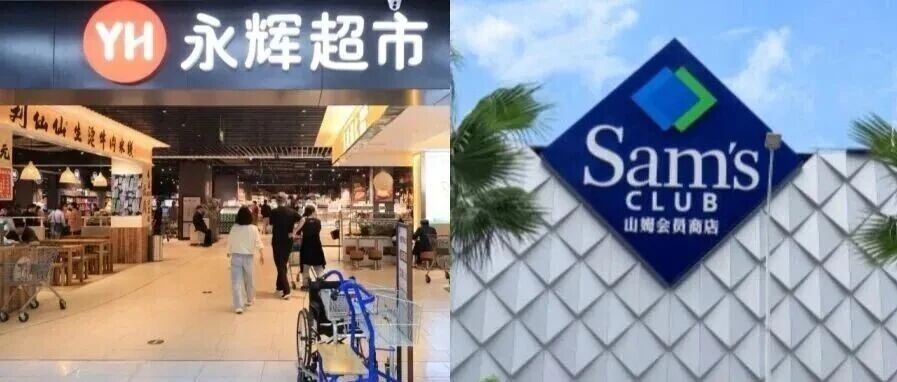
永辉喊话山姆 :别搞供应链“二选一”
21世纪经济报道· 2026-03-17 06:08
Core Viewpoint - The article highlights the competitive tension between Yonghui Supermarket and Sam's Club regarding supply chain practices, particularly the "choose one" strategy imposed by Sam's Club on suppliers, which restricts competition and market access for other retailers [1][10]. Group 1: Financial Performance and Market Position - Yonghui Supermarket is projected to incur a net loss of 2.14 billion yuan for the fiscal year 2025, marking its fifth consecutive year of losses, primarily due to one-time costs associated with store adjustments and asset disposals [1]. - In contrast, Sam's Club is experiencing rapid growth, with sales expected to exceed 140 billion yuan in 2025, representing a year-on-year increase of approximately 40% [1]. Group 2: Supply Chain Practices - Yonghui Supermarket's self-owned brand, "Quality Yonghui," has called for fair competition and has criticized Sam's Club for its "choose one" policy, which they argue undermines supplier relationships and market fairness [3][10]. - The article draws parallels to past incidents in 2021 where other retailers, such as Hema and Carrefour, accused Sam's Club of similar supply chain pressures, indicating a recurring issue in the industry [10]. Group 3: Industry Standards and Collaboration - Yonghui Supermarket emphasizes the need for collaboration in developing high-quality products and maintaining transparency in ingredient usage, advocating for a collective effort with Sam's Club to enhance product quality and safety [5][8]. - The company also stresses the importance of employee welfare and ESG (Environmental, Social, and Governance) initiatives, aiming to create a sustainable and responsible business environment [7][8]. Group 4: Regulatory Environment - The article notes that regulatory scrutiny regarding the "choose one" practice is increasing, with the market regulator clarifying that such behavior by dominant market players is prohibited under antitrust laws [11]. - The potential negative impacts of supply chain exclusivity are highlighted, including reduced bargaining power for suppliers and limited options for consumers, which could ultimately lead to higher prices [11].


永辉公开喊话山姆:不要让供应商“二选一”
证券时报· 2026-03-16 13:16
Core Viewpoint - The company "Quality Yonghui" has issued an open letter to "Sam's MM," advocating for fair competition and quality co-construction in the retail industry, emphasizing the need to resist low-quality competition and promote overall industry progress [1][4]. Group 1: Seven Joint Initiatives - The first initiative is to avoid forcing suppliers into a "choose one" situation, promoting fair competition and allowing suppliers to collaborate with multiple partners [2][4]. - The second initiative focuses on enhancing product quality through superior raw materials, scientific formulations, advanced processes, and aesthetically pleasing designs and packaging [2][5]. - The third initiative emphasizes the importance of clean formulations, with the company committing to annually disclose ingredient lists and additive usage, advocating for transparency in product safety [2][6]. - The fourth initiative aims to offer excellent price-quality ratios, encouraging customers to choose based on quality at the same price point, thereby creating greater value [2][7]. - The fifth initiative is about employee empowerment, ensuring fair compensation, ample vacation, professional development, and a strong ethical foundation [2][8]. - The sixth initiative promotes Environmental, Social, and Governance (ESG) practices, focusing on systematic thinking, forward-looking strategies, and efficient innovation for societal and environmental well-being [2][8]. - The seventh initiative highlights the need for continuous innovation, with the company aspiring to learn from industry leaders like Sam's and Kirkland to enhance product offerings [2][9].
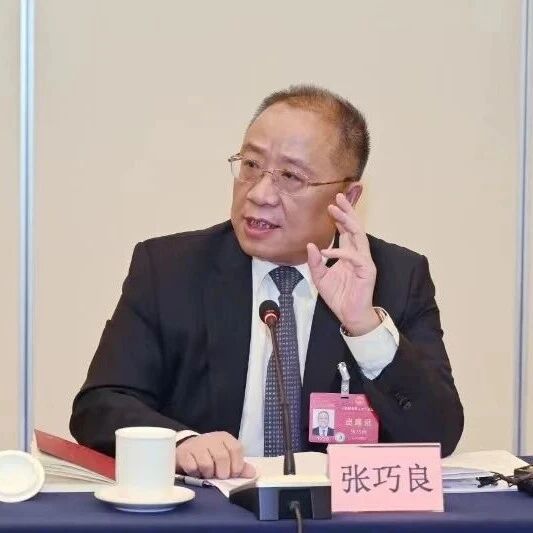
推进民促法落地,全国人大代表张巧良:建议开展专项执法检查
第一财经· 2026-03-05 09:47
Core Viewpoint - The implementation of the Private Economy Promotion Law has significantly boosted market confidence, but there are still obstacles in execution at the local level, including deviations in enforcement and hidden barriers that hinder the law's effectiveness [3][5][6]. Group 1: Legal Framework and Implementation - The Private Economy Promotion Law, as the first fundamental law regarding the development of the private economy in China, enhances predictability, stability, and reliability in policies related to fair competition, property rights protection, and financing support [5][6]. - Since its implementation, over 150 supporting systems have been introduced by relevant national departments, and local regulations have been established to address specific concerns of enterprises [6]. - Despite the law's provisions, local execution faces challenges, including hidden barriers that are not explicitly stated in regulations, such as unclear market access paths and unreasonable thresholds in bidding processes that favor state-owned enterprises [6][7]. Group 2: Recommendations for Improvement - To ensure the effective implementation of the Private Economy Promotion Law, it is recommended to conduct a nationwide review and alignment of regulations and policies [9][10]. - A total of 1,466 normative documents were identified for modification or repeal, with 947 local regulations already amended or abolished to eliminate barriers to market entry and fair competition [9][10]. - It is suggested to enhance the supervision and accountability mechanisms for law enforcement, ensuring that local governments are held accountable for their performance in implementing the law [14][15]. Group 3: Fair Competition and Financial Services - To guarantee equal participation rights for private enterprises, it is proposed to develop a guiding list for private enterprises' participation in major national projects and infrastructure, clarifying access paths and support policies [11][12]. - Strengthening the rigidity of fair competition review systems and establishing a unified platform for reporting discriminatory practices against private enterprises in bidding and procurement processes is recommended [11][12]. - Financial institutions are encouraged to innovate financing models using technologies like big data and blockchain to address the challenges faced by asset-light enterprises in securing loans [13].
中国把印度告上WTO
Sou Hu Cai Jing· 2026-02-26 01:41
Core Viewpoint - The establishment of an expert group by the World Trade Organization to address the trade dispute between China and India over tariffs and measures in the renewable energy and automotive sectors reflects deeper structural tensions within the global trade system [1][3]. Group 1: Trade Dispute Context - The renewable energy and automotive industries have become central to national policy strategies, leading governments to balance market openness with industry protection [3]. - China claims that India's tariffs and incentives in the renewable energy and automotive sectors violate multilateral rules, while India asserts that its measures comply with WTO regulations [3]. - The dispute highlights the role of multilateral mechanisms in mediating complex policy environments, with the key issue being the governance logic behind policy design rather than just tariff rates [3]. Group 2: Implications of the Dispute - The establishment of the expert group signifies the transition to a phase of factual determination and legal assessment, requiring rigorous argumentation from both parties [3]. - Since 2019, the appointment of judges to the appellate body has been obstructed, limiting the final adjudicative function of the dispute resolution system, which poses challenges to the enforcement and authority of expert group reports [5]. - The dispute serves as a test of the resilience of multilateral mechanisms, with the ability of the expert group to maintain professionalism and neutrality in politically charged industrial issues being crucial for the perceived effectiveness of the system [5]. Group 3: Economic and Policy Effects - The highly globalized nature of the renewable energy and automotive supply chains means that any trade friction can trigger chain reactions, affecting investment decisions and supply chain configurations [5]. - Prolonged disputes may lead to increased policy uncertainty, impacting capital and technology flows and reducing the efficiency of industrial collaboration [5]. - If member countries frequently resort to unilateral measures in key industries, it could lead to a cycle of "policy competition" and "rule friction," undermining the stability of the trade system [7]. Group 4: Future Challenges - The long-term challenge lies in the repair and updating of the dispute resolution system, as the global economic structure and technological landscape are undergoing significant changes [7]. - Establishing clearer boundaries between encouraging industrial innovation and maintaining fair competition is essential for the multilateral trade system to respond effectively to new challenges [7].
人民日报刊载评论:破“内卷”需用好法治之钥
Ren Min Ri Bao· 2026-02-25 01:33
Core Viewpoint - The article emphasizes that the rule of law serves as both a "firewall" against unfair competition and a "stabilizer" for companies' development, highlighting its importance in addressing "involution" competition in the context of building a unified national market [1][4]. Group 1: Case Studies - A car company suffered significant losses when 40 executives and technical personnel moved to a competitor, which launched a series of electric vehicles using proprietary technology without legal sources. The Supreme People's Court imposed punitive damages of approximately 640 million yuan, marking a historic high in intellectual property infringement cases in China [2]. - A machinery technology company faced three patent infringement lawsuits from a competitor. After winning the first two cases, the competitor attempted to disrupt the company's IPO with a third lawsuit. The court dismissed the competitor's claims and ordered them to pay 400,000 yuan in reasonable expenses, reinforcing the notion that lawful companies will not suffer from malicious lawsuits [4]. Group 2: Legal Enforcement and Judicial Actions - The article discusses the need for strict and fair law enforcement to delineate the boundaries of fair competition. The State Administration for Market Regulation has intensified enforcement efforts against "involution" competition, particularly in key sectors, to enhance deterrence [5][6]. - Judicial actions are crucial in defining the legal boundaries of competitive behavior, effectively combating intellectual property infringement, and promoting a shift from low-quality competition to high-quality and innovative competition [5][6]. Group 3: Legislative and Regulatory Framework - The emergence of new challenges in the platform and digital economy, such as unauthorized use of AI models and data theft, necessitates timely legislative responses and clear judicial rules to maintain market order and promote healthy industry development [7]. - The rule of law is identified as an essential requirement and important guarantee for constructing a high-level socialist market economy, which can unleash market vitality and accelerate the growth of new productive forces [8].
让竞争回归价值创造主场(有感而发)
Ren Min Ri Bao· 2026-02-24 22:28
Core Viewpoint - The essence of competition is the ability to create value, and the "anti-involution" policy signals a shift towards rational competition focused on innovation, quality, and service rather than price wars [1] Group 1: Current Industry Challenges - Some industries still experience "involution," leading to continuous pressure on profit margins, as companies remain trapped in outdated competitive strategies focused on scale and cost reduction [1] - Despite having a complete industrial system and advanced technology, certain sectors have not fully escaped the mindset of "winning by volume," resulting in a cycle of increasing losses [1] Group 2: Policy Measures - The "anti-involution" policy reflects a governance approach that combines strict regulation with institutional support, aiming to clarify competitive boundaries while injecting momentum into industry development [2] - Regulatory efforts are focused on addressing industry anomalies through enhanced antitrust and anti-unfair competition enforcement, creating a fair competitive environment, especially for small and medium-sized enterprises [2] Group 3: Future Directions - Returning competition to the realm of value creation is a systematic project that requires persistent effort and collaboration across fiscal, financial, and talent support, tailored to industry characteristics [3] - As the "anti-involution" actions deepen, a healthy and orderly competitive ecosystem is expected to form, driving innovation and quality development, which will enhance China's position in global competition [3]
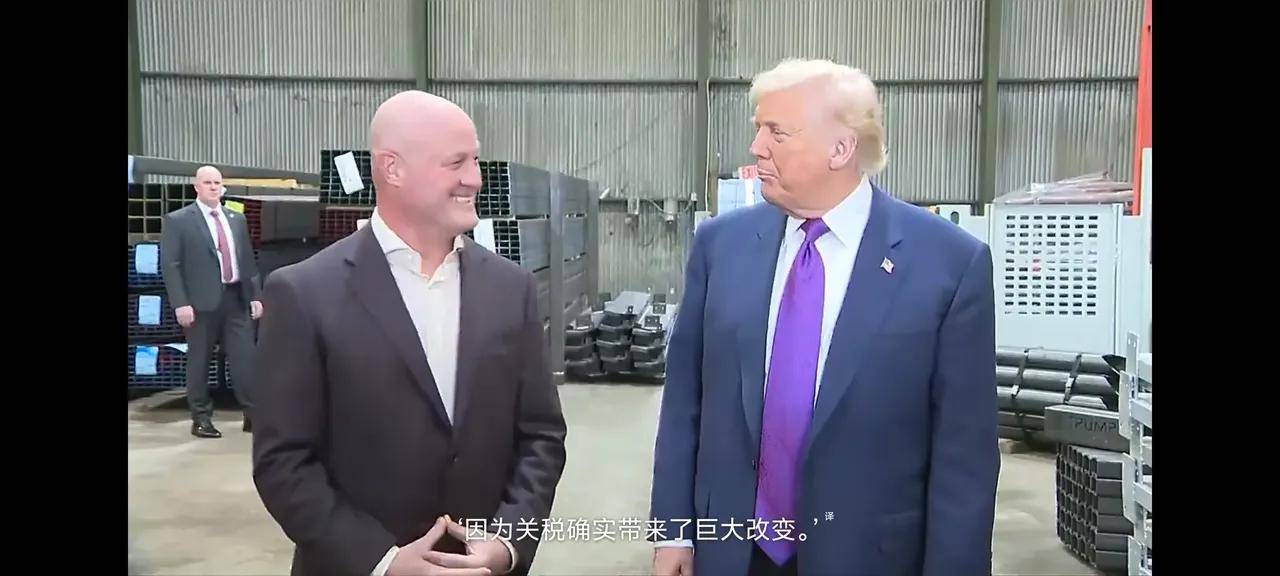
美高层视察的一家美国钢铁制品公司老板诉苦,以前他在与东大的竞争中苦苦挣扎。
Sou Hu Cai Jing· 2026-02-21 04:23
Group 1 - The core issue highlighted is the lack of competitiveness of the U.S. manufacturing industry against low-priced foreign products, with domestic production costs significantly higher at $150 compared to $90 for imports [1] - The implementation of tariff policies has led to increased prices for consumers, with similar products now exceeding $150 and delivery times extending to 36 weeks, indicating a direct impact on consumer costs [1] - Economic experts argue that trade barriers created through administrative means effectively subsidize specific industries at the expense of overall consumer welfare, raising concerns about the long-term viability of domestic industries without international competition [1] Group 2 - While some level of trade protection is deemed necessary, there is a warning against using such measures to sustain outdated production capacities, which ultimately harms societal economic efficiency [3] - The article emphasizes the importance of consumer feedback regarding high prices and long delivery times, suggesting that the ultimate test of economic policy should be the well-being of the populace [3]
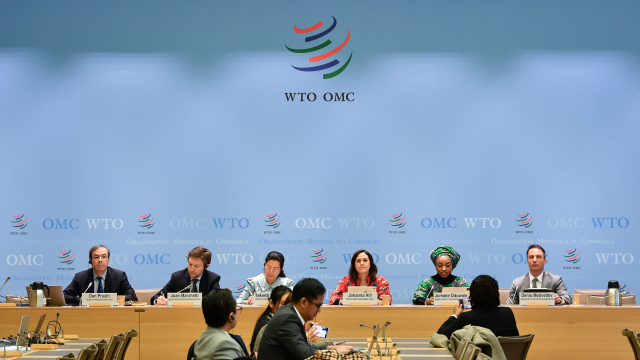
博弈与合作:中国世贸组织改革立场的三重启示|专家热评
Di Yi Cai Jing· 2026-02-20 04:07
Group 1 - The core viewpoint of the article emphasizes the potential for consensus among China, the US, and the EU on certain issues despite apparent differences, particularly in the context of WTO reform [1] - China submitted a position paper to the WTO advocating for inclusive economic globalization and a rules-based multilateral trading system, contrasting with the US and EU's focus on perceived imbalances caused by the rise of developing countries [3][4] - The document highlights the historical lessons learned by China regarding the importance of openness and cooperation for development, noting that the WTO has significantly contributed to global trade growth over the past 30 years [3] Group 2 - Fair competition is identified as a core issue in WTO reform, with China proposing that discussions should focus on government measures that distort international trade rather than vague concepts of unfair competition [4][5] - There is a shared goal among the three parties to restore the WTO dispute resolution mechanism, which serves as a foundational basis for cooperation [6] - China has taken concrete actions to build trust, such as announcing it will not seek new special and differential treatment in current and future WTO negotiations, signaling a commitment to fair competition under the same rules as developed countries [7]
有效引导民营经济走出“内卷困境”
Xin Lang Cai Jing· 2026-02-19 23:02
Core Viewpoint - The article discusses the challenges faced by the private economy in China, particularly the "involution" phenomenon, which has shifted competition from technology and product optimization to price reduction and cost-cutting, impacting innovation and development potential [1]. Group 1: Policy Optimization and Corporate Guidance - The "involution dilemma" is not solely a result of individual corporate choices but a product of multiple long-term factors, necessitating a focus on key aspects that determine competitive direction [2]. - Policy incentives are shifting from emphasizing scale to prioritizing quality, encouraging firms to focus on capability building rather than rapid expansion [3]. - Fair competition rules must be implemented to create a stable environment for long-term investments, moving away from price-cutting strategies [3]. - A smoother market exit mechanism is essential to ensure that inefficient competition is cleared, allowing resources to flow to more innovative firms [3]. Group 2: Market Operation and Innovation Encouragement - Ensuring that private enterprises have access to production factors is crucial for fostering innovation rather than merely maintaining operations [4]. - Innovative companies must be able to enter markets and reap benefits, as high market barriers hinder smaller firms despite their technological capabilities [4]. - Competition should be redirected towards encouraging innovation, ensuring that it translates into stable returns for innovative firms [4]. Group 3: Correcting Short-term Competitive Paths - Companies should shift their focus from short-term survival to long-term capability enhancement, recognizing that technological innovation is the foundation for sustainable development [5]. - Firms need to adopt a competitive philosophy that balances profit motives with social responsibility, avoiding practices that harm industry order and public interests [5]. Group 4: Stabilizing Expectations and Promoting Transformation - To resolve the "involution dilemma," it is necessary to improve institutional and environmental factors, creating a balanced economic order that encourages value creation [6]. - A stable institutional supply is key to maintaining development expectations, with a focus on fair competition and resource allocation [6][7]. - Enhancing various property rights protection mechanisms can increase the predictability of innovation returns, encouraging long-term investments [7]. Group 5: Shaping a Healthy Competitive Ecology - Optimizing the market environment is fundamental for guiding the private economy out of the "involution dilemma," including reducing the cost of resource acquisition for private enterprises [8]. - Promoting the marketization of resource allocation can enhance the availability of production factors for private firms [8]. - Regulatory measures should be strengthened to prevent monopolistic behaviors and ensure fair market access for innovative small and medium-sized enterprises [8]. Group 6: Promoting Competition Transformation through Scientific Management - Companies should establish long-term development strategies to enhance decision-making stability and foresight [9]. - Fostering entrepreneurial spirit and a positive competitive ethos is essential for aligning corporate operations with industry ecology and social responsibility [9]. Group 7: Expanding Development Space through Innovation - The fundamental solution to the "involution dilemma" lies in expanding new growth areas through the integration of technological and industrial innovation [10]. - Supporting private enterprises in adopting new technologies and upgrading traditional industries can improve efficiency and reduce reliance on low-price competition [10]. - Encouraging collaborative innovation among enterprises can alleviate competitive pressure and promote a more sustainable industry ecosystem [10].