混合攻击

Search documents
立陶宛宣布全国进入紧急状态
Huan Qiu Shi Bao· 2025-12-09 22:56
Core Viewpoint - Lithuania has declared a state of emergency due to Belarus's alleged deployment of "smuggling balloons," which pose a threat to national security [1] Group 1: Government Actions - The Lithuanian government has granted the military additional autonomy during the state of emergency to assist law enforcement in managing the situation [1] - The Lithuanian President has announced a review of Belarusian assets in Lithuania that could be frozen or confiscated as a response to the balloon threat [1] Group 2: Impact on Operations - The smuggling balloons have disrupted operations at Vilnius Airport, leading to over 60 hours of closure, affecting more than 350 flights and approximately 51,000 passengers [1] Group 3: Belarus's Response - Belarus has denied responsibility for the balloon incidents and accused Lithuania of provocation, including the alleged deployment of drones carrying "extremist materials" [1] - Belarusian President Lukashenko described Lithuania's accusations as "absurd and unrealistic," questioning Lithuania's motives and suggesting they are escalating the situation [1] Group 4: Smuggling Operations - Reports indicate that smugglers have been using weather balloons to transport cigarettes into Lithuania, with SIM cards from Lithuanian, Polish, and Latvian telecom operators found in the balloons [1] - The balloons, which are typically used for weather observation, can reach altitudes of up to 15 kilometers and are released with cigarettes attached, relying on wind for their trajectory [1]
无人机侵犯边界,白俄罗斯抗议立陶宛
Huan Qiu Shi Bao· 2025-12-02 22:55
Core Points - Belarus has lodged a protest with Lithuania regarding an incident involving a drone that entered its airspace and crashed in Grodno [1] - The drone, which took off from Lithuania, was equipped with intelligence-gathering devices and dropped extremist materials [1] - Belarus demands detailed information from Lithuania about the incident, including the purpose of the drone's launch and the operator [1] Summary by Sections Incident Details - A drone from Lithuania illegally entered Belarusian airspace and crashed in Grodno on December 1 [1] - The drone was found to have intelligence-gathering capabilities and was involved in dropping extremist literature [1] Diplomatic Actions - Belarus summoned the Lithuanian chargé d'affaires to express its protest regarding the drone incident [1] - Belarus is requesting a thorough investigation from Lithuania into the incident and accountability for those responsible [1] Broader Context - Tensions between Belarus and Lithuania have escalated, with previous border closures due to allegations of smuggling activities [2] - The European Commission is considering new sanctions against Belarus, accusing it of orchestrating unacceptable hybrid attacks against Lithuania [2]
欧洲头条丨一堵“看不见的墙”为何让欧盟吵成一团?
Yang Shi Xin Wen· 2025-10-03 02:56
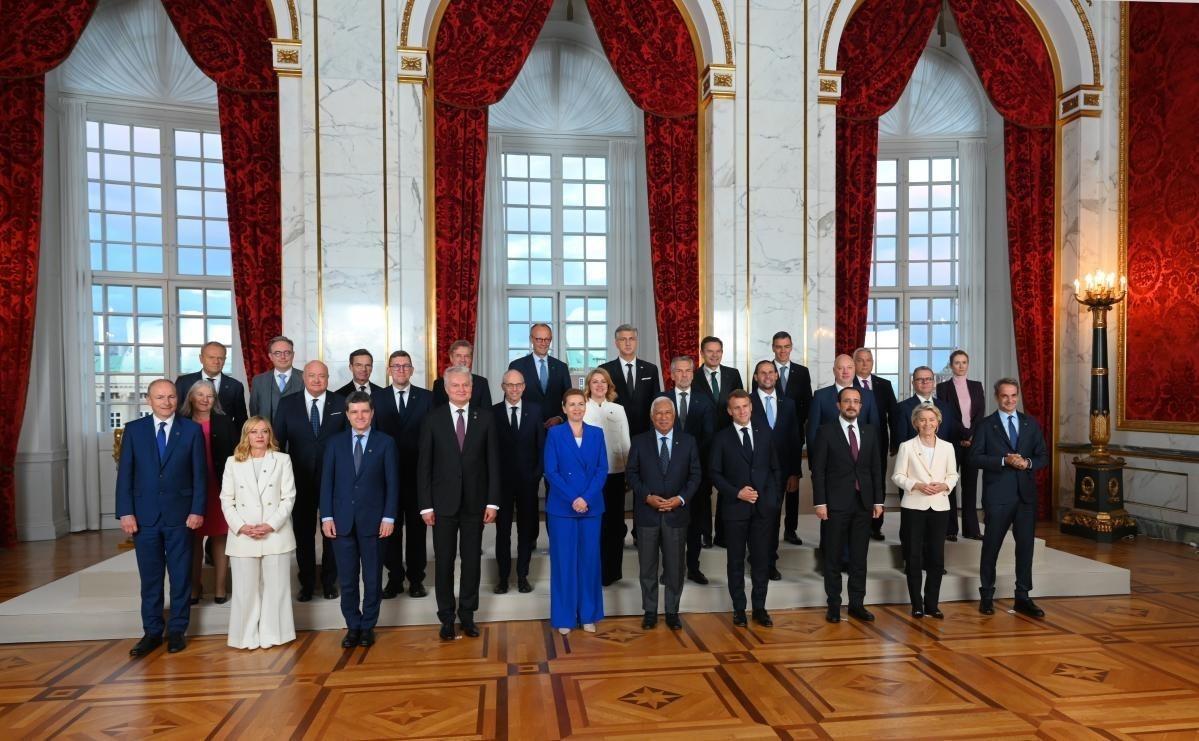
Core Viewpoint - The EU leaders' summit in Copenhagen on October 1 focused on defense issues, particularly the controversial proposal for a "drone wall" to enhance European defense against threats, especially in light of the ongoing Russia-Ukraine conflict [1][2]. Group 1: Proposal and Discussions - The meeting, originally scheduled for two hours, extended to four hours due to intense discussions, particularly regarding the "drone wall" project, highlighting internal disagreements among EU member states [2]. - The proposal for the "drone wall" aims to create a networked defense system capable of detecting, tracking, and intercepting drones using various technologies [9][12]. - EU defense officials consider the "drone wall" a priority, responding to perceived threats from Russia, as recent drone incidents in Northern and Eastern Europe have raised alarms [5][19]. Group 2: Internal Disagreements - Significant opposition emerged from Germany and France, with leaders expressing concerns that such defense projects should be controlled by member states rather than the EU [13][16]. - The proposal has sparked debate over budget allocation, with Eastern European countries expected to receive a majority of the funding, causing dissatisfaction among Western and Southern European nations [18]. - The complexity of the "drone wall" project has been emphasized, with calls for a more comprehensive defense strategy that includes both short-range and long-range systems [16][18]. Group 3: Political Context and Implications - The backdrop of increasing drone incidents in Europe, including accusations of airspace violations, has intensified the urgency for a defensive response [19][20]. - Observers suggest that the push for the "drone wall" may be more of a political gesture rather than a practical solution to security concerns, reflecting deeper divisions within the EU regarding defense strategies [24]. - The project raises questions about the EU's strategic autonomy and its ability to effectively address security threats, with skepticism about the actual security benefits it may provide [24].