港口规划

Search documents
山东省政府批复同意《滨州港套尔河港区总体规划(2035年)》
Qi Lu Wan Bao· 2025-12-07 02:37
Core Viewpoint - The Shandong Provincial Government has approved the "Overall Plan for the Ta'er River Port Area of Binzhou Port (2035)", which aims to enhance the port's infrastructure and support the development of coastal industries in the region [3][6]. Group 1: Port Planning and Infrastructure - The approved plan includes a total port coastline of 37.18 kilometers, with 30.51 kilometers designated for the planning period and 6.67 kilometers reserved for future use [3]. - The port area is divided into several operational zones, each with specific functions, including the Wudi, Beihai, Zhanhua, and Binhai operational areas, focusing on bulk cargo and container transportation [4][6]. Group 2: Operational Zones - The Wudi operational area will primarily handle bulk and liquid cargo, with plans to expand container shipping, serving the Wudi and Beihai Economic Development Zone [4]. - The Beihai operational area will also focus on bulk and liquid cargo, with a similar service scope as Wudi, but with a phased development approach [4]. - The Zhanhua operational area will concentrate on bulk cargo and aims to expand container shipping, supporting the Zhanhua coastal industry [4]. - The Binhai operational area will focus on bulk and liquid cargo, with plans to develop container shipping based on the needs of the industrial cluster [4]. Group 3: Supporting Infrastructure - The plan includes provisions for transportation and utility infrastructure, such as power supply and water management systems, to support the port's operations [5].


广州港已开辟181条外贸班轮航线
Zhong Guo Xin Wen Wang· 2025-11-27 11:17
Core Insights - Guangzhou Port has established 181 foreign trade shipping routes, 73 shuttle barge routes, and 39 sea-rail intermodal trains, and has formed partnerships with 60 international friendly ports [1][2] Group 1: Port Overview - Guangzhou Port is recognized as an international hub seaport in the National Comprehensive Transportation Network Planning Outline and is the largest domestic container port and grain transshipment port in China [1] - The port includes both Guangzhou Sea Port and Guangzhou Inland River Port, with the latter being a significant regional hub for inland transportation in Guangdong Province [1] Group 2: Inland Port Development - The Guangzhou Inland Port is set to be divided into four areas: Panyu, Wanquansha, Wuhe, and Xintang, with a planned port shoreline of approximately 39 kilometers [1] - The development plan aims to enhance existing freight functions while adding water tourism passenger services, promoting deep integration of the port and city [1] Group 3: Future Development Goals - The future focus of Guangzhou Inland Port will be on agricultural and industrial raw materials, finished products, container transport, and will also develop roll-on/roll-off transport for vehicles and water tourism services [2] - The goal is to evolve into a comprehensive, modern, and eco-friendly port with capabilities in direct river-sea transport, logistics management, transshipment, and tourism services [2]

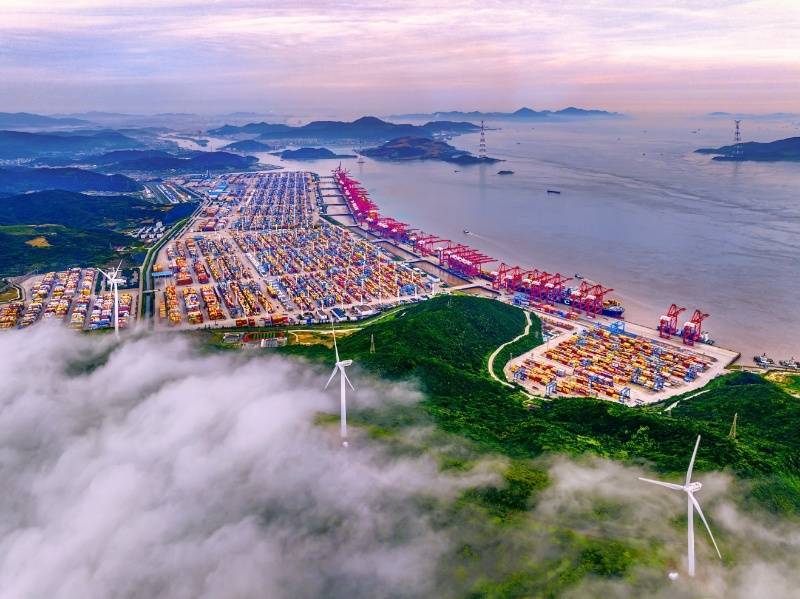
规划引领一周年 宁波力促百亿投资加速跑
Sou Hu Cai Jing· 2025-10-30 10:56
Core Insights - The article highlights the increasing significance of ports as indicators of foreign trade amidst global economic pressures and changing trade patterns [1] - Ningbo has rapidly advanced its port development projects, showcasing a sense of urgency and efficiency in response to the approved "Ningbo-Zhoushan Port Overall Plan (2035)" [3][11] Project Deployment - Following the approval of the overall plan, Ningbo quickly initiated a project list with over 70 billion yuan in investments, including 14 major water transport projects aimed at supporting a port industry system worth over 1 trillion yuan [3] - By September 2025, Ningbo's fixed asset investment in water transport is projected to reach 228 billion yuan, exceeding the planned target by 142.5% [3] Port Performance - In the first three quarters of the year, Ningbo Port achieved a cargo throughput of 540 million tons and a container throughput of 29.093 million TEUs, reflecting year-on-year growth of 2.8% and 7.7% respectively [4] Approval Mechanisms - Ningbo has established three mechanisms—"expedited promotion, efficient approval, and collaborative problem-solving"—to streamline the project approval process [5] - The "efficient approval" mechanism allows for parallel processing of approvals and permits the submission of supplementary materials after the initial application, significantly reducing approval times [8] Resource Management - A new joint consultation mechanism for port shoreline resources was implemented to ensure optimal allocation and prevent inefficient use of resources [9][10] - This mechanism has already facilitated the efficient matching of shoreline resources with high-quality projects, ensuring maximum utility from every meter of shoreline [10] Future Projections - The revised overall plan predicts that by 2035, Ningbo-Zhoushan Port will handle 1.8 billion tons of cargo and 60 million TEUs, establishing a spatial layout of "one port, two cores, and twenty districts" [12]